Dalloneau Emilie, Baroukh Nadine, Mavridis Konstantinos, Maillet Agnès, Gueugnon Fabien, Courty Yves, Petit Agnès, Kryza Thomas, Del Rio Maguy, Guyetant Serge, Cadena Castaneda Diana Carolina, Dhommée Christine, Arnoult Christophe, Scorilas Andreas, Gouilleux-Gruart Valérie, Heuzé-Vourc'h Nathalie
Université François Rabelais, UMR 1100, Tours, France.
INSERM, Centre d'Etude des Pathologies Respiratoires, UMR 1100, Tours, France.
Oncotarget. 2016 Aug 23;7(34):54415-54429. doi: 10.18632/oncotarget.10074.
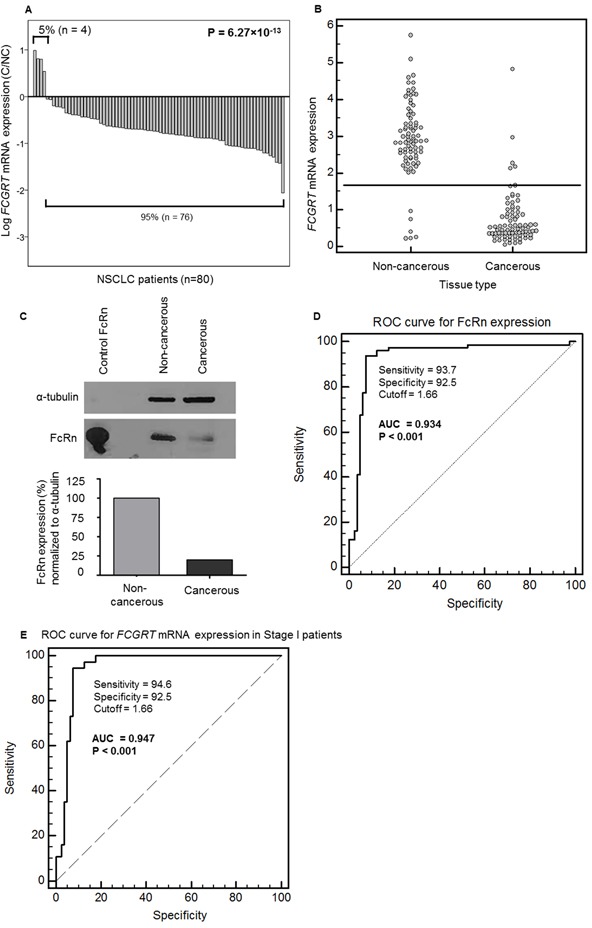
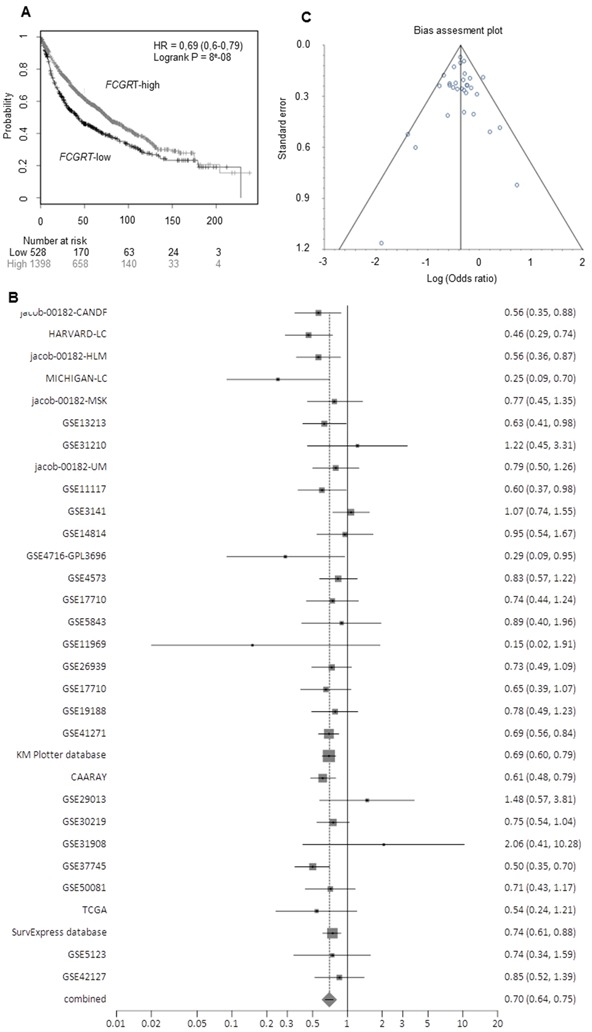
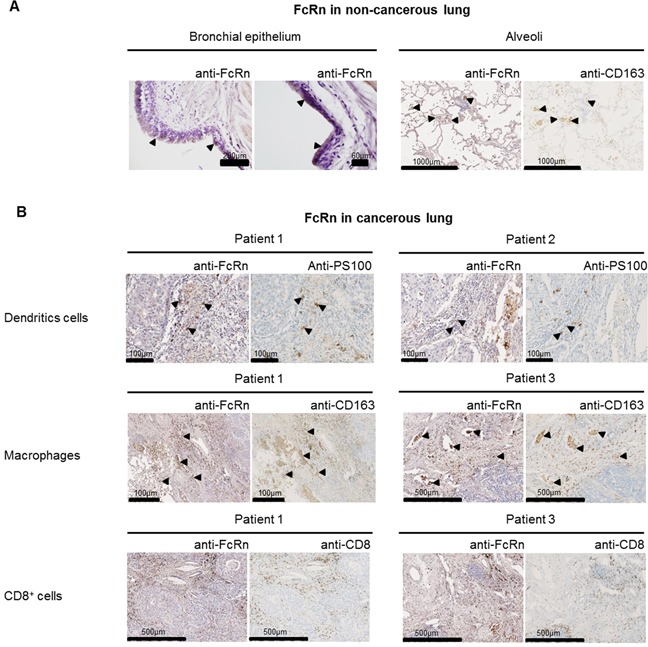
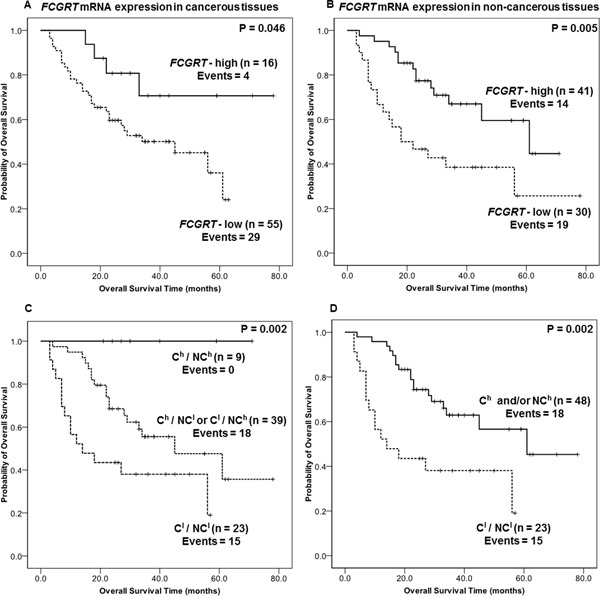
Lung cancer is the leading cause of cancer-related death worldwide. Although the recommended tumor, node and metastasis (TNM) classification and stage determination are important to select therapeutic options for patients with non-small cell lung carcinoma (NSCLC), additional molecular markers are required to indicate the prognosis, in particular within a specific stage, and help with the management of patients.Because neonatal Fc receptor (FcRn) has recently been involved in colon cancer immunosurveillance, we measured its expression in non-cancerous and NSCLC lung tissues and evaluated its prognostic value in overall survival for patient with NSCLC. FcRn expression was determined at both mRNA and protein levels on cancerous and adjacent non-cancerous tissues from 80 NSCLC patients. In NSCLC, FcRn was mainly found in resident and tumor infiltrating immune cells. The corresponding mRNA and protein were significantly less abundant in lung tumor than non-cancerous tissue. Moreover, analysis of our cohort and datasets from the public data bases show that FCGRT mRNA down-regulation is a robust and independent, unfavorable predictive factor of NSCLC patient survival. We conclude that FCGRT mRNA expression may be a useful additional marker for immunoscoring, reflecting tumor immune system, and help in the decision-making process for NSCLC patients.
肺癌是全球癌症相关死亡的主要原因。尽管推荐的肿瘤、淋巴结和转移(TNM)分类及分期对于为非小细胞肺癌(NSCLC)患者选择治疗方案很重要,但还需要额外的分子标志物来指示预后,尤其是在特定分期内,并有助于患者的管理。由于新生儿Fc受体(FcRn)最近参与了结肠癌免疫监视,我们检测了其在非癌性和NSCLC肺组织中的表达,并评估了其对NSCLC患者总生存期的预后价值。在80例NSCLC患者的癌组织和相邻非癌组织中,从mRNA和蛋白质水平测定FcRn表达。在NSCLC中,FcRn主要存在于驻留和肿瘤浸润免疫细胞中。肺肿瘤中相应的mRNA和蛋白质明显少于非癌组织。此外,对我们的队列和来自公共数据库的数据集分析表明,FCGRT mRNA下调是NSCLC患者生存的一个强有力且独立的不良预测因素。我们得出结论,FCGRT mRNA表达可能是免疫评分的一个有用的附加标志物,反映肿瘤免疫系统,并有助于NSCLC患者的决策过程。