Maeta Kazuhiro, Edamatsu Hironori, Nishihara Kaori, Ikutomo Junji, Bilasy Shymaa E, Kataoka Tohru
Department of Biochemistry and Molecular and Biology, Division of Molecular Biology, Kobe University Graduate School of Medicine , Kobe 650-0017, Japan.
eNeuro. 2016 Jun 23;3(3). doi: 10.1523/ENEURO.0142-16.2016. eCollection 2016 May-Jun.
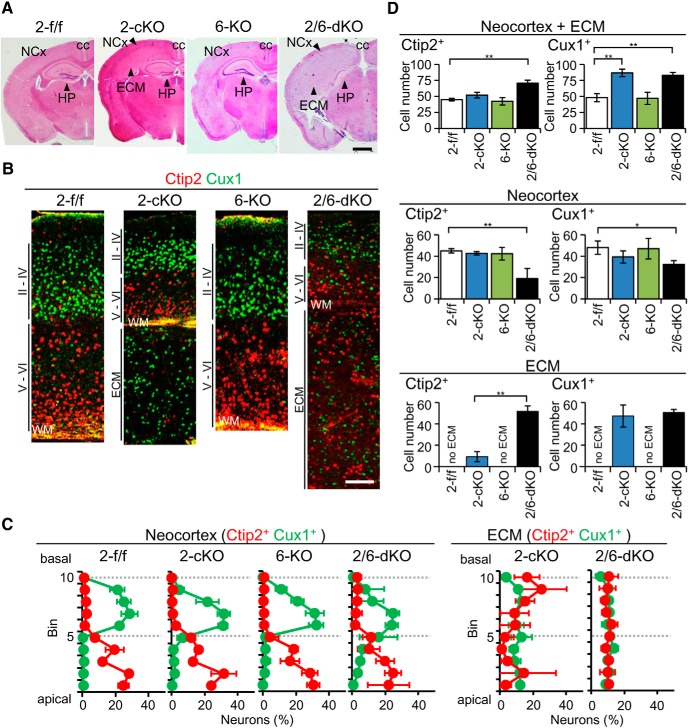
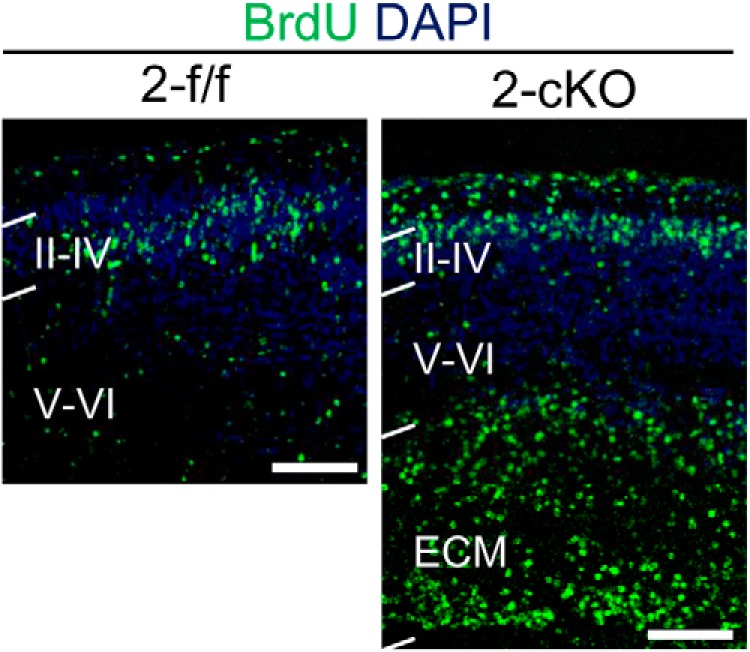
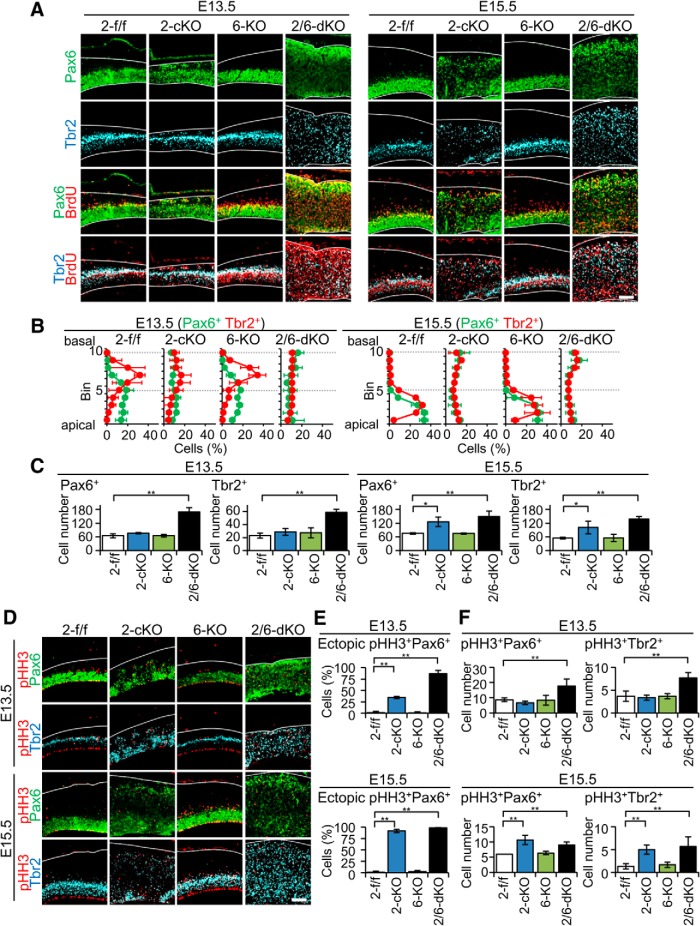
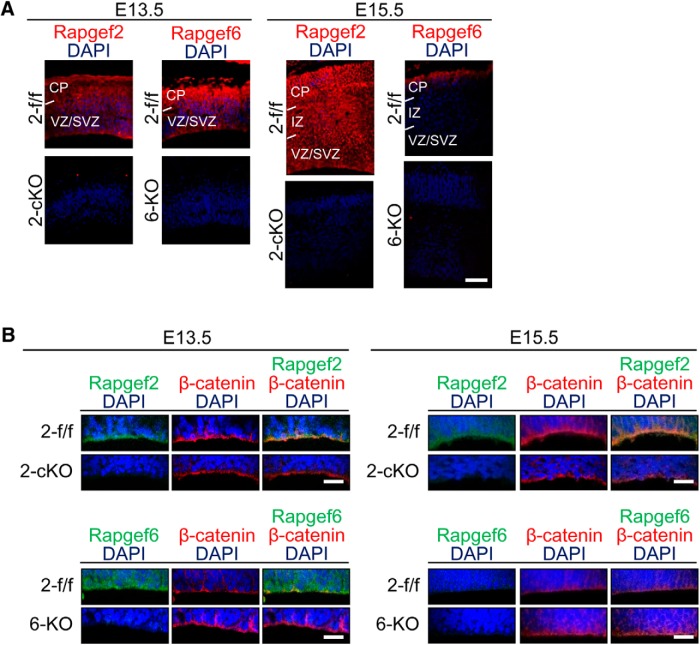
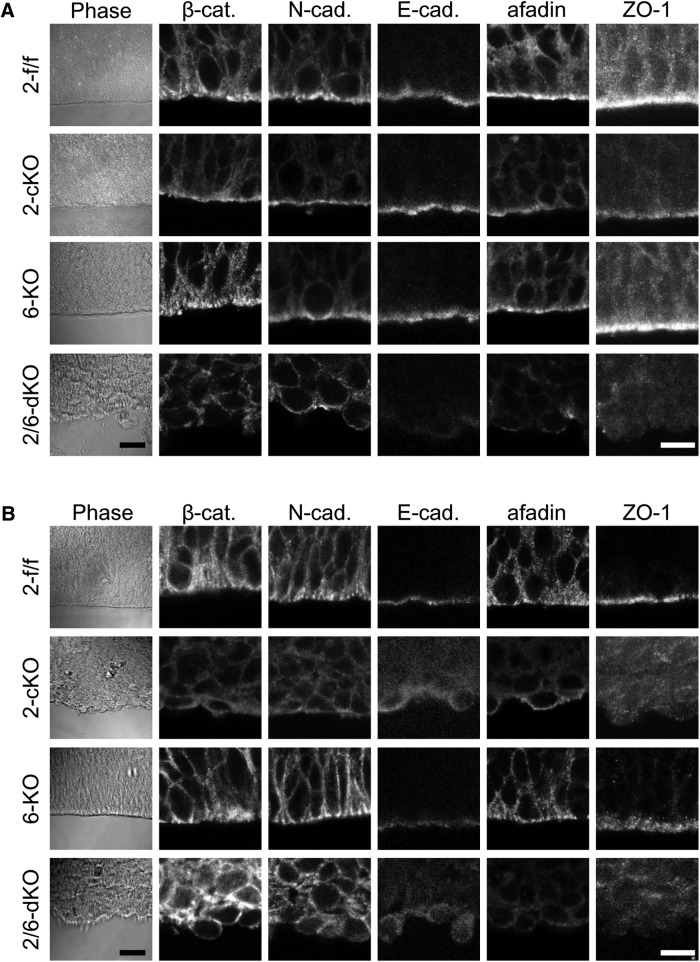
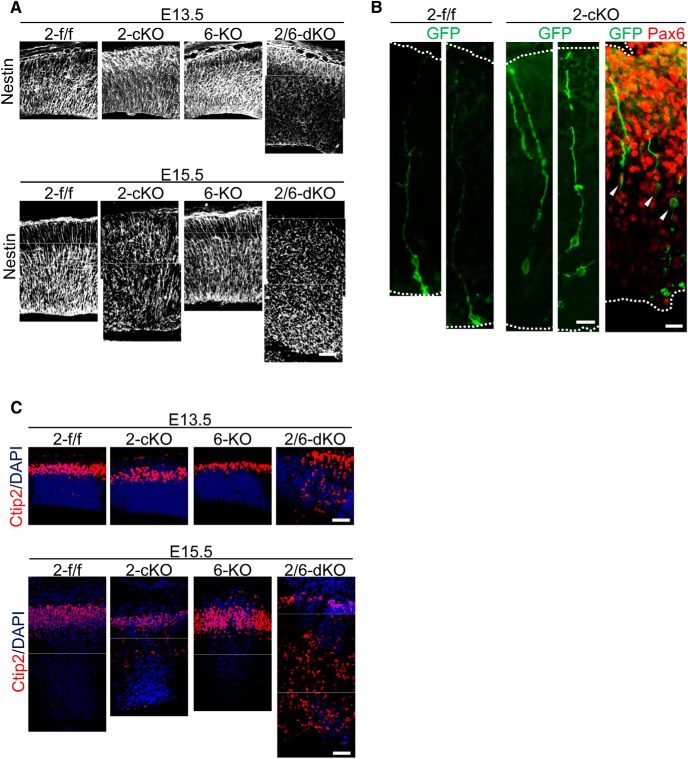
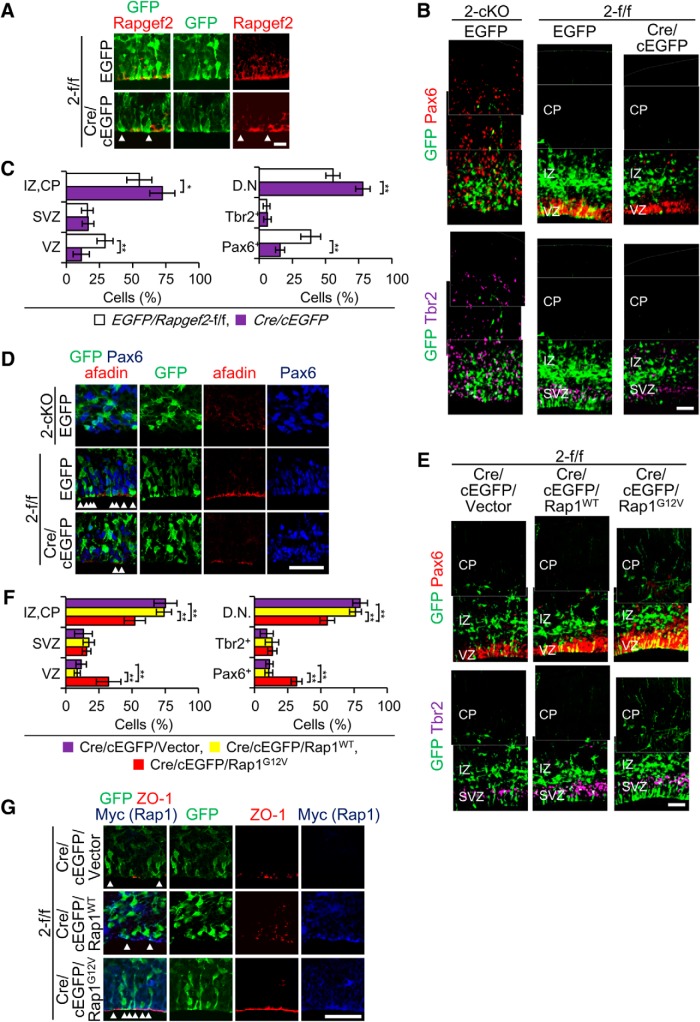
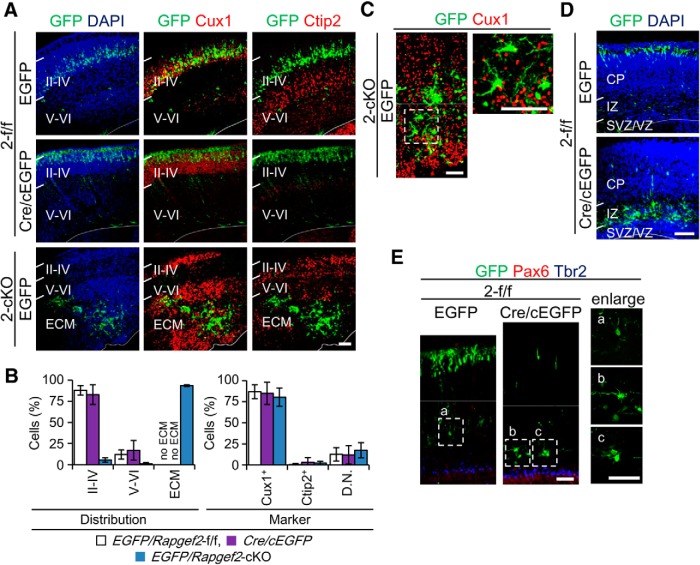
Cerebral neocortex development in mammals requires highly orchestrated events involving proliferation, differentiation, and migration of neural progenitors and neurons. Rapgef2 and Rapgef6 constitute a unique family of guanine nucleotide exchange factors for Rap1 small GTPase, which is known to play crucial roles in migration of postmitotic neurons. We previously reported that conditional knockout of Rapgef2 in dorsal telencephalon (Rapgef2-cKO) resulted in the formation of an ectopic cortical mass (ECM) resembling that of subcortical band heterotopia. Here we show that double knockout of Rapgef6 in Rapgef2-cKO mice (Rapgef2/6-dKO) results in marked enlargement of the ECM. While Rapgef2-cKO affects late-born neurons only, Rapgef2/6-dKO affects both early-born and late-born neurons. The Rapgef2-cKO cortex at embryonic day (E) 15.5, and the Rapgef2/6-dKO cortex at E13.5 and E15.5 show disruption of the adherens junctions (AJs) on the apical surface, detachment of radial glial cells (RGCs) from the apical surface and disorganization of the radial glial fiber system, which are accompanied by aberrant distribution of RGCs and intermediate progenitors, normally located in the ventricular zone and the subventricular zone, respectively, over the entire cerebral cortex. Moreover, intrauterine transduction of Cre recombinase into the Rapgef2(flox/flox) brains also results in the apical surface AJ disruption and the RGC detachment from the apical surface, both of which are effectively suppressed by cotransduction of the constitutively active Rap1 mutant Rap1(G12V). These results demonstrate a cell-autonomous role of the Rapgef2/6-Rap1 pathway in maintaining the apical surface AJ structures, which is necessary for the proper development of neural progenitor cells.
哺乳动物大脑新皮质的发育需要高度协调的事件,这些事件涉及神经祖细胞和神经元的增殖、分化和迁移。Rapgef2和Rapgef6构成了Rap1小GTP酶的鸟嘌呤核苷酸交换因子的独特家族,已知该家族在有丝分裂后神经元的迁移中起关键作用。我们之前报道过,在背侧端脑有条件地敲除Rapgef2(Rapgef2-cKO)会导致形成一个异位皮质团块(ECM),类似于皮质下带异位症。在这里我们表明,在Rapgef2-cKO小鼠中双敲除Rapgef6(Rapgef2/6-dKO)会导致ECM显著增大。虽然Rapgef2-cKO仅影响晚期出生的神经元,但Rapgef2/6-dKO影响早期出生和晚期出生的神经元。胚胎第15.5天(E15.5)的Rapgef2-cKO皮质,以及E13.5和E15.5的Rapgef2/6-dKO皮质,在顶端表面显示黏附连接(AJs)破坏,放射状胶质细胞(RGCs)从顶端表面脱离,以及放射状胶质纤维系统紊乱,同时伴随着RGCs和中间祖细胞的异常分布,它们通常分别位于脑室区和脑室下区,遍布整个大脑皮质。此外,将Cre重组酶子宫内转导到Rapgef2(flox/flox)大脑中也会导致顶端表面AJ破坏和RGCs从顶端表面脱离,而组成型活性Rap1突变体Rap1(G12V)的共转导可有效抑制这两种情况。这些结果证明了Rapgef2/6-Rap1通路在维持顶端表面AJ结构中的细胞自主作用,这对于神经祖细胞的正常发育是必要的。