Photosynthesis Research Center, Key Laboratory of Photobiology, Institute of Botany, Chinese Academy of Sciences, Beijing 100093, China.
University of Chinese Academy of Sciences, Beijing 100049, China.
Nat Commun. 2016 Jul 11;7:12173. doi: 10.1038/ncomms12173.
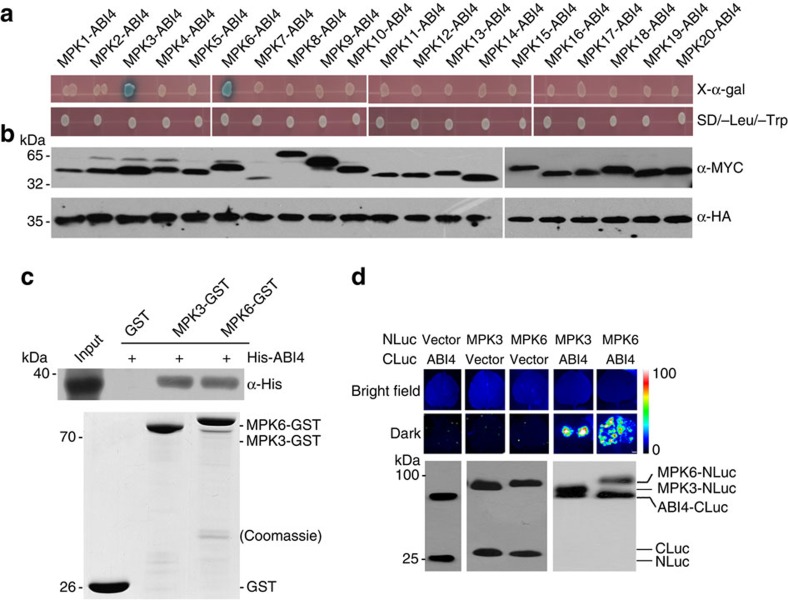
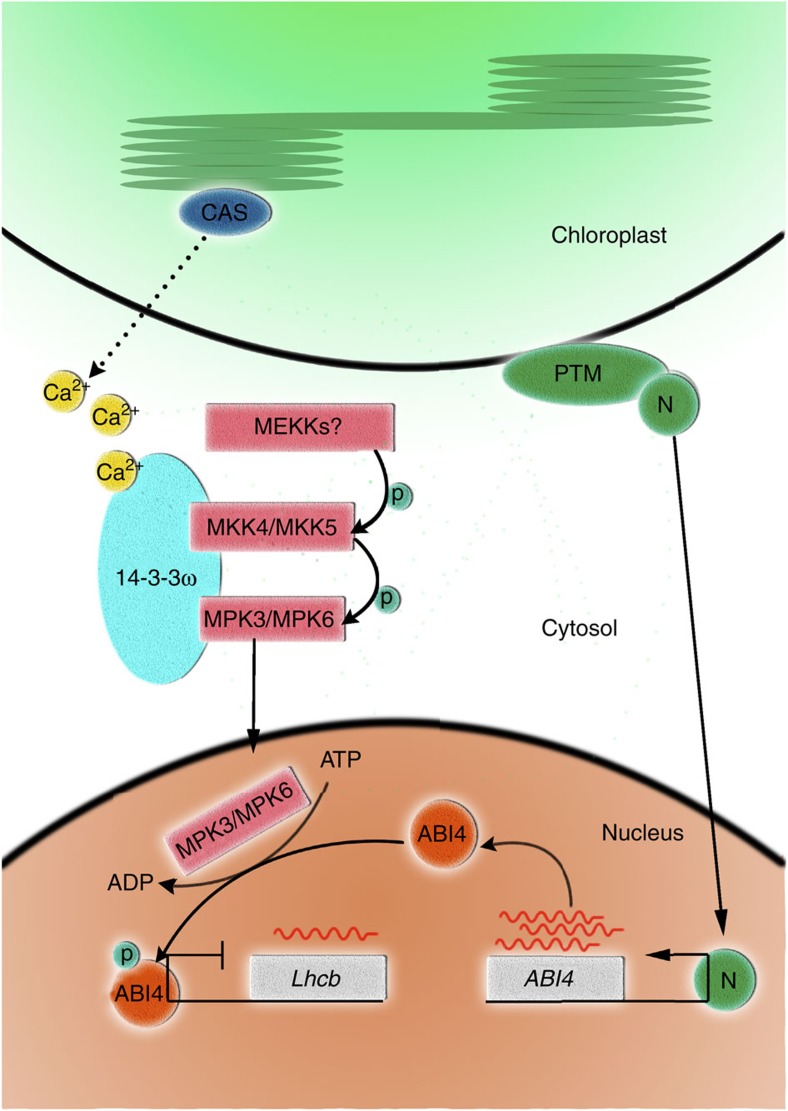
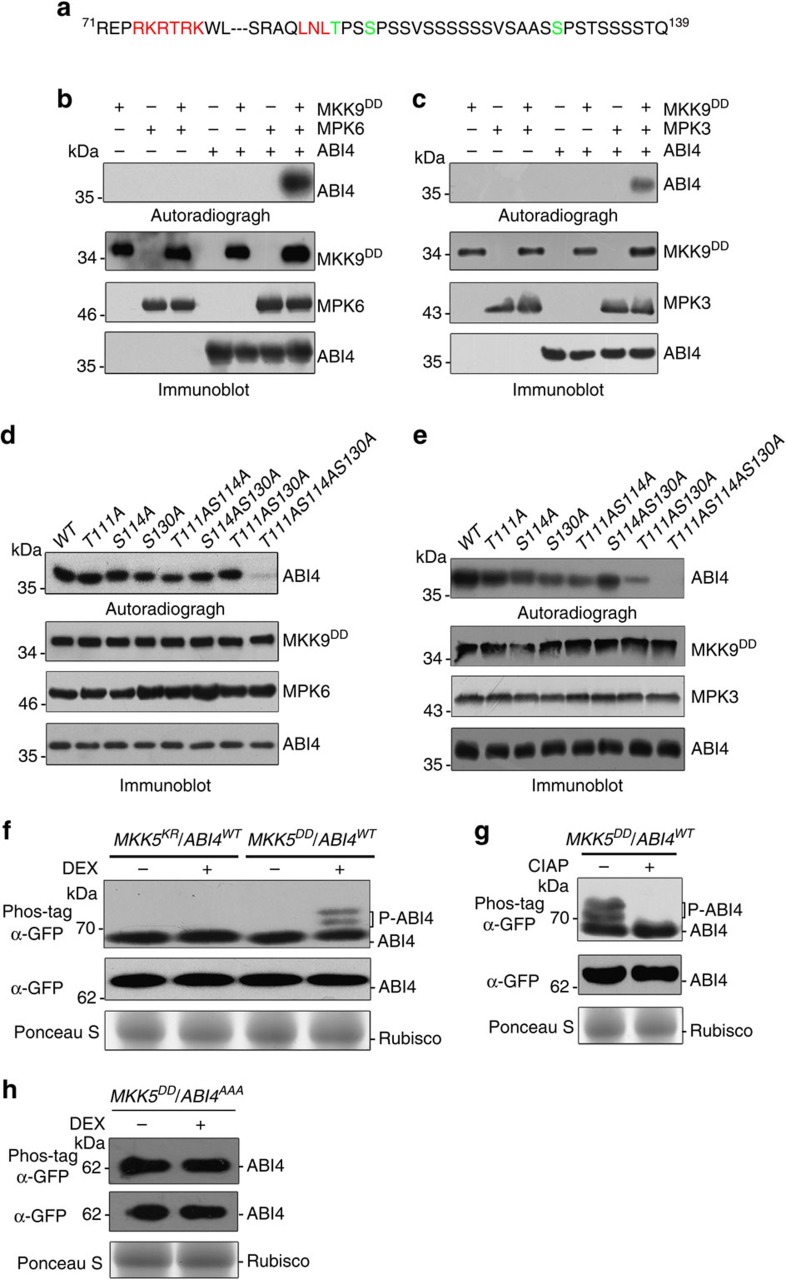
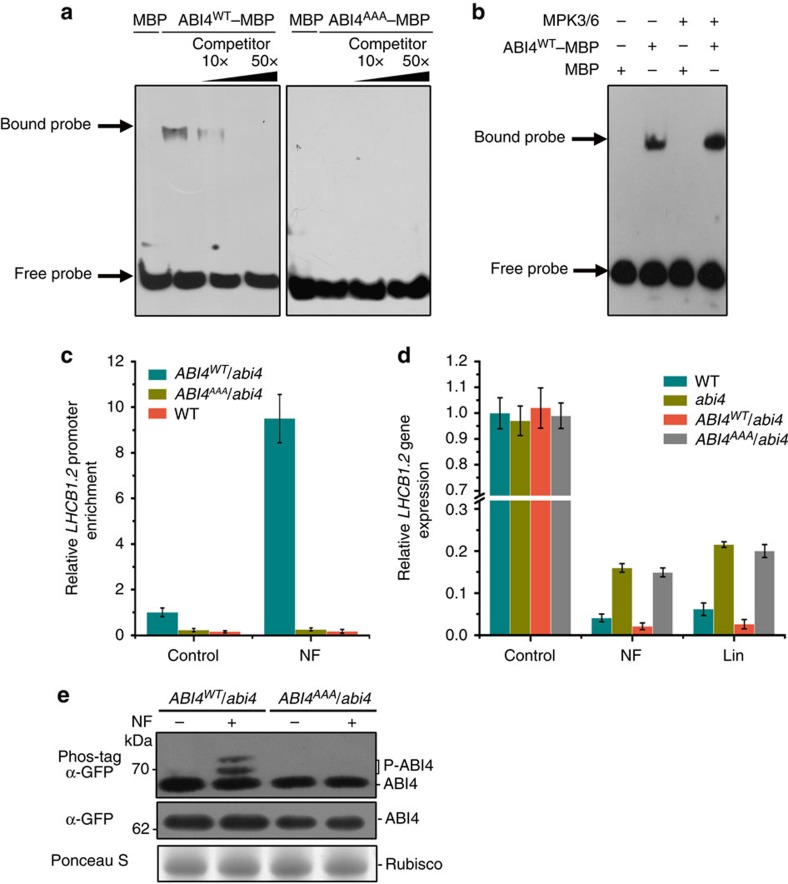
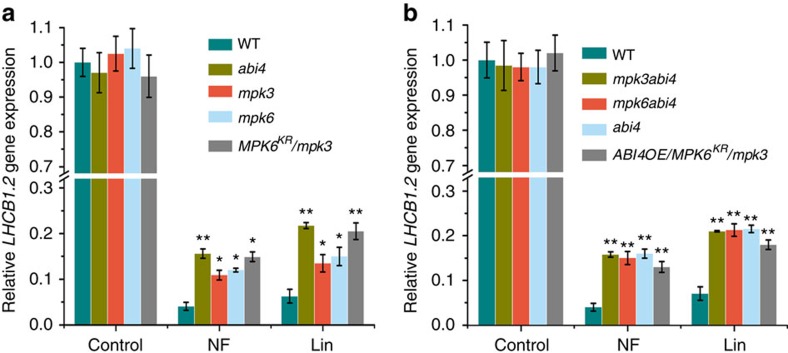
Chloroplast retrograde signals play important roles in coordinating the plastid and nuclear gene expression and are critical for proper chloroplast biogenesis and for maintaining optimal chloroplast functions in response to environmental changes in plants. Until now, the signals and the mechanisms for retrograde signalling remain poorly understood. Here we identify factors that allow the nucleus to perceive stress conditions in the chloroplast and to respond accordingly by inducing or repressing specific nuclear genes encoding plastid proteins. We show that ABI4, which is known to repress the LHCB genes during retrograde signalling, is activated through phosphorylation by the MAP kinases MPK3/MPK6 and the activity of these kinases is regulated through 14-3-3ω-mediated Ca(2+)-dependent scaffolding depending on the chloroplast calcium sensor protein CAS. These findings uncover an additional mechanism in which chloroplast-modulated Ca(2+) signalling controls the MAPK pathway for the activation of critical components of the retrograde signalling chain.
叶绿体逆行信号在协调质体和核基因表达方面发挥着重要作用,对于质体生物发生和维持最佳质体功能以响应植物环境变化至关重要。到目前为止,逆行信号的信号和机制仍知之甚少。在这里,我们确定了使细胞核能够感知质体中应激条件并通过诱导或抑制编码质体蛋白的特定核基因来做出相应反应的因素。我们表明,ABI4 在逆行信号传导过程中已知会抑制 LHCB 基因,它通过 MAP 激酶 MPK3/MPK6 的磷酸化而被激活,并且这些激酶的活性通过 14-3-3ω 介导的 Ca2+ 依赖性支架进行调节,这取决于质体钙传感器蛋白 CAS。这些发现揭示了一种额外的机制,其中质体调节的 Ca2+ 信号控制 MAPK 途径,用于激活逆行信号链的关键组成部分。