Masiak Anna, Kulczycka Julia, Czuszyńska Zenobia, Zdrojewski Zbigniew
Department of Interial Diseases, Connective Tissue Diseases and Geriatrics, University of Gdansk, Gdansk, Poland.
Clinical Immunology i Transplantology Unit, UCK Gdańsk, University of Gdansk, Gdansk, Poland.
Reumatologia. 2016;54(1):14-8. doi: 10.5114/reum.2016.58756. Epub 2016 Mar 24.
Inflammatory myopathies are a group of idiopathic, heterogeneous systemic diseases affecting predominantly skeletal muscles, though they can also involve the skin and internal organs. The association between cancer and idiopathic inflammatory myopathies, particularly dermatomyositis, which is termed cancer-associated myositis (CAM), has been reported in the medical literature. A newly described autoantibody to a 155-kDa nuclear protein, identified as transcription intermediary factor 1-gamma (TIF1-γ), has proven useful for cancer screening in patients with dermatomyositis.
Based on our database of laboratory results, between November 2014 and January 2016, we found 80 patients with a positive autoimmune inflammatory myopathy immunoblot profile.
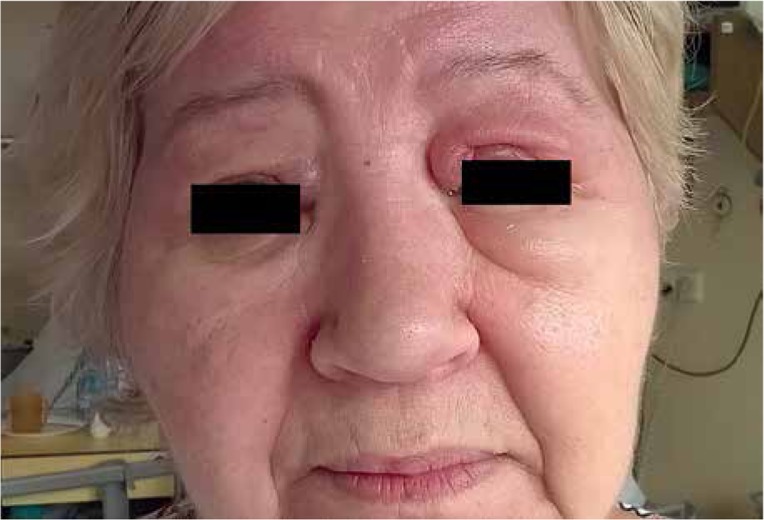
Eleven of 80 patients revealed the presence of anti-TIF1-γ antibodies: 8 women and 3 men with average age 54.2 years. Dermatomyositis (DM) was diagnosed in 6 cases, polymyositis in 1 case, myositis limited to ocular muscles and rhabdomyolysis in 1 case each, and undifferentiated connective tissue disease in 2 cases. Neoplasm was found in 4 cases. All of those patients had DM. The average time between DM and diagnosis of neoplasm was 7.5 months (from 1 to 18 months).
The association between cancer and idiopathic inflammatory myopathies, particularly DM, is well known, and cancer screening should be obligatory in such patients. So far there is no consensus as to the method or frequency with which patients with an idiopathic inflammatory myopathy should be tested to rule out neoplasm. Detection of anti-TIF1-γ antibodies in patients with DM gives the clinicians the very important suggestion of CAM. It seems reasonable that these patients should have more detailed and often repeated differential diagnostics.
炎性肌病是一组特发性、异质性的全身性疾病,主要累及骨骼肌,不过也可累及皮肤和内脏器官。医学文献中已报道癌症与特发性炎性肌病之间的关联,尤其是皮肌炎,即所谓的癌症相关性肌炎(CAM)。一种新发现的针对155 kDa核蛋白的自身抗体,被鉴定为转录中介因子1-γ(TIF1-γ),已被证明对皮肌炎患者的癌症筛查有用。
基于我们的实验室结果数据库,在2014年11月至2016年1月期间,我们发现80例自身免疫性炎性肌病免疫印迹谱呈阳性的患者。
80例患者中有11例检测出抗TIF1-γ抗体:8名女性和3名男性,平均年龄54.2岁。诊断为皮肌炎(DM)6例,多发性肌炎1例,眼肌型肌炎和横纹肌溶解各1例,未分化结缔组织病2例。4例发现有肿瘤。所有这些患者均为DM。DM与肿瘤诊断之间的平均时间为7.5个月(从1个月至18个月)。
癌症与特发性炎性肌病,尤其是DM之间的关联是众所周知的,此类患者应进行癌症筛查。目前对于特发性炎性肌病患者应采用何种方法或检测频率来排除肿瘤尚无共识。在DM患者中检测到抗TIF1-γ抗体为临床医生提供了CAM的非常重要的提示。这些患者应进行更详细且经常重复的鉴别诊断似乎是合理的。