Ware Kathryn E, Somarelli Jason A, Schaeffer Daneen, Li Jing, Zhang Tian, Park Sally, Patierno Steven R, Freedman Jennifer, Foo Wen-Chi, Garcia-Blanco Mariano A, Armstrong Andrew J
Department of Medicine, Division of Medical Oncology, Duke University Medical Center, Durham, NC, USA.
Department of Genitourinary Oncology, Duke Cancer Institute, Duke University Medical Center, Durham, NC, USA.
Oncotarget. 2016 Aug 2;7(31):50507-50521. doi: 10.18632/oncotarget.10476.
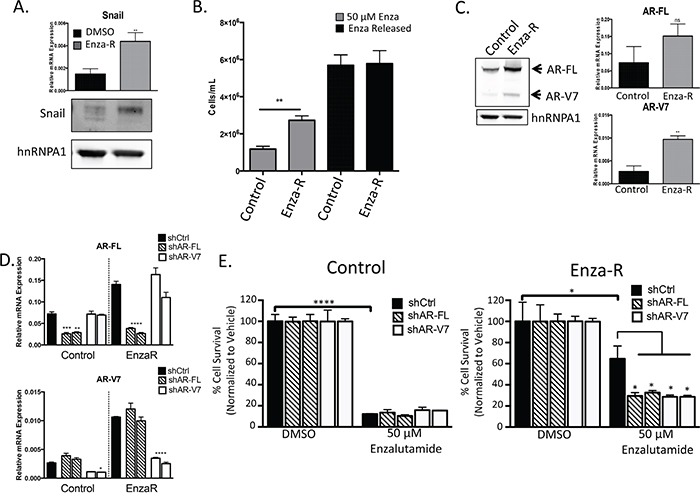
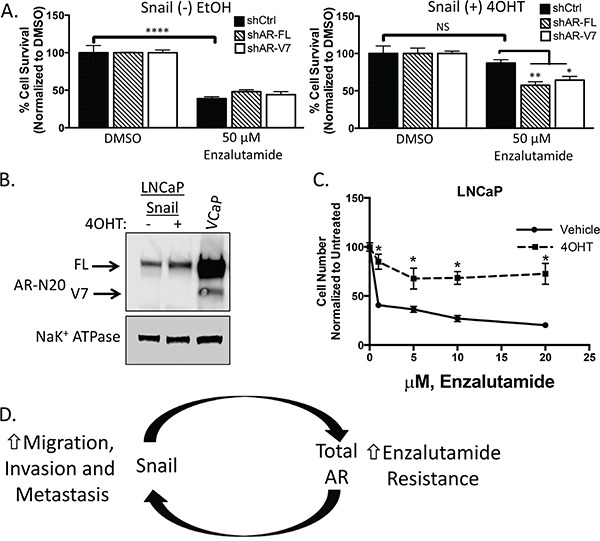
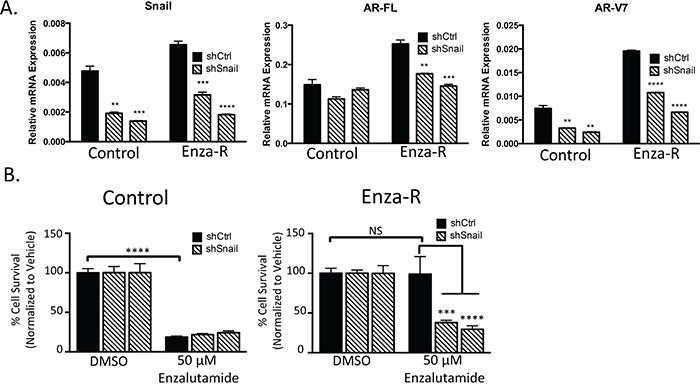
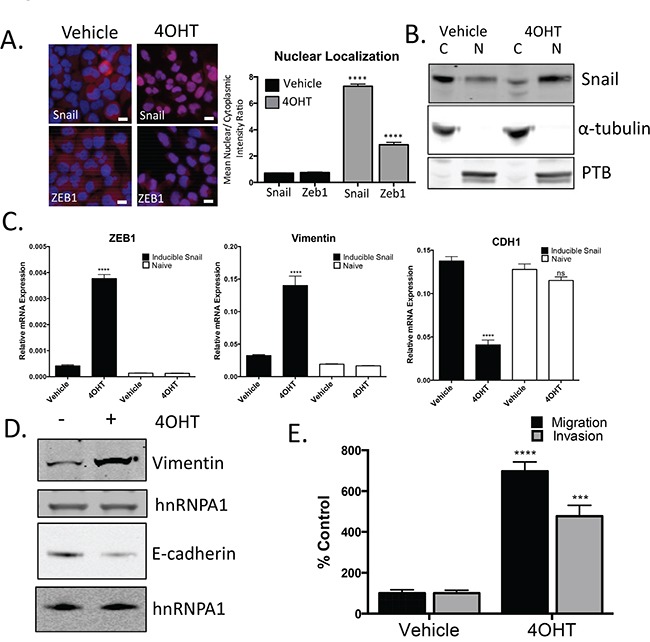
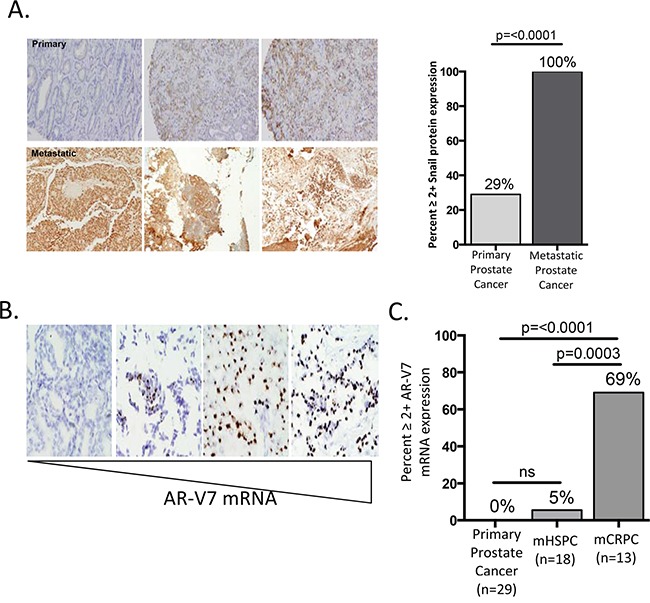
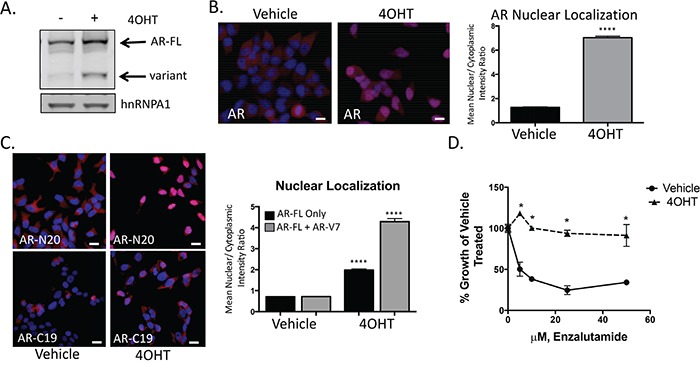
Treatment with androgen-targeted therapies can induce upregulation of epithelial plasticity pathways. Epithelial plasticity is known to be important for metastatic dissemination and therapeutic resistance. The goal of this study is to elucidate the functional consequence of induced epithelial plasticity on AR regulation during disease progression to identify factors important for treatment-resistant and metastatic prostate cancer. We pinpoint the epithelial plasticity transcription factor, Snail, at the nexus of enzalutamide resistance and prostate cancer metastasis both in preclinical models of prostate cancer and in patients. In patients, Snail expression is associated with Gleason 9-10 high-risk disease and is strongly overexpressed in metastases as compared to localized prostate cancer. Snail expression is also elevated in enzalutamide-resistant prostate cancer cells compared to enzalutamide-sensitive cells, and downregulation of Snail re-sensitizes enzalutamide-resistant cells to enzalutamide. While activation of Snail increases migration and invasion, it is also capable of promoting enzalutamide resistance in enzalutamide-sensitive cells. This Snail-mediated enzalutamide resistance is a consequence of increased full-length AR and AR-V7 expression and nuclear localization. Downregulation of either full-length AR or AR-V7 re-sensitizes cells to enzalutamide in the presence of Snail, thus connecting Snail-induced enzalutamide resistance directly to AR biology. Finally, we demonstrate that Snail is capable of mediating-resistance through AR even in the absence of AR-V7. These findings imply that increased Snail expression during progression to metastatic disease may prime cells for resistance to AR-targeted therapies by promoting AR activity in prostate cancer.
雄激素靶向治疗可诱导上皮可塑性途径上调。已知上皮可塑性对转移扩散和治疗抵抗很重要。本研究的目的是阐明疾病进展过程中诱导的上皮可塑性对雄激素受体(AR)调节的功能后果,以确定对治疗抵抗性和转移性前列腺癌重要的因素。我们在前列腺癌临床前模型和患者中均发现,上皮可塑性转录因子Snail处于恩杂鲁胺耐药和前列腺癌转移的关键节点。在患者中,Snail表达与Gleason 9 - 10高危疾病相关,与局限性前列腺癌相比,在转移灶中强烈过表达。与恩杂鲁胺敏感细胞相比,恩杂鲁胺耐药前列腺癌细胞中Snail表达也升高,下调Snail可使恩杂鲁胺耐药细胞对恩杂鲁胺重新敏感。虽然Snail激活会增加迁移和侵袭,但它也能够在恩杂鲁胺敏感细胞中促进恩杂鲁胺耐药。这种Snail介导的恩杂鲁胺耐药是全长AR和AR - V7表达及核定位增加的结果。在存在Snail的情况下,下调全长AR或AR - V7均可使细胞对恩杂鲁胺重新敏感,从而将Snail诱导的恩杂鲁胺耐药直接与AR生物学联系起来。最后,我们证明即使在没有AR - V7的情况下,Snail也能够通过AR介导耐药。这些发现表明,在进展为转移性疾病过程中Snail表达增加可能通过促进前列腺癌中的AR活性,使细胞对AR靶向治疗产生耐药。