Steven André, Leisz Sandra, Sychra Katharina, Hiebl Bernhard, Wickenhauser Claudia, Mougiakakos Dimitrios, Kiessling Rolf, Denkert Carsten, Seliger Barbara
Institute of Medical Immunology, Martin Luther University Halle-Wittenberg, Halle, Germany.
Charité, Institute of Pathology, Berlin, Germany.
Oncotarget. 2016 Aug 9;7(32):52061-52084. doi: 10.18632/oncotarget.10474.
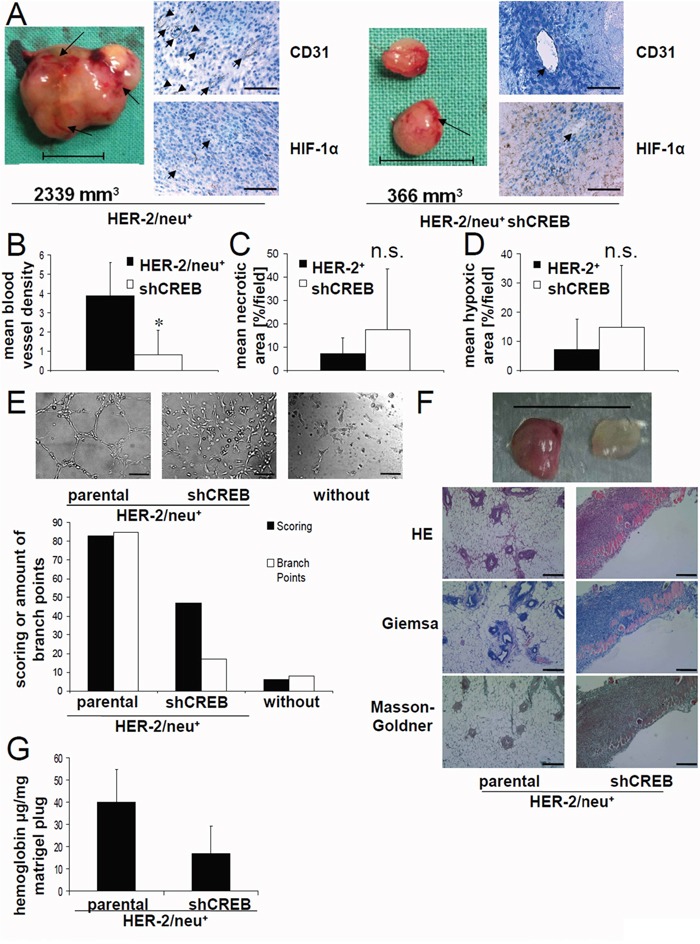
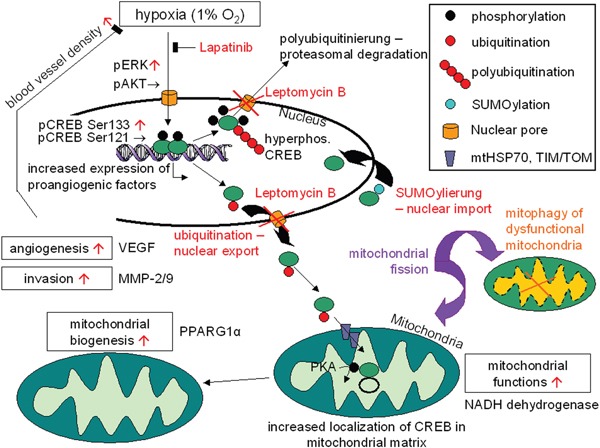
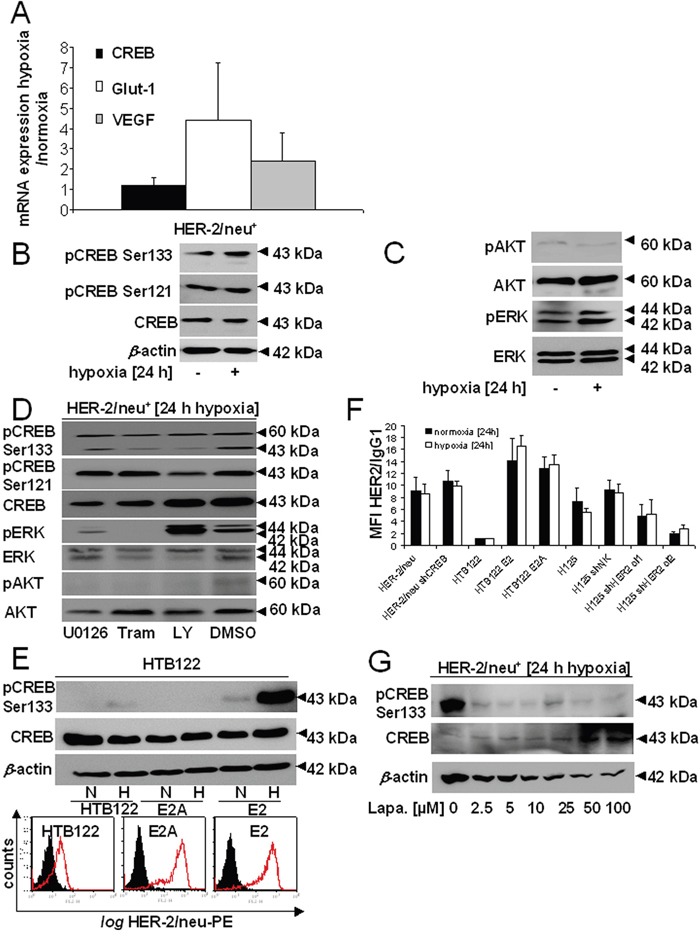
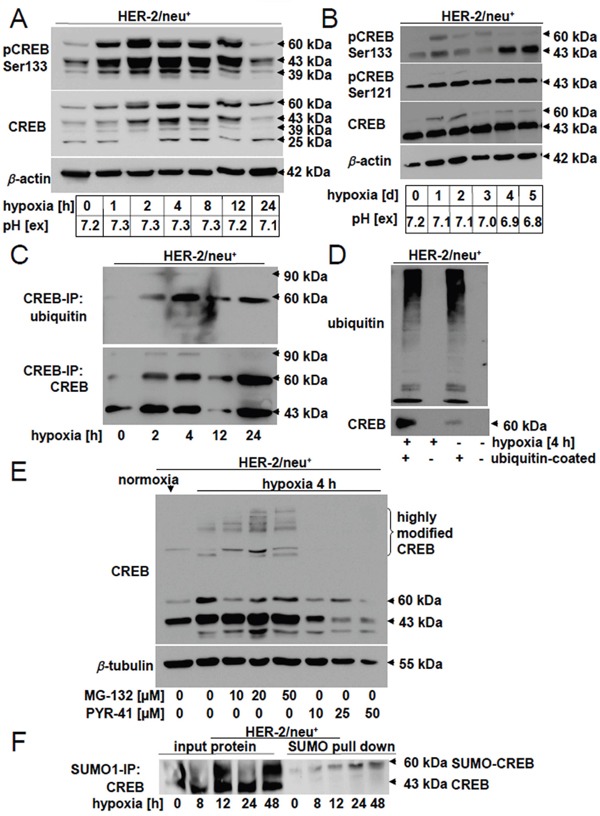
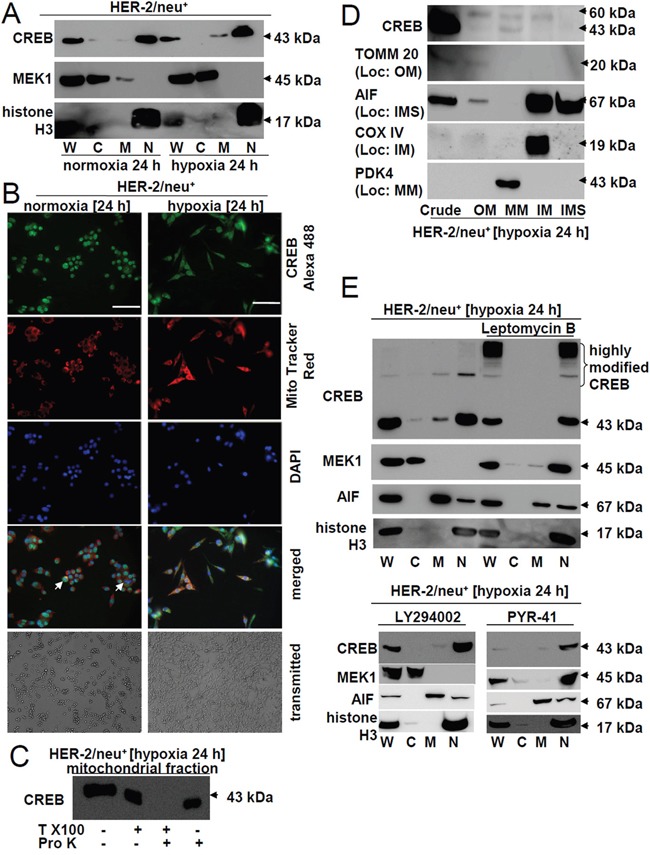
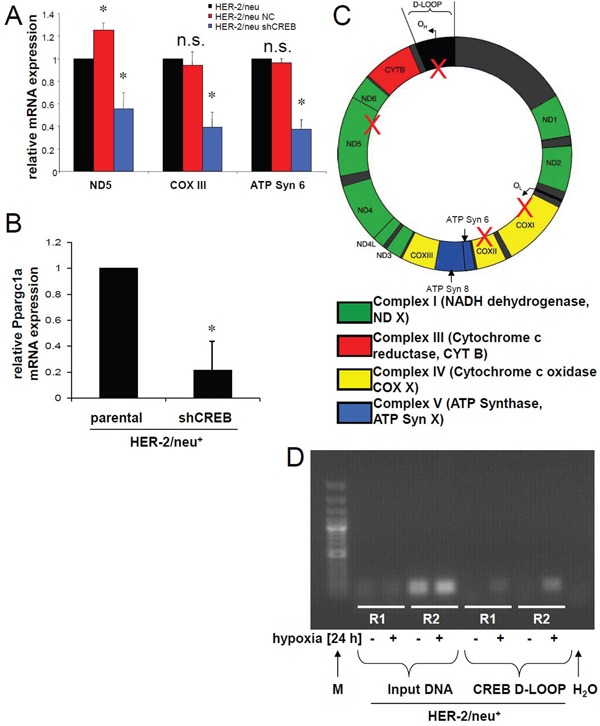
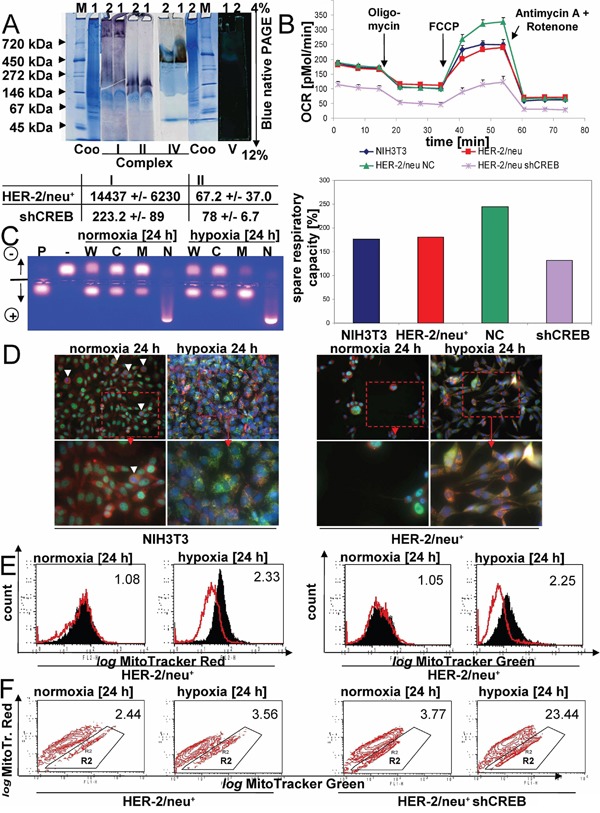
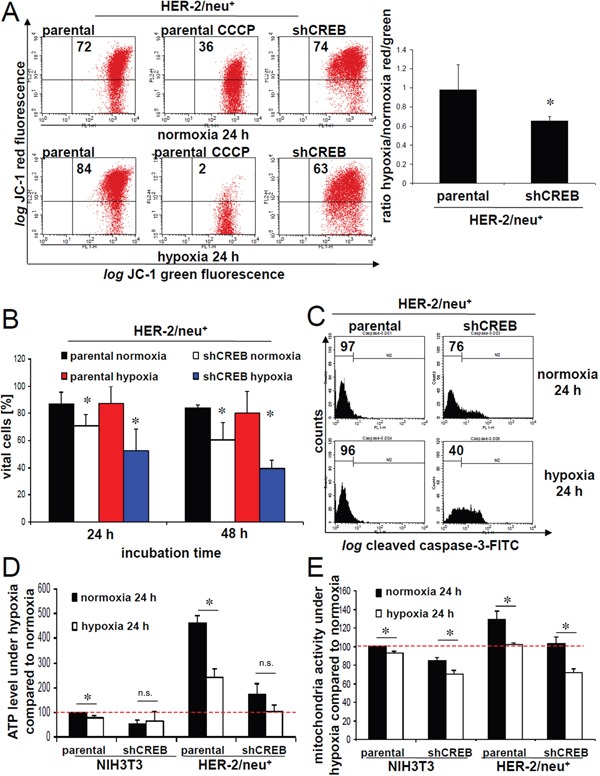
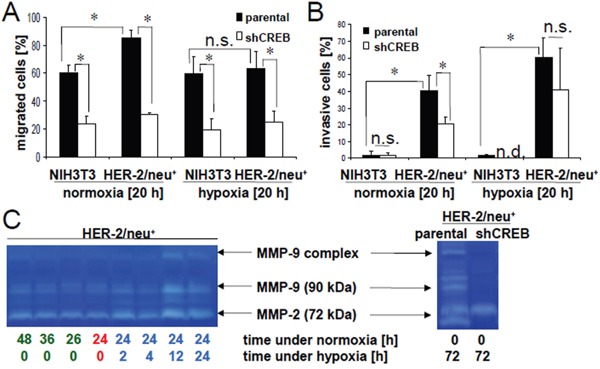
The cAMP-responsive element-binding protein (CREB) is involved in the tumorigenicity of HER-2/neu-overexpressing murine and human tumor cells, but a link between the HER-2/neu-mediated CREB activation, its posttranslational modification and localization and changes in the cellular metabolism, due to an altered (tumor) microenvironment remains to be established. The present study demonstrated that shRNA-mediated silencing of CREB in HER-2/neu-transformed cells resulted in decreased tumor formation, which was associated with reduced angiogenesis, but increased necrotic and hypoxic areas in the tumor. Hypoxia induced pCREBSer133, but not pCREBSer121 expression in HER-2/neu-transformed cells. This was accompanied by upregulation of the hypoxia-inducible genes GLUT1 and VEGF, increased cell migration and matrix metalloproteinase-mediated invasion. Treatment of HER-2/neu+ cells with signal transduction inhibitors targeting in particular HER-2/neu was able to revert hypoxia-controlled CREB activation. In addition to changes in the phosphorylation, hypoxic response of HER-2/neu+ cells caused a transient ubiquitination and SUMOylation as well as a co-localization of nuclear CREB to the mitochondrial matrix. A mitochondrial localization of CREB was also demonstrated in hypoxic areas of HER-2/neu+ mammary carcinoma lesions. This was accompanied by an altered gene expression pattern, activity and metabolism of mitochondria leading to an increased respiratory rate, oxidative phosphorylation and mitochondrial membrane potential and consequently to an enhanced apoptosis and reduced cell viability. These data suggest that the HER-2/neu-mediated CREB activation caused by a hypoxic tumor microenvironment contributes to the neoplastic phenotype of HER-2/neu+ cells at various levels.
环磷酸腺苷反应元件结合蛋白(CREB)参与HER-2/neu过表达的小鼠和人类肿瘤细胞的致瘤性,但HER-2/neu介导的CREB激活、其翻译后修饰和定位与因(肿瘤)微环境改变导致的细胞代谢变化之间的联系仍有待确定。本研究表明,在HER-2/neu转化细胞中,shRNA介导的CREB沉默导致肿瘤形成减少,这与血管生成减少相关,但肿瘤中的坏死和缺氧区域增加。缺氧诱导HER-2/neu转化细胞中pCREBSer133表达,但不诱导pCREBSer121表达。这伴随着缺氧诱导基因GLUT1和VEGF的上调、细胞迁移增加以及基质金属蛋白酶介导的侵袭。用特别针对HER-2/neu的信号转导抑制剂处理HER-2/neu+细胞能够逆转缺氧控制的CREB激活。除了磷酸化变化外,HER-2/neu+细胞的缺氧反应还导致短暂的泛素化和SUMO化以及核CREB与线粒体基质的共定位。在HER-2/neu+乳腺癌病变的缺氧区域也证实了CREB的线粒体定位。这伴随着线粒体基因表达模式、活性和代谢的改变,导致呼吸速率、氧化磷酸化和线粒体膜电位增加,从而导致凋亡增加和细胞活力降低。这些数据表明,缺氧肿瘤微环境引起的HER-2/neu介导的CREB激活在多个水平上促成了HER-2/neu+细胞的肿瘤表型。