Ma Li, Fei Jian, Chen Ying, Zhao Bing, Yang Zhi-Tao, Wang Lu, Sheng Hui-Qiu, Chen Er-Zhen, Mao En-Qiang
Department of Emergency Medicine, Ruijin Hospital Affiliated to Shanghai Jiao Tong University School of Medicine, Shanghai 200025, China.
Department of General Surgery, Ruijin Hospital Affiliated to Shanghai Jiao Tong University School of Medicine, Shanghai 200025, China.
Chin Med J (Engl). 2016 Jul 20;129(14):1731-6. doi: 10.4103/0366-6999.185868.
The expression of dendritic cell-specific intercellular adhesion molecule 3-grabbing nonintegrin (DC-SIGN) in renal tubular epithelial cells has been thought to be highly correlated with the occurrence of several kidney diseases, but whether it takes place in renal tissues during hemorrhagic shock (HS) is unknown. The present study aimed to investigate this phenomenon and the inhibitory effect of Vitamin C (VitC).
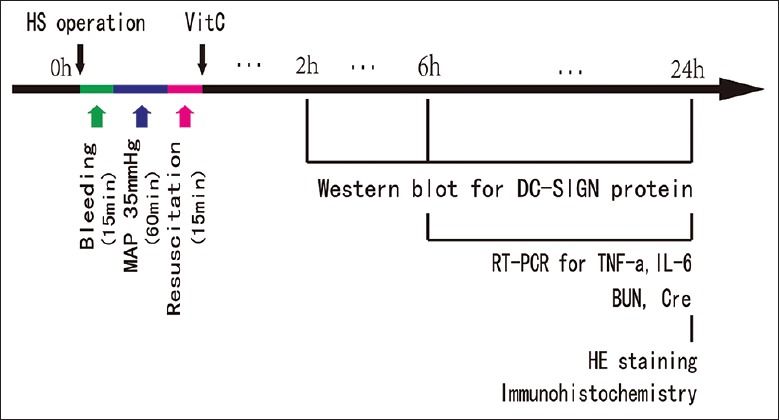
A Sprague-Dawley rat HS model was established in vivo in this study. The expression level and location of DC-SIGN were observed in kidneys. Also, the degree of histological damage, the concentrations of tumor necrosis factor-μ and interleukin-6 in the renal tissues, and the serum concentration of blood urea nitrogen and creatinine at different times (2-24 h) after HS (six rats in each group), with or without VitC treatment before resuscitation, were evaluated.
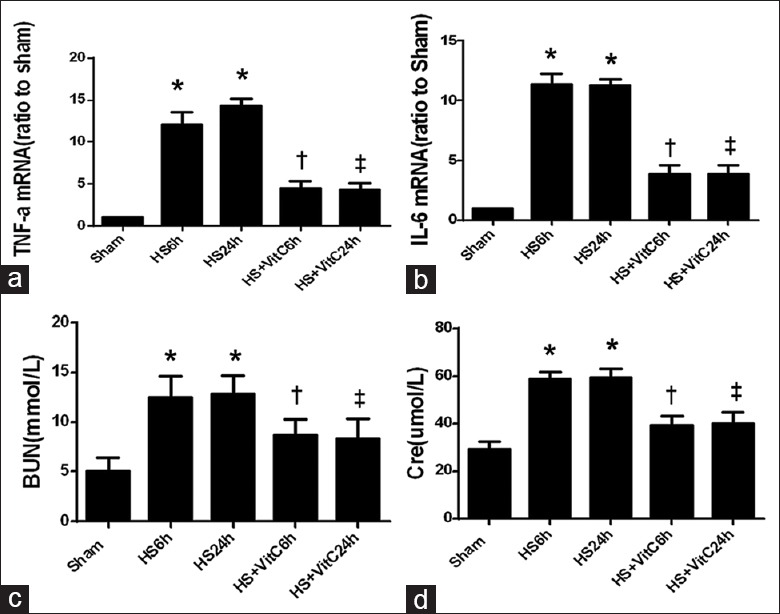
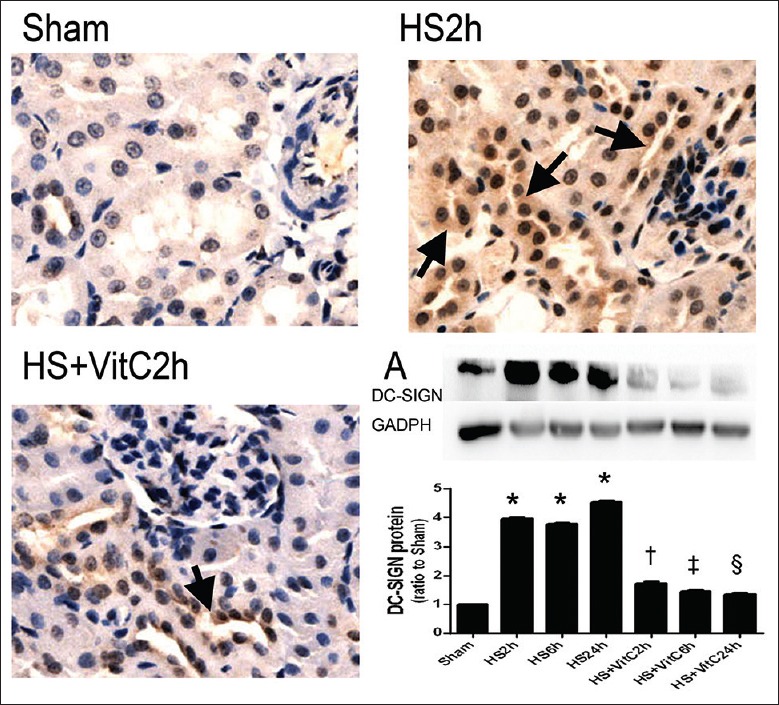
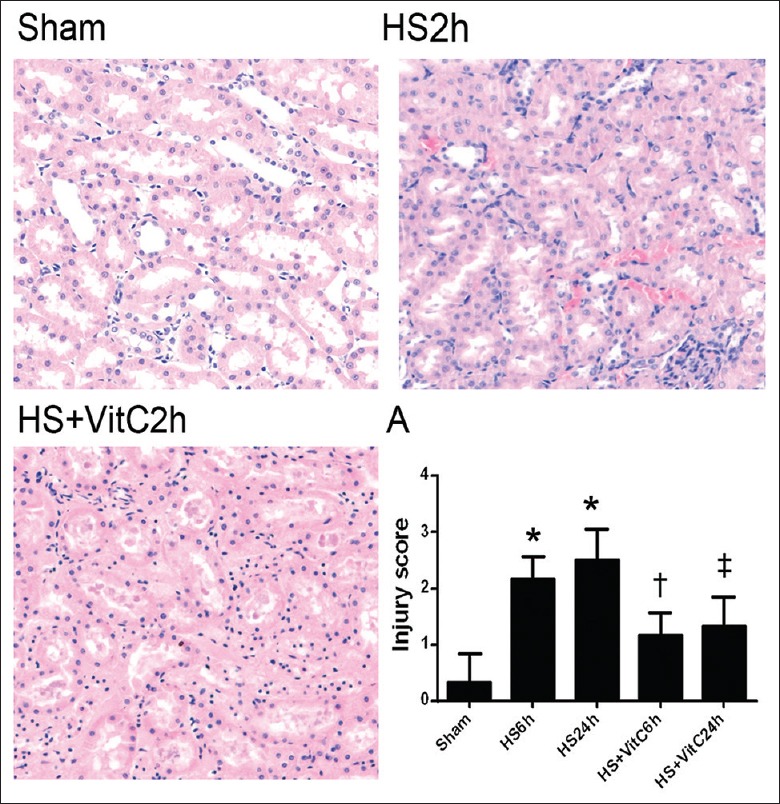
HS induced DC-SIGN expression in rat tubular epithelial cells. The proinflammatory cytokine concentration, histological damage scores, and functional injury of kidneys had increased. All these phenomena induced by HS were relieved when the rats were treated with VitC before resuscitation.
The results of the present study illustrated that HS could induce tubular epithelial cells expressing DC-SIGN, and the levels of proinflammatory cytokines in the kidney tissues improved correspondingly. The results also indicated that VitC could suppress the DC-SIGN expression in the tubular epithelial cells induced by HS and alleviate the inflammation and functional injury in the kidney.
树突状细胞特异性细胞间黏附分子3结合非整合素(DC-SIGN)在肾小管上皮细胞中的表达被认为与多种肾脏疾病的发生高度相关,但在失血性休克(HS)期间肾脏组织中是否发生这种情况尚不清楚。本研究旨在探讨这一现象以及维生素C(VitC)的抑制作用。
本研究在体内建立了Sprague-Dawley大鼠HS模型。观察肾脏中DC-SIGN的表达水平和定位。此外,评估了复苏前有无VitC治疗的情况下,HS后不同时间(2 - 24小时)肾组织中肿瘤坏死因子 - μ和白细胞介素 - 6的浓度、组织学损伤程度以及血清尿素氮和肌酐浓度(每组6只大鼠)。
HS诱导大鼠肾小管上皮细胞中DC-SIGN表达。促炎细胞因子浓度、组织学损伤评分和肾脏功能损伤均增加。当大鼠在复苏前用VitC治疗时,HS诱导的所有这些现象均得到缓解。
本研究结果表明,HS可诱导肾小管上皮细胞表达DC-SIGN,肾脏组织中促炎细胞因子水平相应升高。结果还表明,VitC可抑制HS诱导的肾小管上皮细胞中DC-SIGN的表达,并减轻肾脏中的炎症和功能损伤。