Fukutani Atsuki, Misaki Jun, Isaka Tadao
Research Organization of Science and Technology, Ritsumeikan University, Kusatsu, Shiga, Japan.
Japan Society for the Promotion of Science, Research Fellowship for Young Scientists, Chiyoda-ku, Tokyo, Japan.
PLoS One. 2016 Jul 14;11(7):e0159058. doi: 10.1371/journal.pone.0159058. eCollection 2016.
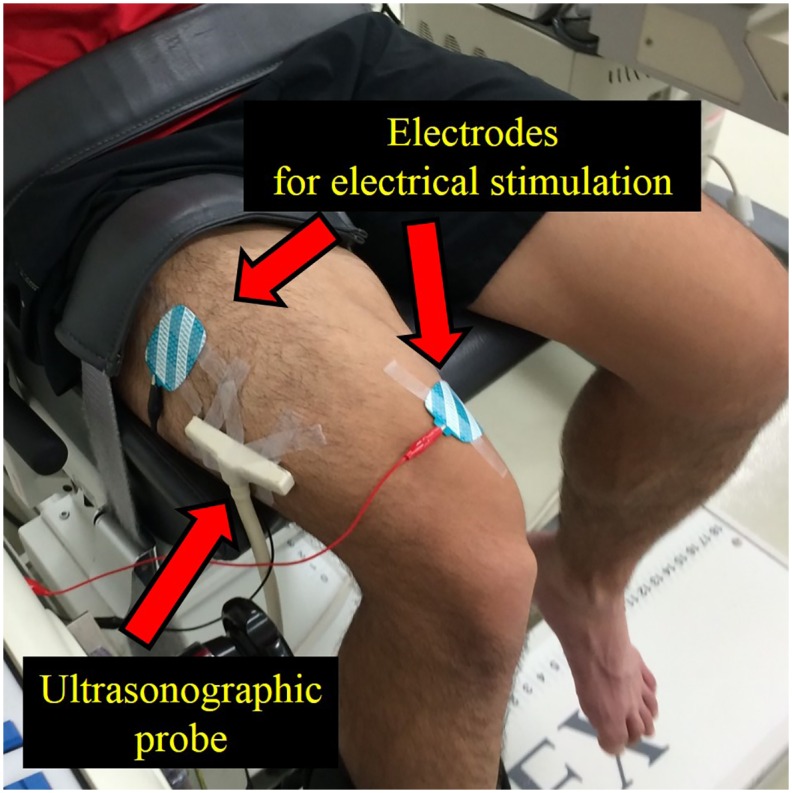
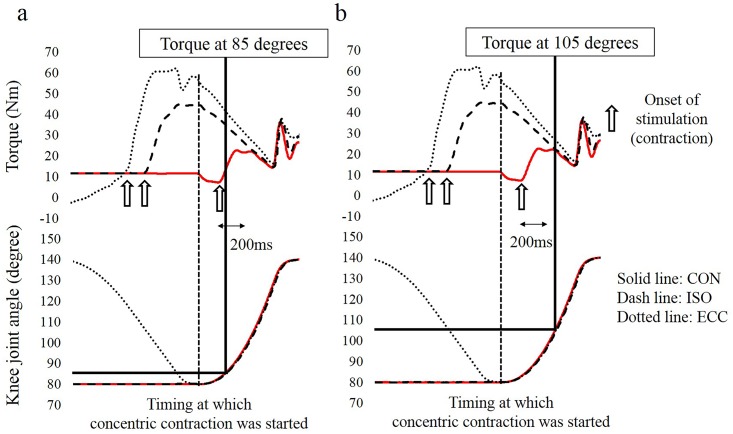
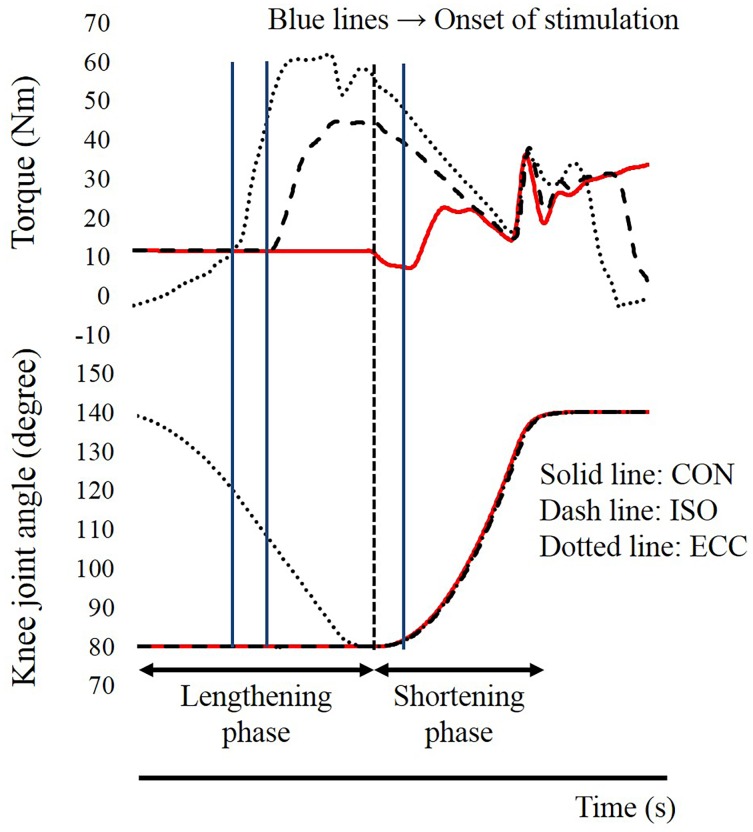
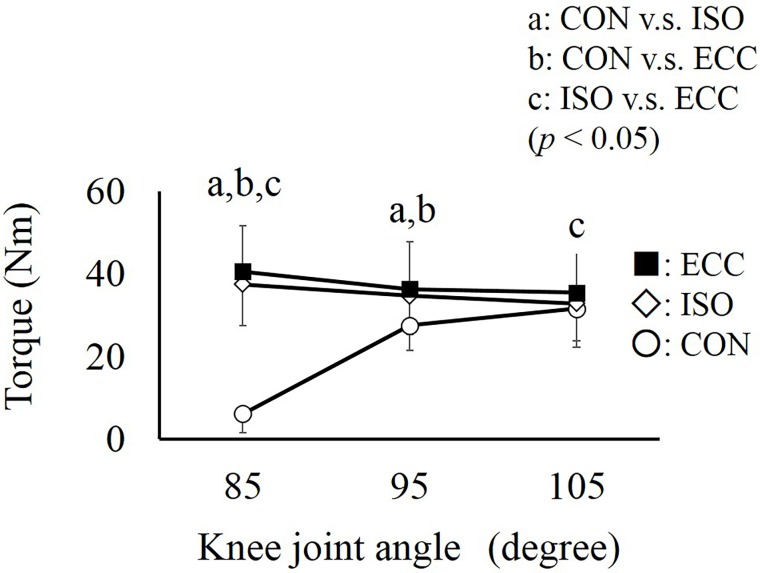
The stretch-shortening cycle is one of the most interesting topics in the field of sport sciences, because the performance of human movement is enhanced by the stretch-shortening cycle (eccentric contraction). The purpose of the present study was to examine whether the influence of preactivation on the torque enhancement by stretch-shortening cycle in knee extensors. Twelve men participated in this study. The following three conditions were conducted for knee extensors: (1) concentric contraction without preactivation (CON), (2) concentric contraction with eccentric preactivation (ECC), and (3) concentric contraction with isometric preactivation (ISO). Muscle contractions were evoked by electrical stimulation to discard the influence of neural activity. The range of motion of the knee joint was set from 80 to 140 degrees (full extension = 180 degrees). Angular velocities of the concentric and eccentric contractions were set at 180 and 90 degrees/s, respectively. In the concentric contraction phase, joint torques were recorded at 85, 95, and 105 degrees, and they were compared among the three conditions. In the early phase (85 degrees) of concentric contraction, the joint torque was larger in the ECC and ISO conditions than in the CON condition. However, these clear differences disappeared in the later phase (105 degrees) of concentric contraction. The results showed that joint torque was clearly different among the three conditions in the early phase whereas this difference disappeared in the later phase. Thus, preactivation, which is prominent in the early phase of contractions, plays an important role in torque enhancement by the stretch-shortening cycle in knee extensors.
拉长-缩短周期是运动科学领域最有趣的话题之一,因为人体运动表现会因拉长-缩短周期(离心收缩)而得到增强。本研究的目的是检验预激活对膝关节伸肌拉长-缩短周期增强扭矩的影响。12名男性参与了本研究。对膝关节伸肌进行了以下三种情况的测试:(1)无预激活的向心收缩(CON),(2)有离心预激活的向心收缩(ECC),以及(3)有等长预激活的向心收缩(ISO)。通过电刺激诱发肌肉收缩以消除神经活动的影响。膝关节的活动范围设定为80至140度(完全伸展 = 180度)。向心和离心收缩的角速度分别设定为180和90度/秒。在向心收缩阶段,在85、95和105度记录关节扭矩,并在三种情况下进行比较。在向心收缩的早期阶段(85度),ECC和ISO情况下的关节扭矩大于CON情况。然而,这些明显差异在向心收缩的后期阶段(105度)消失了。结果表明,在早期阶段三种情况的关节扭矩明显不同,而在后期阶段这种差异消失了。因此,在收缩早期阶段突出的预激活在膝关节伸肌拉长-缩短周期增强扭矩中起重要作用。