Ramakrishnan M, Antony Ceasar S, Duraipandiyan V, Vinod K K, Kalpana Krishnan, Al-Dhabi N A, Ignacimuthu S
Division of Plant Biotechnology, Entomology Research Institute, Loyola College, Chennai, India.
Centre for Plant Sciences and School of Molecular and Cellular Biology, Faculty of Biological Sciences, University of Leeds, Leeds, United Kingdom.
PLoS One. 2016 Jul 14;11(7):e0159264. doi: 10.1371/journal.pone.0159264. eCollection 2016.
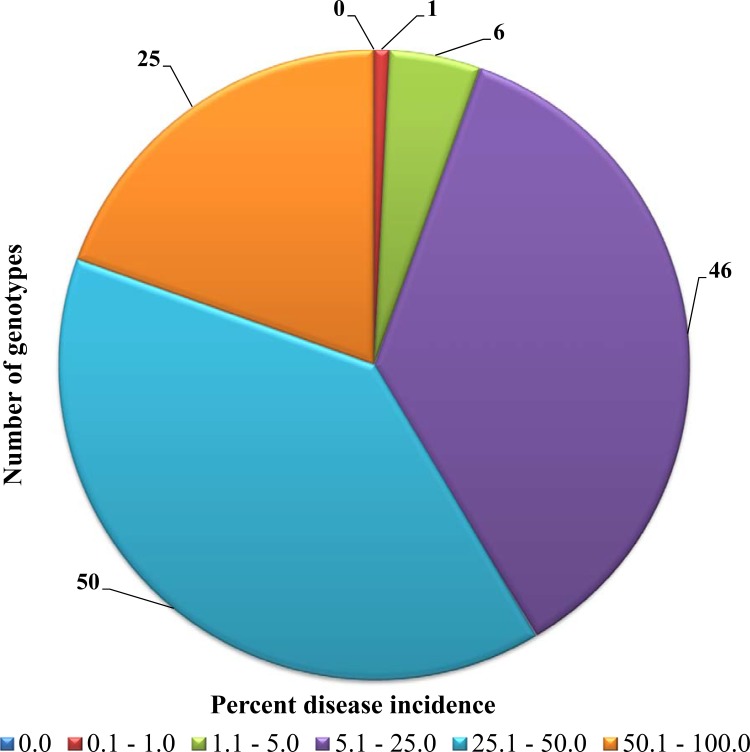
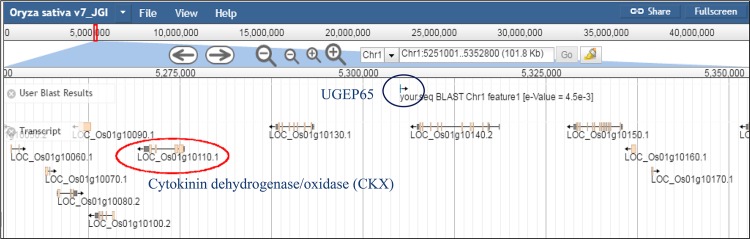
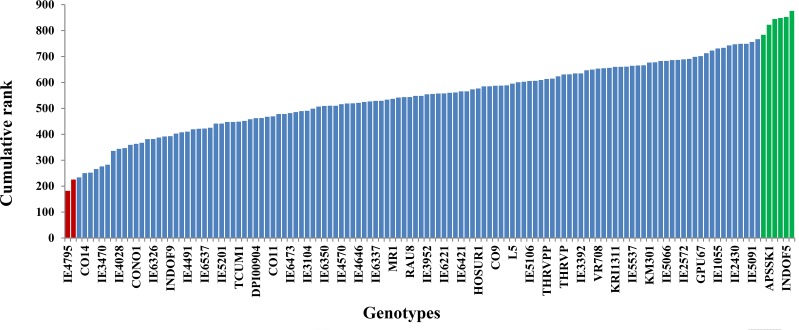
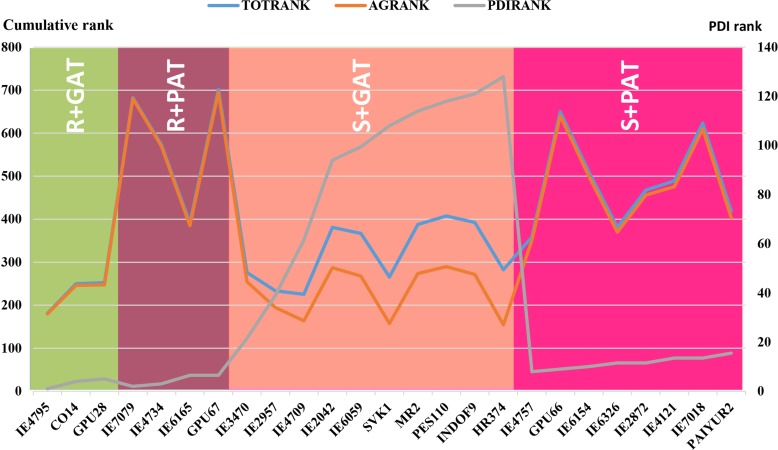
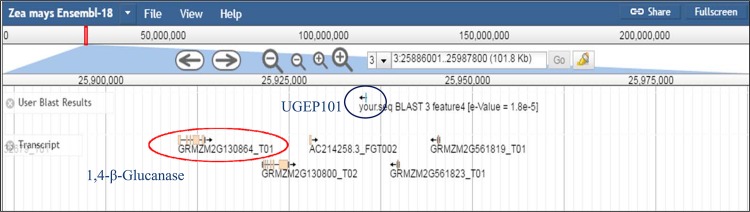
Finger millet is one of the small millets with high nutritive value. This crop is vulnerable to blast disease caused by Pyricularia grisea, which occurs annually during rainy and winter seasons. Leaf blast occurs at early crop stage and is highly damaging. Mapping of resistance genes and other quantitative trait loci (QTLs) for agronomic performance can be of great use for improving finger millet genotypes. Evaluation of one hundred and twenty-eight finger millet genotypes in natural field conditions revealed that leaf blast caused severe setback on agronomic performance for susceptible genotypes, most significant traits being plant height and root length. Plant height was reduced under disease severity while root length was increased. Among the genotypes, IE4795 showed superior response in terms of both disease resistance and better agronomic performance. A total of seven unambiguous QTLs were found to be associated with various agronomic traits including leaf blast resistance by association mapping analysis. The markers, UGEP101 and UGEP95, were strongly associated with blast resistance. UGEP98 was associated with tiller number and UGEP9 was associated with root length and seed yield. Cross species validation of markers revealed that 12 candidate genes were associated with 8 QTLs in the genomes of grass species such as rice, foxtail millet, maize, Brachypodium stacei, B. distachyon, Panicum hallii and switchgrass. Several candidate genes were found proximal to orthologous sequences of the identified QTLs such as 1,4-β-glucanase for leaf blast resistance, cytokinin dehydrogenase (CKX) for tiller production, calmodulin (CaM) binding protein for seed yield and pectin methylesterase inhibitor (PMEI) for root growth and development. Most of these QTLs and their putatively associated candidate genes are reported for first time in finger millet. On validation, these novel QTLs may be utilized in future for marker assisted breeding for the development of fungal resistant and high yielding varieties of finger millet.
黍是具有高营养价值的小谷物之一。这种作物易受稻瘟病菌引起的稻瘟病影响,该病在雨季和冬季每年都会发生。叶瘟在作物生长早期出现,危害极大。绘制抗性基因和其他与农艺性状相关的数量性状位点(QTL)图谱,对于改良黍基因型可能非常有用。在自然田间条件下对128个黍基因型进行评估发现,叶瘟对感病基因型的农艺性状造成了严重挫折,最显著的性状是株高和根长。在病情严重时株高降低而根长增加。在这些基因型中,IE4795在抗病性和更好的农艺性状方面表现出优异的反应。通过关联图谱分析共发现7个明确的QTL与包括抗叶瘟在内的各种农艺性状相关。标记UGE101和UGE95与抗瘟性密切相关。UGE98与分蘖数相关,UGE9与根长和种子产量相关。标记的跨物种验证表明,12个候选基因与水稻、谷子、玉米、短柄草、二穗短柄草、哈利披碱草和柳枝稷等禾本科物种基因组中的8个QTL相关。在已鉴定QTL的直系同源序列附近发现了几个候选基因,如抗叶瘟的1,4-β-葡聚糖酶、控制分蘖产生的细胞分裂素脱氢酶(CKX)、影响种子产量的钙调蛋白(CaM)结合蛋白以及参与根生长发育的果胶甲基酯酶抑制剂(PMEI)。这些QTL及其推定的相关候选基因大多是在黍中首次报道。经验证后,这些新的QTL未来可用于标记辅助育种,以培育抗真菌和高产的黍品种。