Youngstrom D W, Dishowitz M I, Bales C B, Carr E, Mutyaba P L, Kozloff K M, Shitaye H, Hankenson K D, Loomes K M
Department of Small Animal Clinical Sciences, Michigan State University, East Lansing, MI, United States; Department of Physiology, Michigan State University, East Lansing, MI, United States.
Department of Bioengineering, University of Pennsylvania, Philadelphia, PA, United States.
Bone. 2016 Oct;91:64-74. doi: 10.1016/j.bone.2016.07.006. Epub 2016 Jul 12.
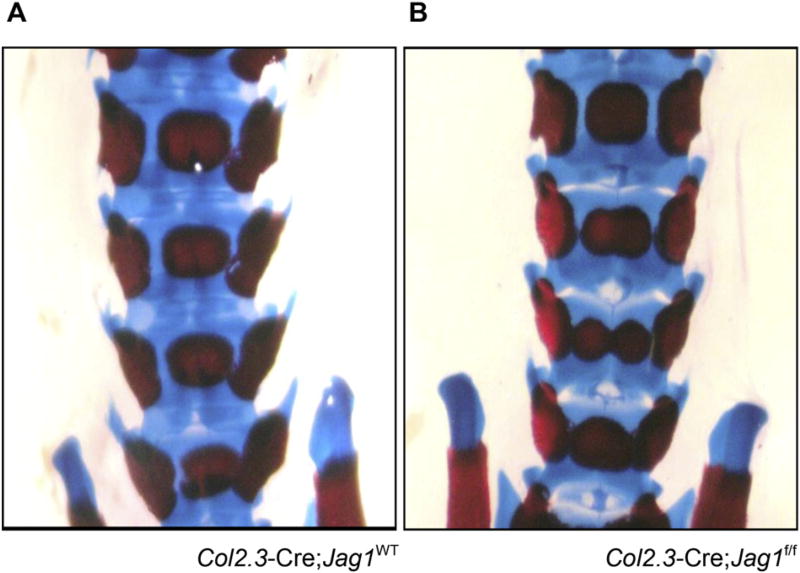
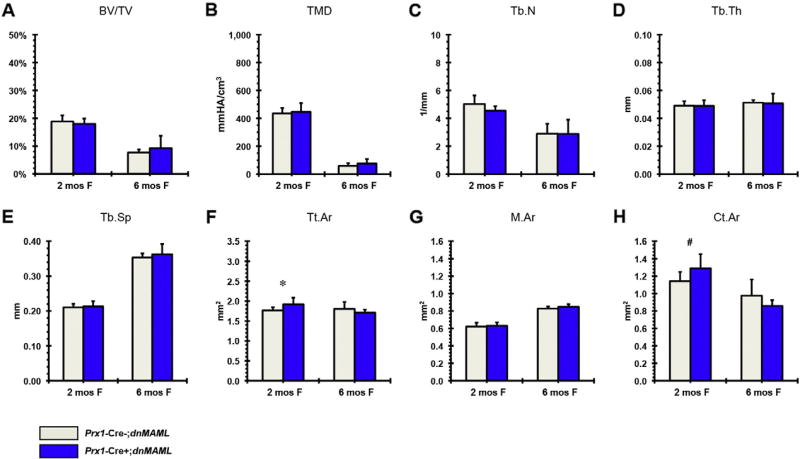
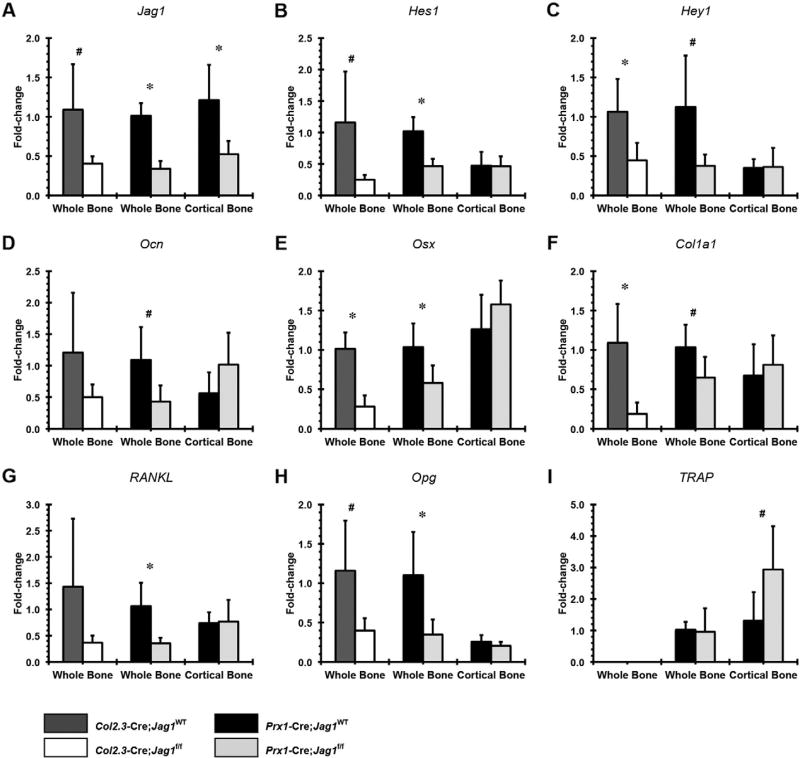
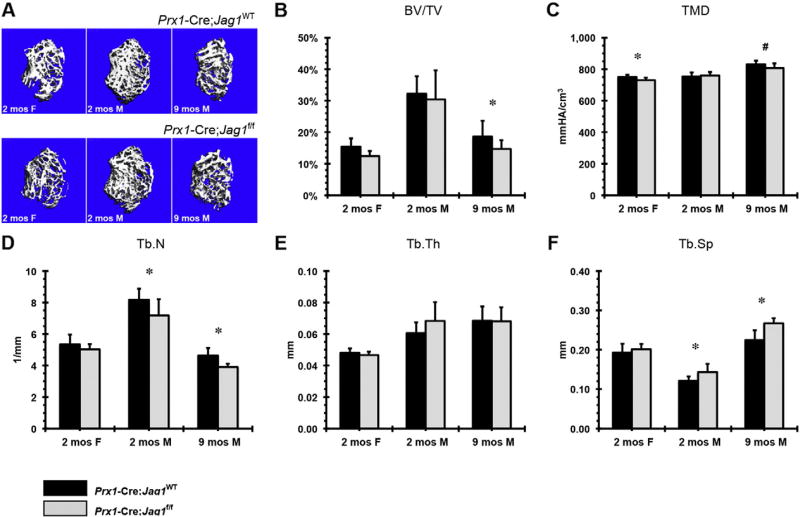
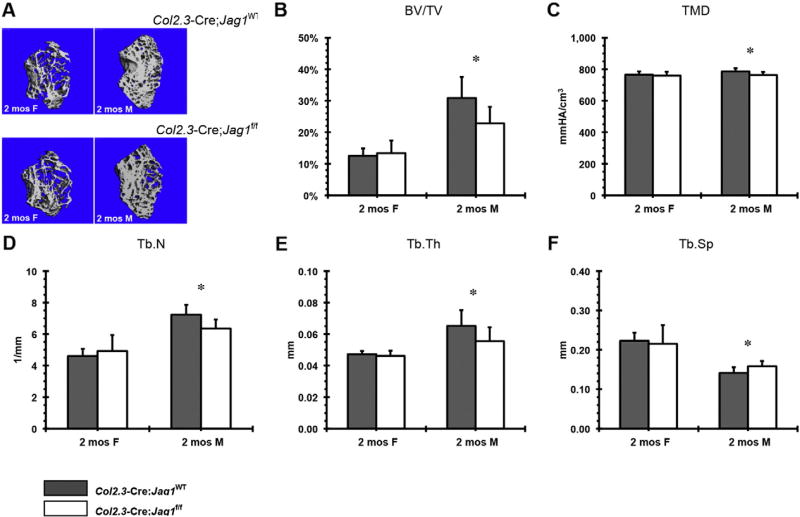
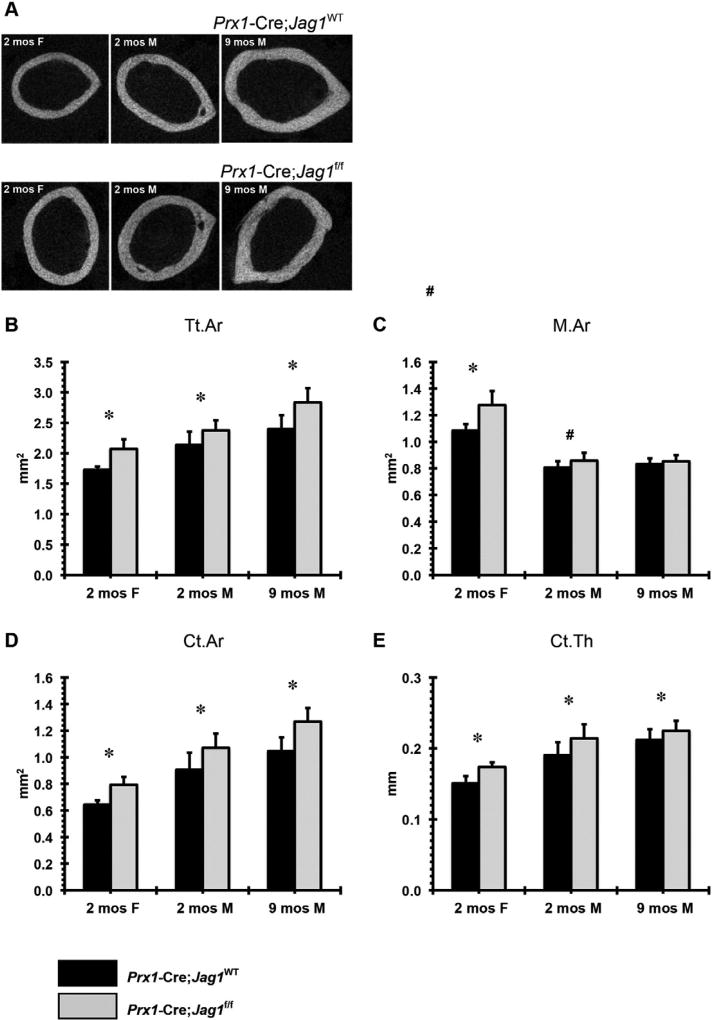
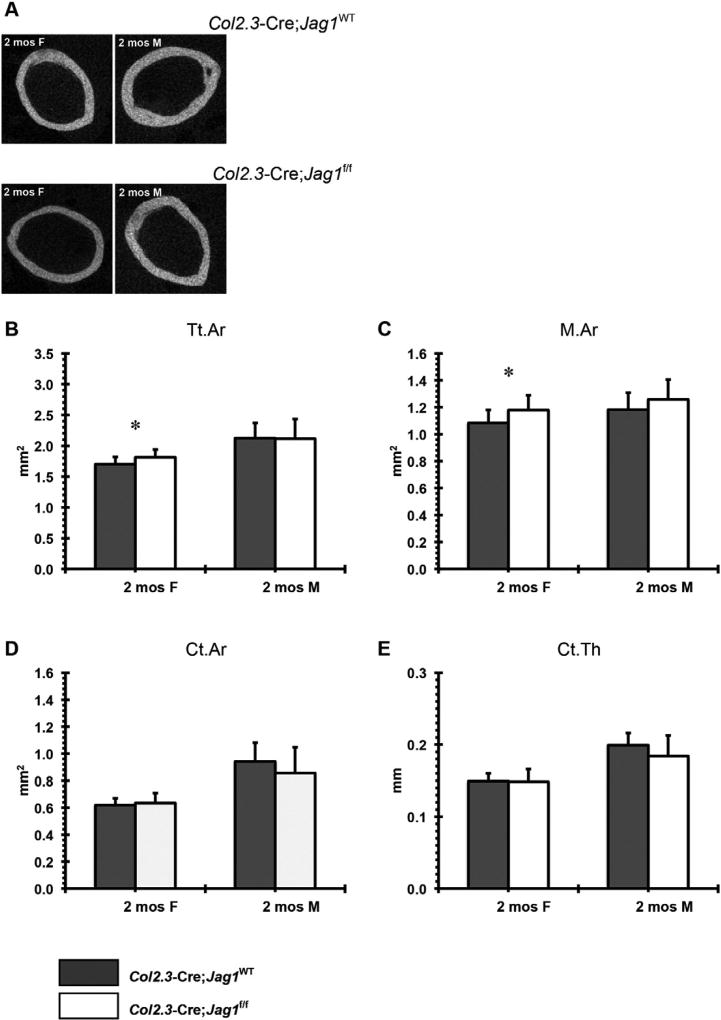
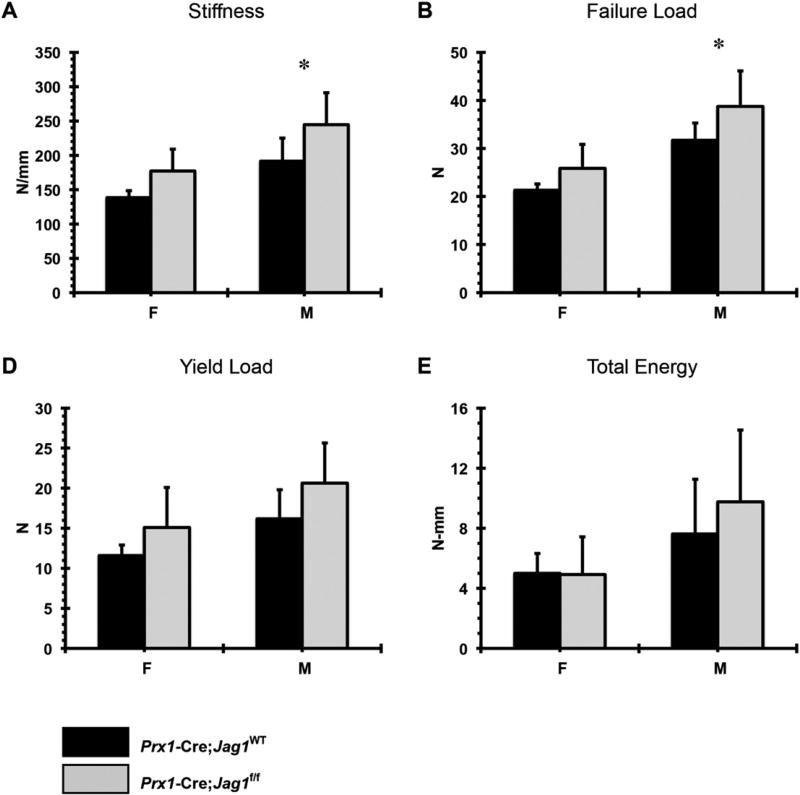
Loss-of-function mutations in the Notch ligand, Jagged1 (Jag1), result in multi-system developmental pathologies associated with Alagille syndrome (ALGS). ALGS patients present with skeletal manifestations including hemi-vertebrae, reduced bone mass, increased fracture incidence and poor bone healing. However, it is not known whether the increased fracture risk is due to altered bone homeostasis (primary) or nutritional malabsorption due to chronic liver disease (secondary). To determine the significance of Jag1 loss in bone, we characterized the skeletal phenotype of two Jag1-floxed conditional knockout mouse models: Prx1-Cre;Jag1(f/f) to target osteoprogenitor cells and their progeny, and Col2.3-Cre;Jag1(f/f) to target mid-stage osteoblasts and their progeny. Knockout phenotypes were compared to wild-type (WT) controls using quantitative micro-computed tomography, gene expression profiling and mechanical testing. Expression of Jag1 and the Notch target genes Hes1 and Hey1 was downregulated in all Jag1 knockout mice. Osteoblast differentiation genes were downregulated in whole bone of both groups, but unchanged in Prx1-Cre;Jag1(f/f) cortical bone. Both knockout lines exhibited changes in femoral trabecular morphology including decreased bone volume fraction and increased trabecular spacing, with males presenting a more severe trabecular osteopenic phenotype. Prx1-Cre;Jag1(f/f) mice showed an increase in marrow mesenchymal progenitor cell number and, counterintuitively, developed increased cortical thickness resulting from periosteal expansion, translating to greater mechanical stiffness and strength. Similar alterations in femoral morphology were observed in mice with canonical Notch signaling disrupted using Prx1-Cre-regulatable dominant-negative mastermind like-protein (dnMAML). Taken together, we report that 1) Jag1 negatively regulates the marrow osteochondral progenitor pool, 2) Jag1 is required for normal trabecular bone formation and 3) Notch signaling through homotypic Jag1 signaling in osteochondral progenitors, but not mature osteoblasts, inhibits periosteal expansion. Therefore, Jag1 signaling within the osteoblast lineage regulates bone metabolism in a compartment-dependent manner. Moreover, loss of Jag1 function in osteoblast lineage cells may contribute to the skeletal phenotype associated with ALGS.
Notch配体Jagged1(Jag1)的功能丧失突变会导致与阿拉吉列综合征(ALGS)相关的多系统发育病理。ALGS患者会出现骨骼表现,包括半椎体、骨量减少、骨折发生率增加和骨愈合不良。然而,尚不清楚骨折风险增加是由于骨内稳态改变(原发性)还是慢性肝病导致的营养吸收不良(继发性)。为了确定Jag1缺失在骨骼中的意义,我们对两种Jag1基因 floxed 条件性敲除小鼠模型的骨骼表型进行了表征:Prx1-Cre;Jag1(f/f)用于靶向骨祖细胞及其后代,Col2.3-Cre;Jag1(f/f)用于靶向中期成骨细胞及其后代。使用定量微计算机断层扫描、基因表达谱分析和力学测试将敲除表型与野生型(WT)对照进行比较。在所有Jag1敲除小鼠中,Jag1以及Notch靶基因Hes1和Hey1的表达均下调。两组全骨中成骨细胞分化基因均下调,但在Prx1-Cre;Jag1(f/f)皮质骨中未发生变化。两个敲除系均表现出股骨小梁形态的改变,包括骨体积分数降低和小梁间距增加,雄性呈现出更严重的小梁骨质减少表型。Prx1-Cre;Jag1(f/f)小鼠的骨髓间充质祖细胞数量增加,并且与直觉相反,由于骨膜扩张导致皮质厚度增加,从而转化为更大的机械刚度和强度。在使用Prx1-Cre可调节的显性负性主调控蛋白样蛋白(dnMAML)破坏经典Notch信号的小鼠中,观察到股骨形态有类似改变。综上所述,我们报告:1)Jag1负向调节骨髓骨软骨祖细胞池;2)Jag1是正常小梁骨形成所必需的;3)通过骨软骨祖细胞中同型Jag1信号而非成熟成骨细胞中的Notch信号抑制骨膜扩张。因此,成骨细胞谱系内的Jag1信号以区室依赖性方式调节骨代谢。此外,成骨细胞谱系细胞中Jag1功能的丧失可能导致与ALGS相关的骨骼表型。