Ito Takeshi, Matsubara Daisuke, Tanaka Ichidai, Makiya Kanae, Tanei Zen-Ichi, Kumagai Yuki, Shiu Shu-Jen, Nakaoka Hiroki J, Ishikawa Shumpei, Isagawa Takayuki, Morikawa Teppei, Shinozaki-Ushiku Aya, Goto Yasushi, Nakano Tomoyuki, Tsuchiya Takehiro, Tsubochi Hiroyoshi, Komura Daisuke, Aburatani Hiroyuki, Dobashi Yoh, Nakajima Jun, Endo Shunsuke, Fukayama Masashi, Sekido Yoshitaka, Niki Toshiro, Murakami Yoshinori
Molecular Pathology Laboratory, Institute of Medical Science, University of Tokyo, Tokyo, Japan.
Department of Integrative Pathology, Jichi Medical University, Tochigi, Japan.
Cancer Sci. 2016 Oct;107(10):1527-1538. doi: 10.1111/cas.13013. Epub 2016 Sep 9.
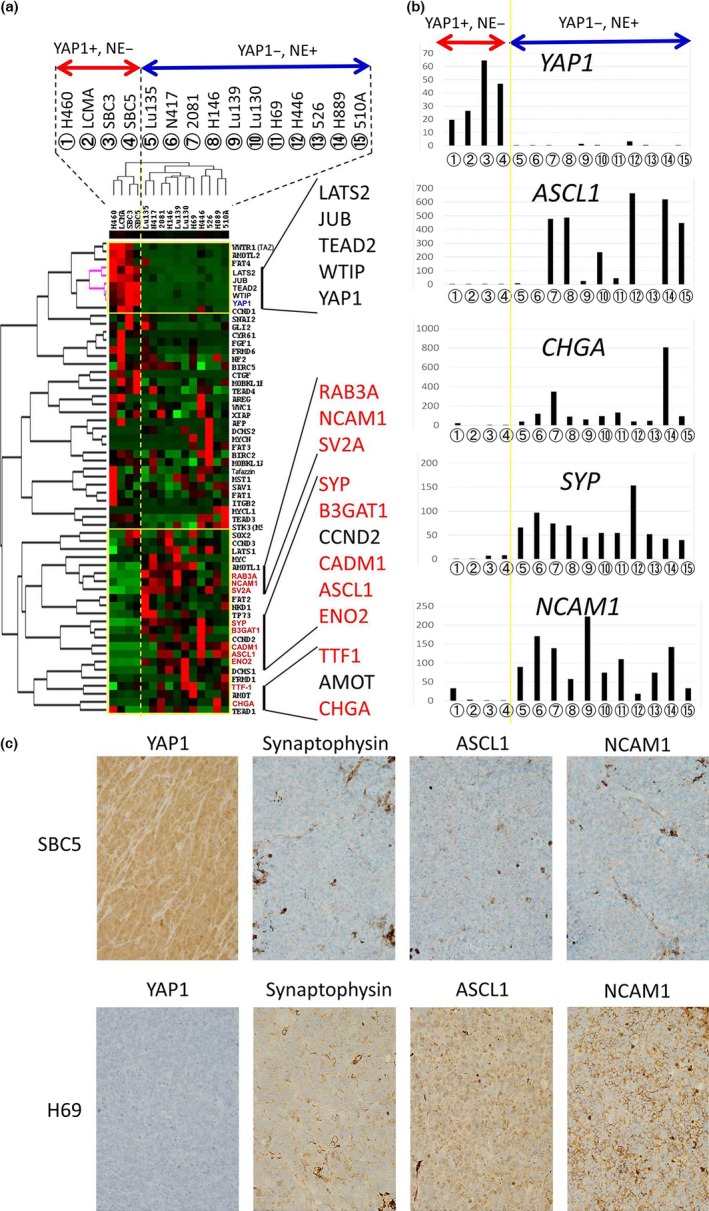
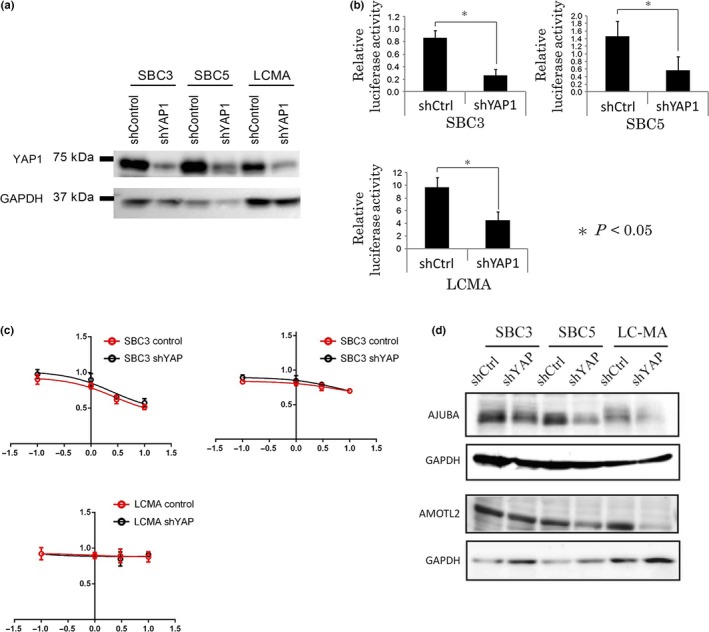
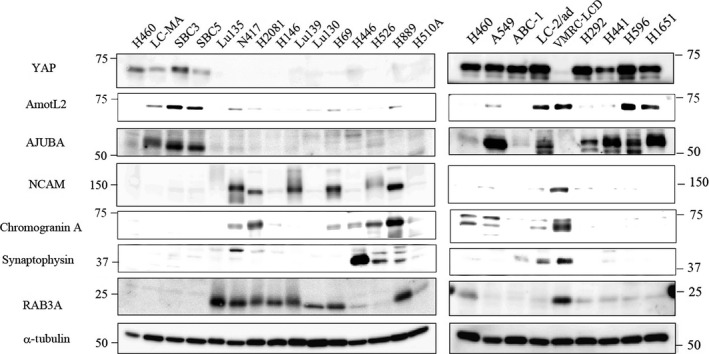
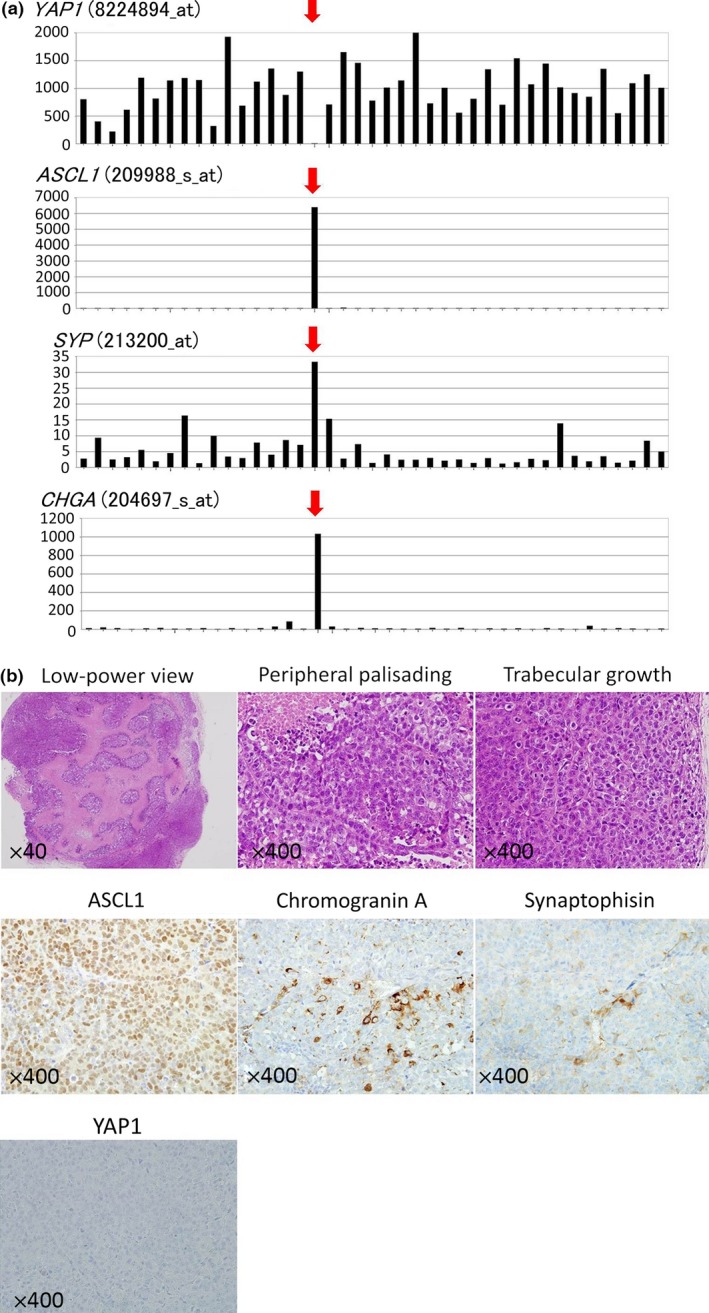
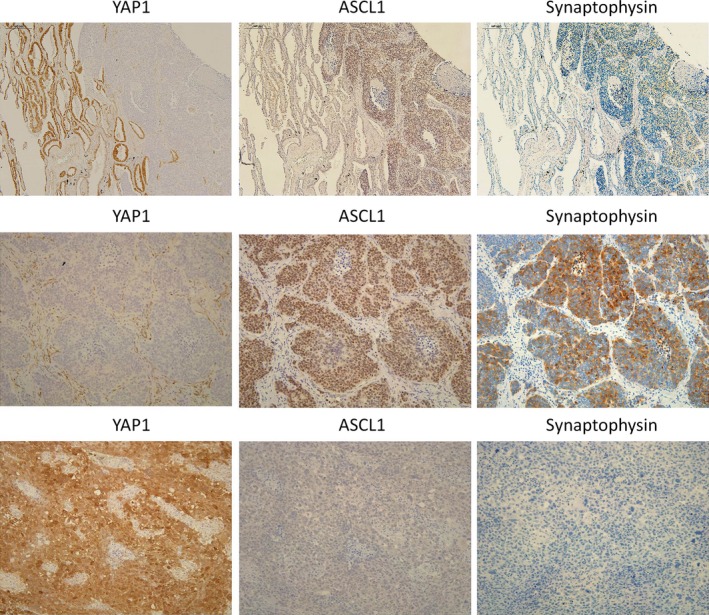
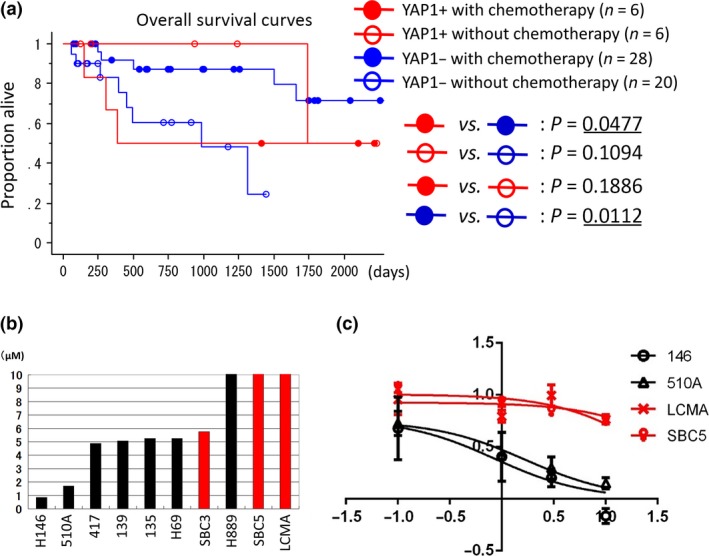
YAP1, the main Hippo pathway effector, is a potent oncogene and is overexpressed in non-small-cell lung cancer (NSCLC); however, the YAP1 expression pattern in small-cell lung cancer (SCLC) has not yet been elucidated in detail. We report that the loss of YAP1 is a special feature of high-grade neuroendocrine lung tumors. A hierarchical cluster analysis of 15 high-grade neuroendocrine tumor cell lines containing 14 SCLC cell lines that depended on the genes of Hippo pathway molecules and neuroendocrine markers clearly classified these lines into two groups: the YAP1-negative and neuroendocrine marker-positive group (n = 11), and the YAP1-positive and neuroendocrine marker-negative group (n = 4). Among the 41 NSCLC cell lines examined, the loss of YAP1 was only observed in one cell line showing the strong expression of neuroendocrine markers. Immunostaining for YAP1, using the sections of 189 NSCLC, 41 SCLC, and 30 large cell neuroendocrine carcinoma (LCNEC) cases, revealed that the loss of YAP1 was common in SCLC (40/41, 98%) and LCNEC (18/30, 60%), but was rare in NSCLC (6/189, 3%). Among the SCLC and LCNEC cases tested, the loss of YAP1 correlated with the expression of neuroendocrine markers, and a survival analysis revealed that YAP1-negative cases were more chemosensitive than YAP1-positive cases. Chemosensitivity test for cisplatin using YAP1-positive/YAP1-negative SCLC cell lines also showed compatible results. YAP1-sh-mediated knockdown induced the neuroendocrine marker RAB3a, which suggested the possible involvement of YAP1 in the regulation of neuroendocrine differentiation. Thus, we showed that the loss of YAP1 has potential as a clinical marker for predicting neuroendocrine features and chemosensitivity.
Yes相关蛋白1(YAP1)是Hippo信号通路的主要效应因子,是一种强大的致癌基因,在非小细胞肺癌(NSCLC)中过表达;然而,小细胞肺癌(SCLC)中YAP1的表达模式尚未得到详细阐明。我们报告YAP1缺失是高级别神经内分泌性肺肿瘤的一个特殊特征。对15个高级别神经内分泌肿瘤细胞系进行层次聚类分析,其中包括14个依赖Hippo信号通路分子基因和神经内分泌标志物的SCLC细胞系,这些细胞系被明确分为两组:YAP1阴性且神经内分泌标志物阳性组(n = 11)和YAP1阳性且神经内分泌标志物阴性组(n = 4)。在检测的41个NSCLC细胞系中,仅在一个显示神经内分泌标志物强表达的细胞系中观察到YAP1缺失。对189例NSCLC、41例SCLC和30例大细胞神经内分泌癌(LCNEC)病例的切片进行YAP1免疫染色,结果显示YAP1缺失在SCLC(40/41,98%)和LCNEC(18/30,60%)中很常见,但在NSCLC中很少见(6/189,3%)。在检测的SCLC和LCNEC病例中,YAP1缺失与神经内分泌标志物的表达相关,生存分析显示YAP1阴性病例比YAP1阳性病例对化疗更敏感。使用YAP1阳性/YAP1阴性SCLC细胞系进行顺铂化疗敏感性测试也显示了一致的结果。YAP1短发夹RNA介导的敲低诱导了神经内分泌标志物RAB3a,这表明YAP1可能参与神经内分泌分化的调控。因此,我们表明YAP1缺失有潜力作为预测神经内分泌特征和化疗敏感性的临床标志物。