Suzuki Yuko, Sano Hideto, Tomczyk Martyna, Brzoska Tomasz, Urano Tetsumei
Department of Medical Physiology Hamamatsu University School of Medicine Japan.
FEBS Open Bio. 2016 Apr 1;6(5):469-76. doi: 10.1002/2211-5463.12057. eCollection 2016 May.
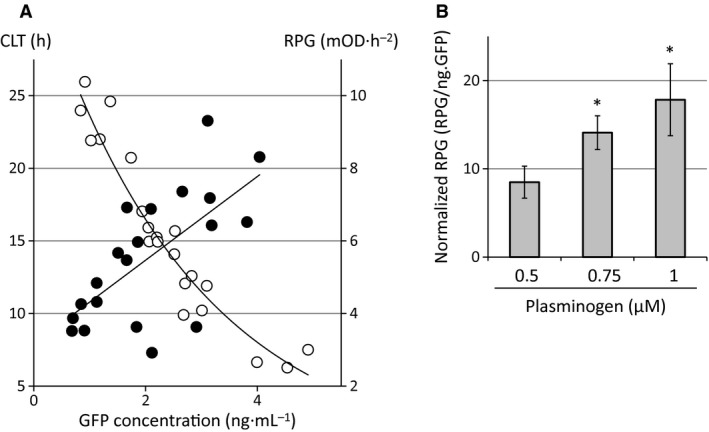
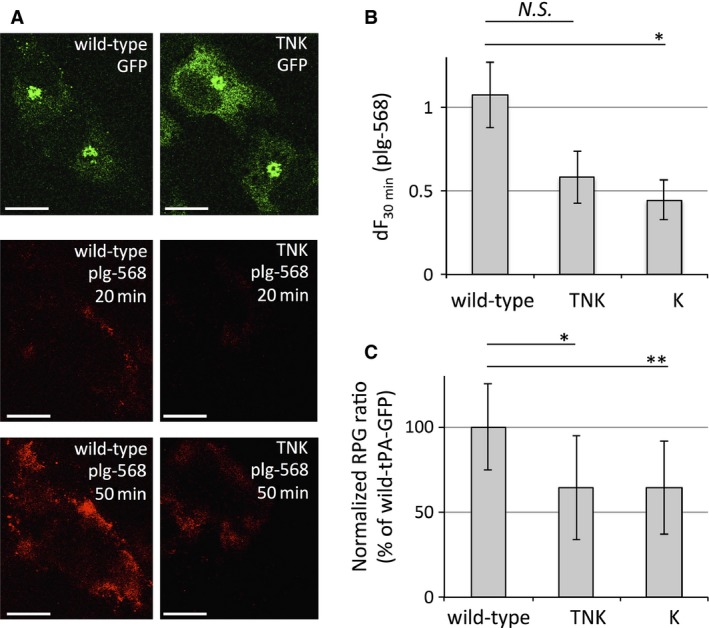
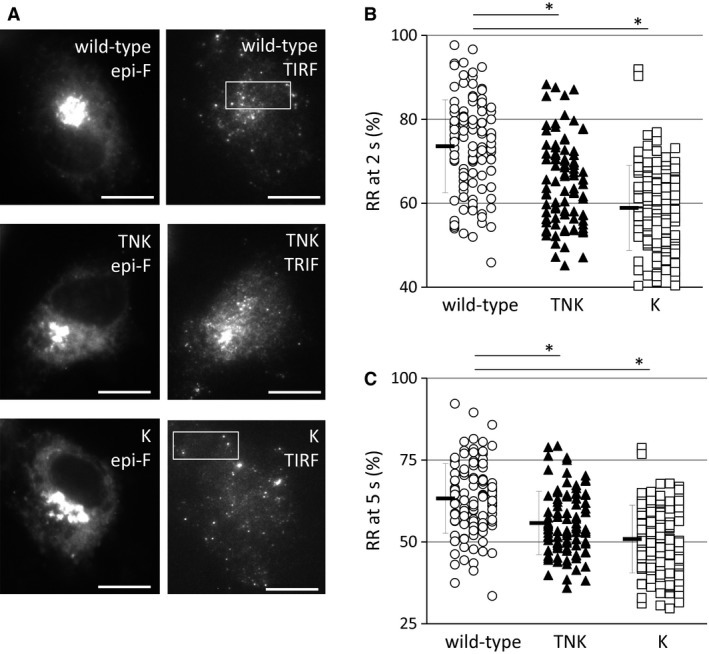
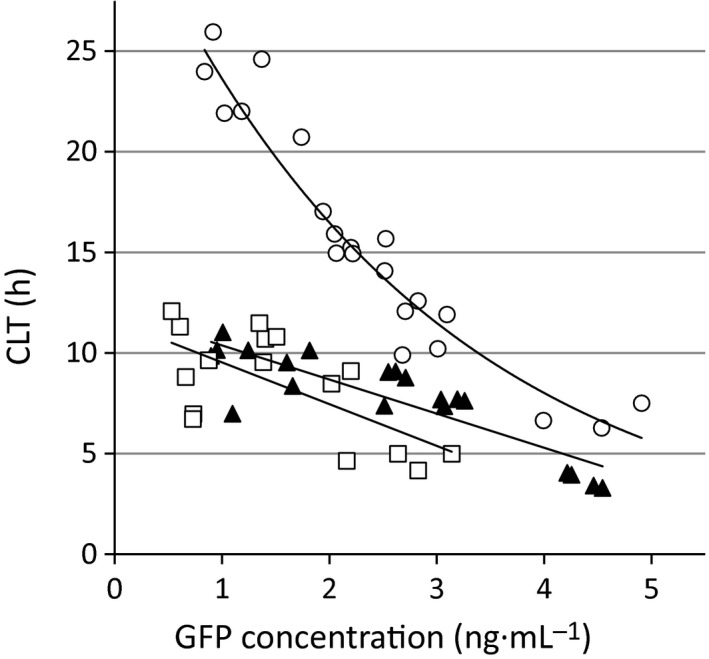
We reported that tissue-type plasminogen activator (tPA) secreted from vascular endothelial cells (VECs) is retained on the cell surface and effectively evokes both plasminogen activation and fibrin clot dissolution (fibrinolysis) on VECs. Here, to evaluate possibly different behaviors of variants of tPA, we quantitatively assessed these two events separately using green fluorescent protein (GFP)-conjugated tPA in cultured human VECs. The amount of secreted wild-type tPA-GFP correlated well with both the activities of plasminogen activation (r = 0.66) and fibrinolysis (r = -0.93). A variant of tPA-GFP, with a lower affinity to the surface of VECs but higher affinity to fibrin, showed higher fibrinolysis and lower plasminogen activation activity compared to the wild-type.
我们报道,血管内皮细胞(VECs)分泌的组织型纤溶酶原激活剂(tPA)保留在细胞表面,并能有效引发VECs上的纤溶酶原激活和纤维蛋白凝块溶解(纤维蛋白溶解)。在此,为评估tPA变体可能不同的行为,我们在培养的人VECs中使用绿色荧光蛋白(GFP)偶联的tPA分别对这两个事件进行了定量评估。分泌的野生型tPA-GFP量与纤溶酶原激活活性(r = 0.66)和纤维蛋白溶解活性(r = -0.93)均密切相关。与野生型相比,一种对VECs表面亲和力较低但对纤维蛋白亲和力较高的tPA-GFP变体显示出更高的纤维蛋白溶解活性和更低的纤溶酶原激活活性。