Picard Martin, Wallace Douglas C, Burelle Yan
Department of Psychiatry, Division of Behavioral Medicine, Columbia University Medical Center, New York, NY, USA; Department of Neurology and CTNI, H Houston Merritt Center, Columbia University Medical Center, New York, NY, USA.
The Center for Mitochondrial and Epigenomic Medicine, Children's Hospital of Philadelphia and Department of Pathology and Laboratory Medicine, University of Pennsylvania, Philadelphia, PA, USA.
Mitochondrion. 2016 Sep;30:105-16. doi: 10.1016/j.mito.2016.07.003. Epub 2016 Jul 14.
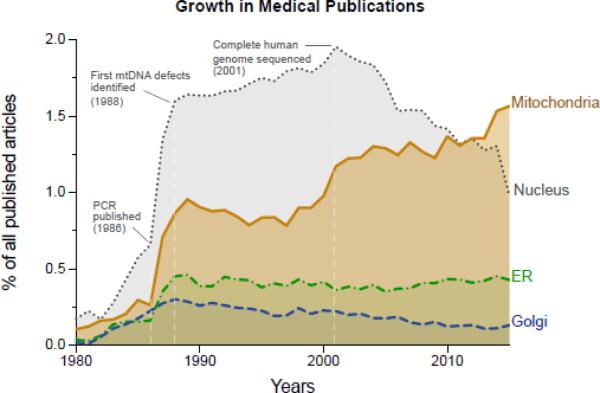
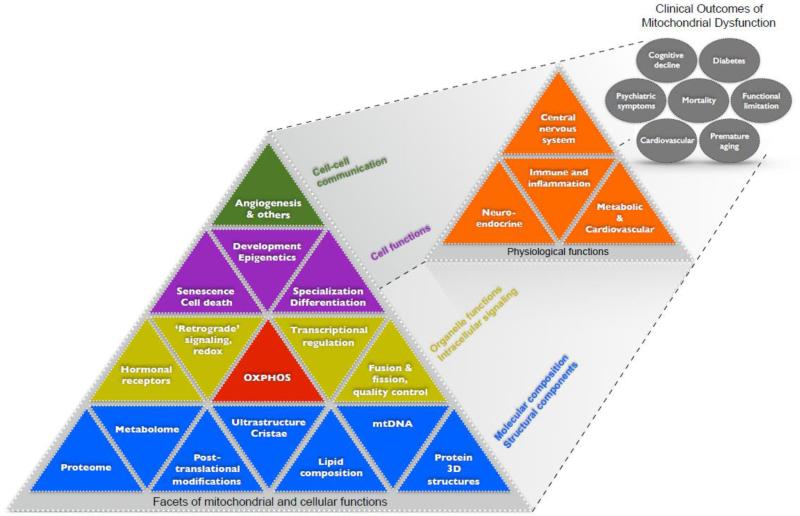
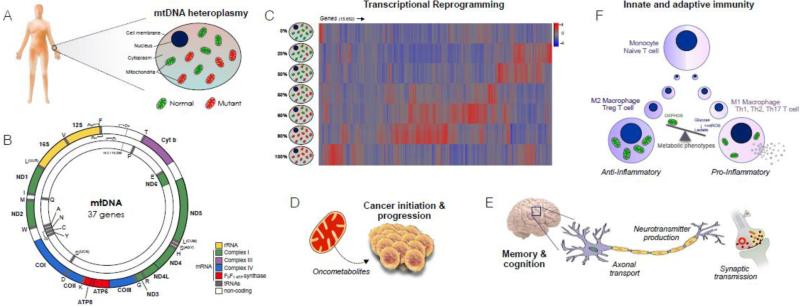
Once considered exclusively the cell's powerhouse, mitochondria are now recognized to perform multiple essential functions beyond energy production, impacting most areas of cell biology and medicine. Since the emergence of molecular biology and the discovery of pathogenic mitochondrial DNA defects in the 1980's, research advances have revealed a number of common human diseases which share an underlying pathogenesis involving mitochondrial dysfunction. Mitochondria undergo function-defining dynamic shape changes, communicate with each other, regulate gene expression within the nucleus, modulate synaptic transmission within the brain, release molecules that contribute to oncogenic transformation and trigger inflammatory responses systemically, and influence the regulation of complex physiological systems. Novel mitopathogenic mechanisms are thus being uncovered across a number of medical disciplines including genetics, oncology, neurology, immunology, and critical care medicine. Increasing knowledge of the bioenergetic aspects of human disease has provided new opportunities for diagnosis, therapy, prevention, and in connecting various domains of medicine. In this article, we overview specific aspects of mitochondrial biology that have contributed to - and likely will continue to enhance the progress of modern medicine.
线粒体曾一度被认为仅是细胞的动力源,如今人们认识到它除了产生能量之外还执行多种重要功能,影响着细胞生物学和医学的大部分领域。自20世纪80年代分子生物学出现以及致病性线粒体DNA缺陷被发现以来,研究进展揭示了许多常见人类疾病,它们有着涉及线粒体功能障碍的潜在发病机制。线粒体经历决定功能的动态形态变化,相互通讯,调节细胞核内的基因表达,调节大脑内的突触传递,释放有助于致癌转化的分子并系统性地引发炎症反应,还影响复杂生理系统的调节。因此,包括遗传学、肿瘤学、神经病学、免疫学和重症医学在内的多个医学学科都在揭示新的线粒体致病机制。对人类疾病生物能量方面的了解不断增加,为诊断、治疗、预防以及连接医学的各个领域提供了新机会。在本文中,我们概述线粒体生物学的具体方面,这些方面已经推动并可能会继续促进现代医学的进步。