Lee Gyu Min, Suh Dong Ho, Jung Eun Sung, Lee Choong Hwan
Department of Bioscience and Biotechnology, Konkuk University, Seoul 05029, Korea.
Molecules. 2016 Jul 15;21(7):921. doi: 10.3390/molecules21070921.
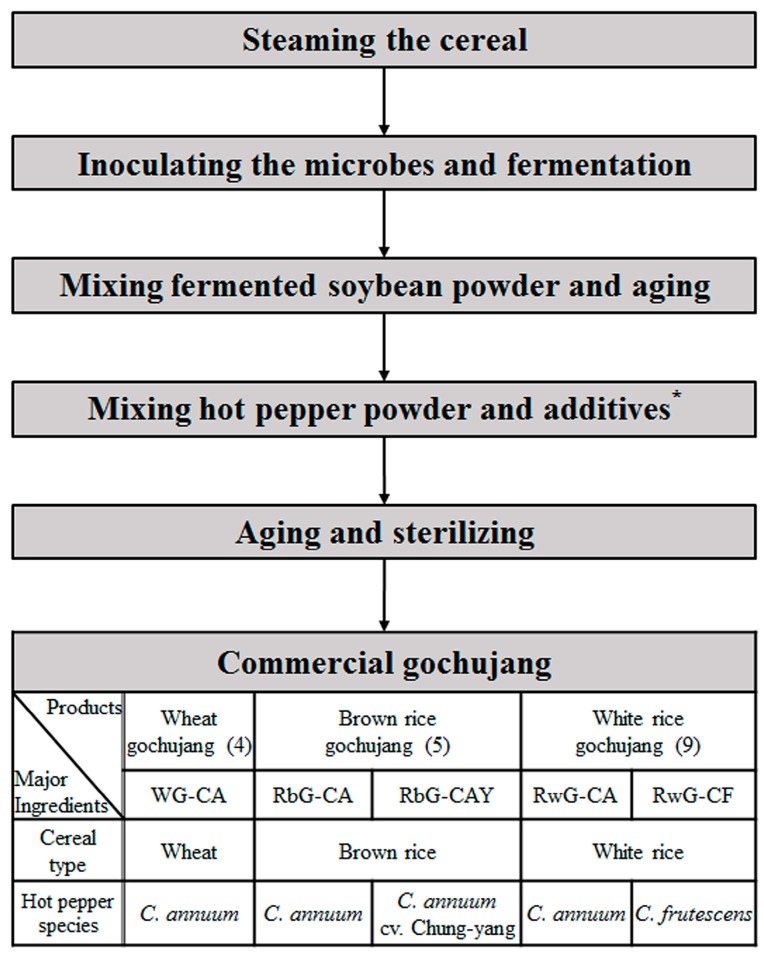
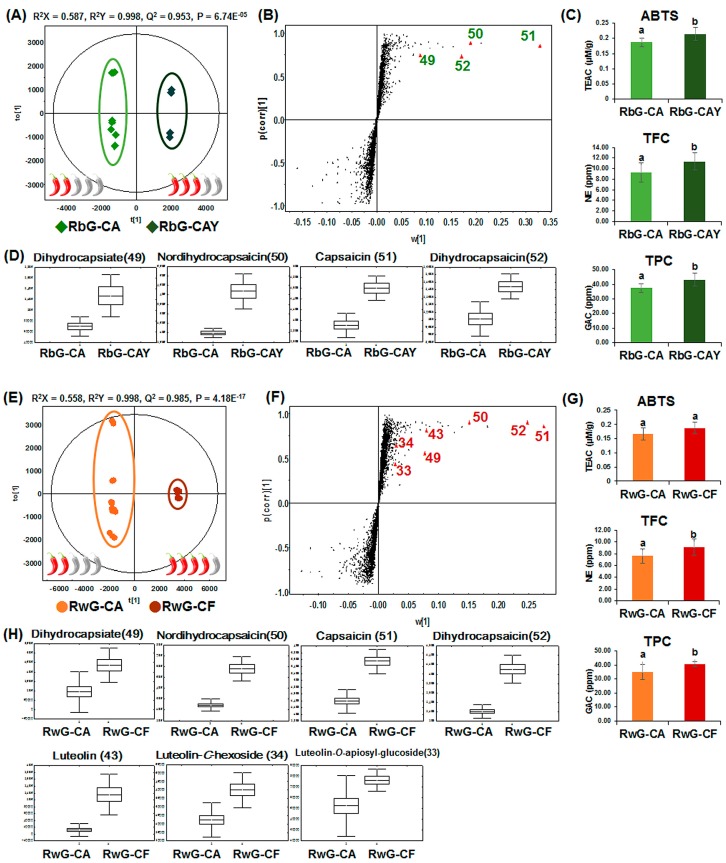
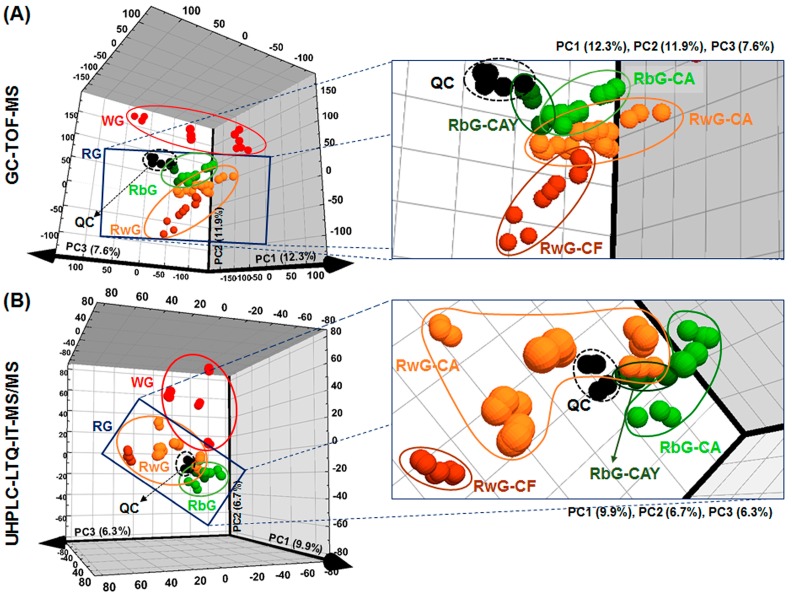
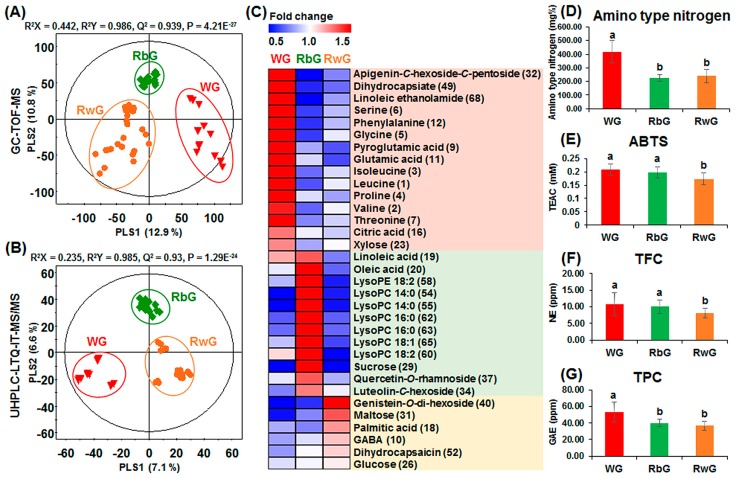
To identify the major factors contributing to the quality of commercial gochujang (fermented red pepper paste), metabolites were profiled by mass spectrometry. In principal component analysis, cereal type (wheat, brown rice, and white rice) and species of hot pepper (Capsicum annuum, C. annuum cv. Chung-yang, and C. frutescens) affected clustering patterns. Relative amino acid and citric acid levels were significantly higher in wheat gochujang than in rice gochujang. Sucrose, linoleic acid, oleic acid, and lysophospholipid levels were high in brown-rice gochujang, whereas glucose, maltose, and γ-aminobutyric acid levels were high in white-rice gochujang. The relative capsaicinoid and luteolin derivative contents in gochujang were affected by the hot pepper species used. Gochujang containing C. annuum cv. Chung-yang and C. frutescens showed high capsaicinoid levels. The luteolin derivative level was high in gochujang containing C. frutescens. These metabolite variations in commercial gochujang may be related to different physicochemical phenotypes and antioxidant activity.
为了确定影响市售韩式辣椒酱(发酵红辣椒酱)品质的主要因素,通过质谱对代谢产物进行了分析。在主成分分析中,谷物类型(小麦、糙米和白米)和辣椒品种(辣椒、中央辣椒和小米辣)影响聚类模式。小麦辣椒酱中相对氨基酸和柠檬酸水平显著高于大米辣椒酱。糙米辣椒酱中蔗糖、亚油酸、油酸和溶血磷脂水平较高,而白米辣椒酱中葡萄糖、麦芽糖和γ-氨基丁酸水平较高。辣椒酱中辣椒素类和木犀草素衍生物的相对含量受所用辣椒品种的影响。含有中央辣椒和小米辣的辣椒酱辣椒素类水平较高。含有小米辣的辣椒酱中木犀草素衍生物水平较高。市售韩式辣椒酱中的这些代谢产物变化可能与不同的理化表型和抗氧化活性有关。