Cormick Gabriela, Betrán Ana Pilar, Ciapponi Agustín, Hall David R, Hofmeyr G Justus
Department of Mother and Child Health Research, Institute for Clinical Effectiveness and Health Policy (IECS), Emilio Ravignani 2024, Buenos Aires, Argentina.
Centro de Investigaciones en Epidemiología y Salud Pública (CIESP, CONICET-IECS), Buenos Aires, Argentina.
Reprod Health. 2016 Jul 18;13(1):83. doi: 10.1186/s12978-016-0197-x.
Women with a history of pre-eclampsia have a higher risk of developing pre-eclampsia in subsequent pregnancies. However, the role of the inter-pregnancy interval on this association is unclear.
To explore the effect of inter-pregnancy interval on the risk of recurrent pre-eclampsia or eclampia.
MEDLINE, EMBASE and LILACS were searched (inception to July 2015).
Cohort studies assessing the risk of recurrent pre-eclampsia in the immediate subsequent pregnancy according to different birth intervals.
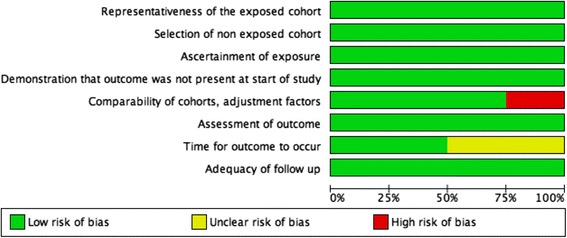
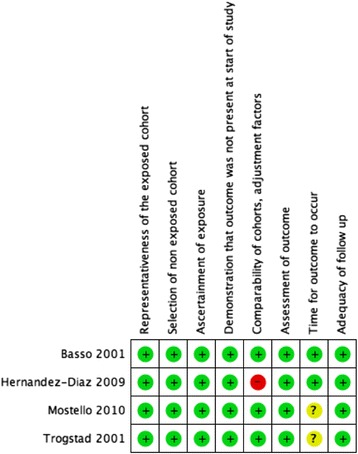
Two reviewers independently performed screening, data extraction, methodological and quality assessment. Meta-analysis of adjusted odds ratios (aOR) with 95 % confidence intervals (CI) was used to measure the association between various interval lengths and recurrent pre-eclampsia or eclampsia.
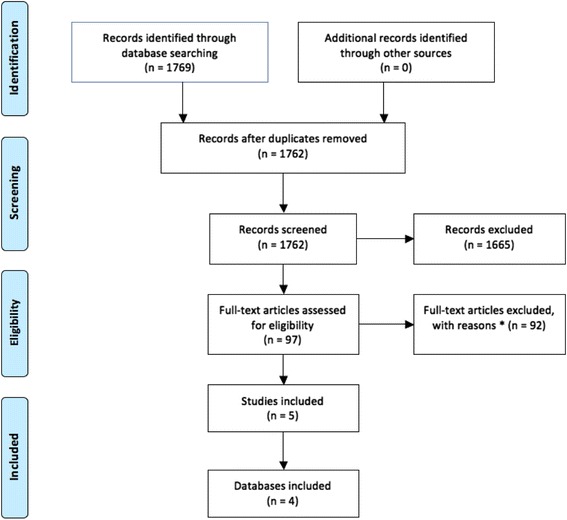
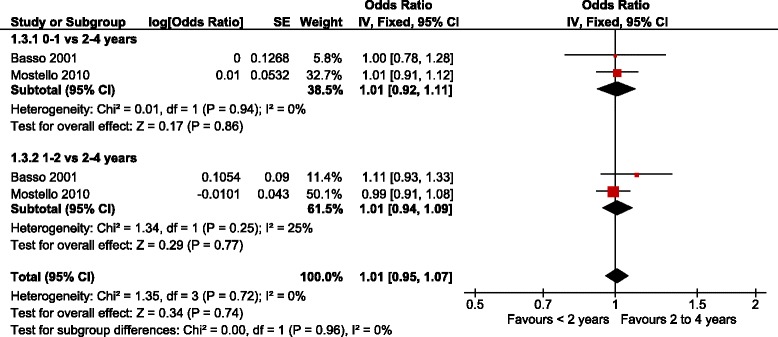
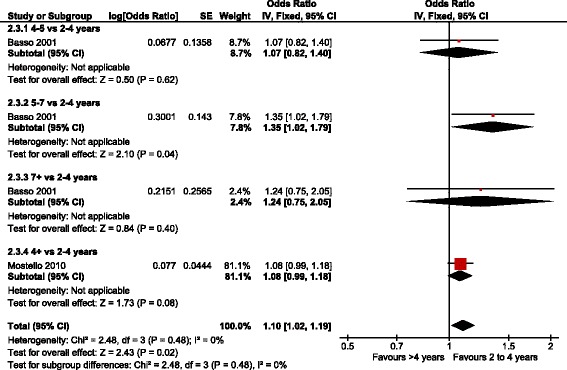
We identified 1769 articles and finally included four studies with a total of 77,561 women. The meta-analysis of two studies showed that compared to inter-pregnancy intervals of 2-4 years, the aOR for recurrent pre-eclampsia was 1.01 [95 % CI 0.95 to 1.07, I(2) 0 %] with intervals of less than 2 years and 1.10 [95 % CI 1.02 to 1.19, I(2) 0 %] with intervals longer than 4 years.
Compared to inter-pregnancy intervals of 2 to 4 years, shorter intervals are not associated with an increased risk of recurrent pre-eclampsia but longer intervals appear to increase the risk. The results of this review should be interpreted with caution as included studies are observational and thus subject to possible confounding factors.
有子痫前期病史的女性在后续妊娠中发生子痫前期的风险更高。然而,妊娠间隔时间在此关联中的作用尚不清楚。
探讨妊娠间隔时间对复发性子痫前期或子痫风险的影响。
检索了MEDLINE、EMBASE和LILACS(从创刊至2015年7月)。
队列研究根据不同的生育间隔评估紧接着的后续妊娠中复发性子痫前期的风险。
两名研究者独立进行筛选、数据提取、方法学和质量评估。采用调整比值比(aOR)及95%置信区间(CI)的荟萃分析来衡量不同间隔时长与复发性子痫前期或子痫之间的关联。
我们识别出1769篇文章,最终纳入了4项研究,共77561名女性。两项研究的荟萃分析表明,与2至4年的妊娠间隔相比,妊娠间隔小于2年时复发性子痫前期的aOR为1.01 [95% CI 0.95至1.07,I(2) 0%],妊娠间隔大于4年时aOR为1.10 [95% CI 1.02至1.19,I(2) 0%]。
与2至4年的妊娠间隔相比,较短的间隔与复发性子痫前期风险增加无关,但较长的间隔似乎会增加风险。由于纳入的研究为观察性研究,因此可能存在混杂因素,本综述的结果应谨慎解读。