Zanin Juan Pablo, Abercrombie Elizabeth, Friedman Wilma J
Department of Biological Sciences, Rutgers University, Newark, United States.
Center for Molecular and Behavioral Neuroscience, Rutgers University, Newark, United States.
Elife. 2016 Jul 19;5:e16654. doi: 10.7554/eLife.16654.
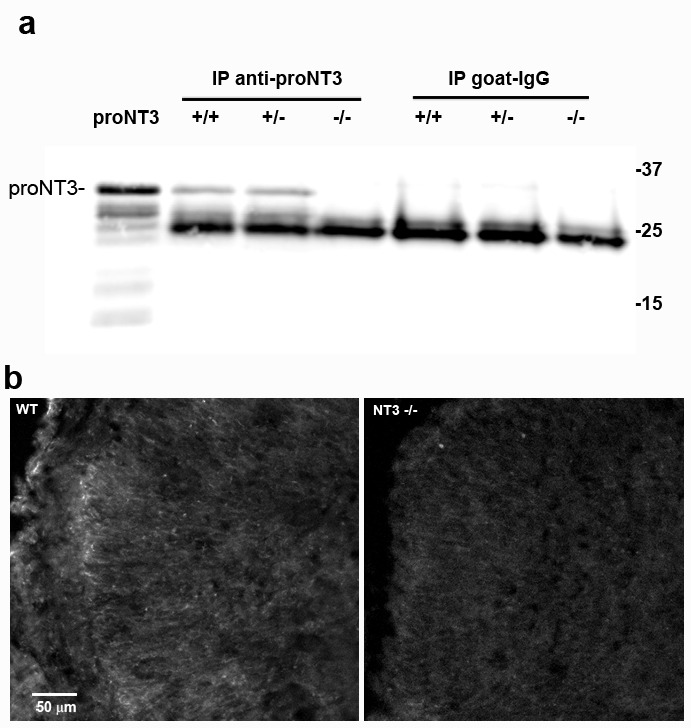
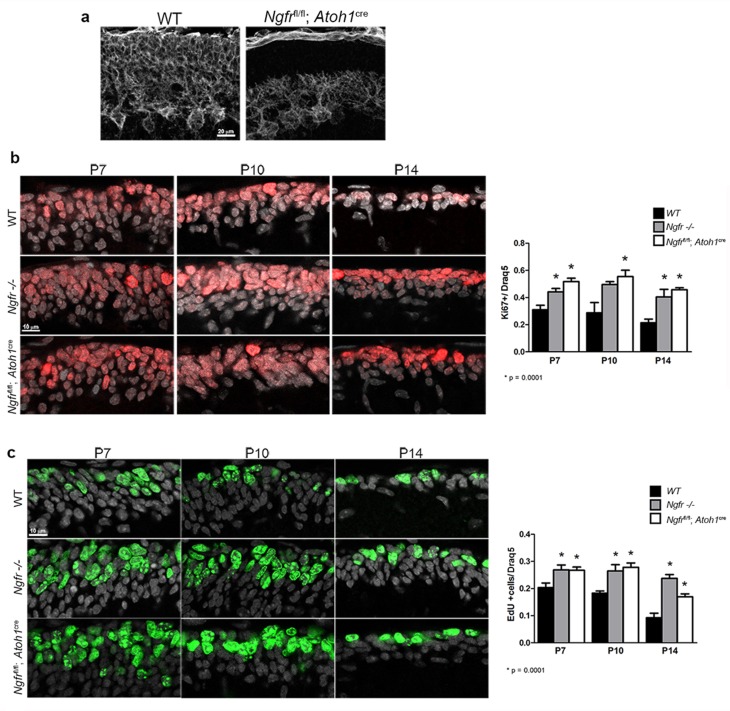
Cerebellar granule cell progenitors (GCP) proliferate extensively in the external granule layer (EGL) of the developing cerebellum prior to differentiating and migrating. Mechanisms that regulate the appropriate timing of cell cycle withdrawal of these neuronal progenitors during brain development are not well defined. The p75 neurotrophin receptor (p75(NTR)) is highly expressed in the proliferating GCPs, but is downregulated once the cells leave the cell cycle. This receptor has primarily been characterized as a death receptor for its ability to induce neuronal apoptosis following injury. Here we demonstrate a novel function for p75(NTR) in regulating proper cell cycle exit of neuronal progenitors in the developing rat and mouse EGL, which is stimulated by proNT3. In the absence of p75(NTR), GCPs continue to proliferate beyond their normal period, resulting in a larger cerebellum that persists into adulthood, with consequent motor deficits.
小脑颗粒细胞前体(GCP)在发育中的小脑外颗粒层(EGL)中广泛增殖,然后进行分化和迁移。在大脑发育过程中,调节这些神经元前体细胞周期退出适当时间的机制尚不清楚。p75神经营养因子受体(p75(NTR))在增殖的GCP中高度表达,但一旦细胞离开细胞周期,其表达就会下调。该受体主要因其在损伤后诱导神经元凋亡的能力而被表征为死亡受体。在这里,我们证明了p75(NTR)在调节发育中的大鼠和小鼠EGL中神经元前体的适当细胞周期退出方面具有新功能,这一功能受到前体神经营养因子3(proNT3)的刺激。在缺乏p75(NTR)的情况下,GCP会在正常时期之后继续增殖,导致小脑更大,并持续到成年期,从而导致运动缺陷。