Beceiro S, Radin J N, Chatuvedi R, Piazuelo M B, Horvarth D J, Cortado H, Gu Y, Dixon B, Gu C, Lange I, Koomoa D-Lt, Wilson K T, Algood H M S, Partida-Sánchez S
Center for Microbial Pathogenesis, The Research Institute at Nationwide Children's Hospital, Columbus, Ohio, USA.
Department of Medicine, Vanderbilt University School of Medicine, Nashville, Tennessee, USA.
Mucosal Immunol. 2017 Mar;10(2):493-507. doi: 10.1038/mi.2016.60. Epub 2016 Jul 20.
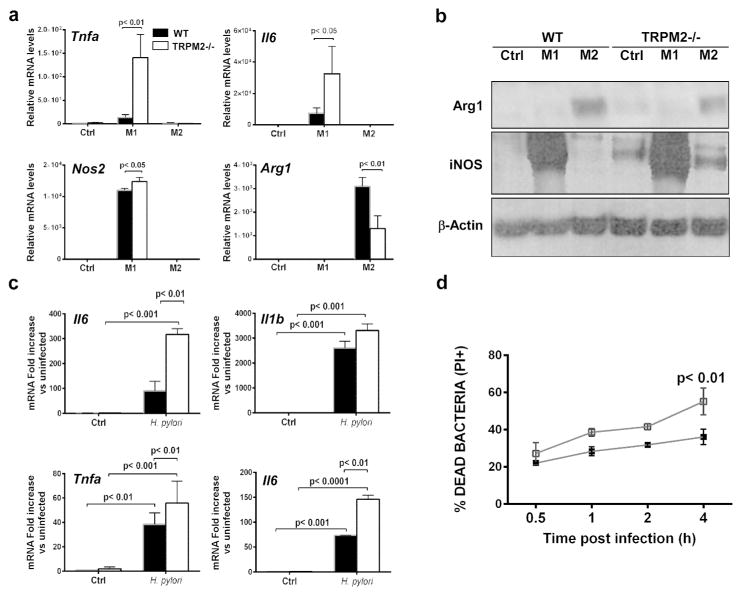
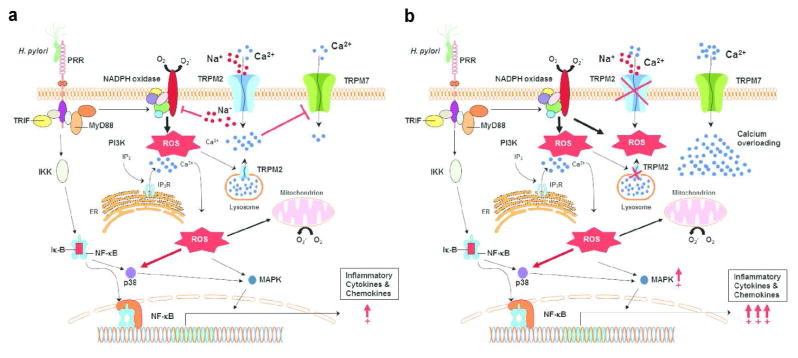
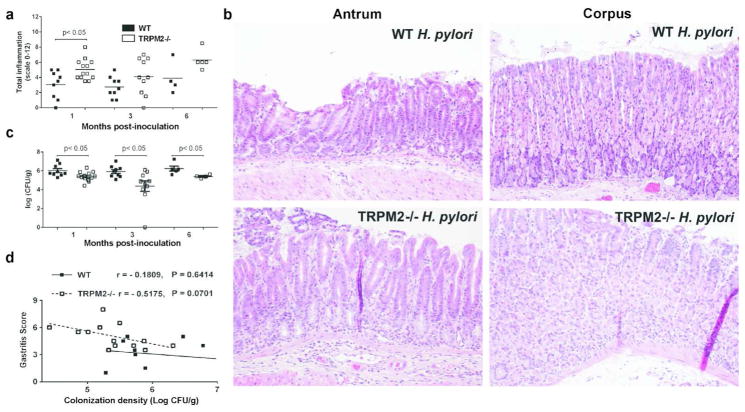
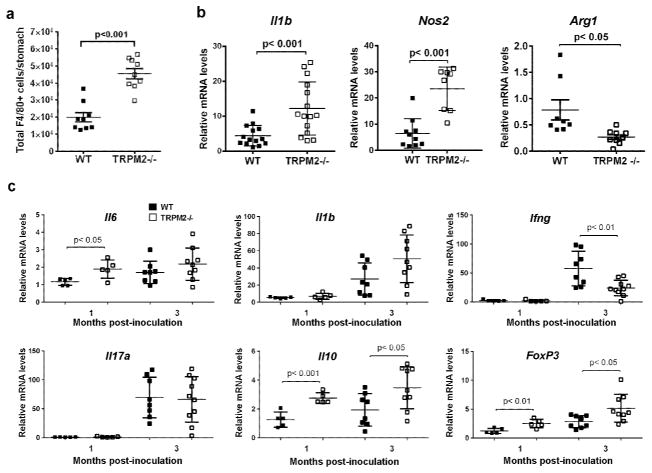
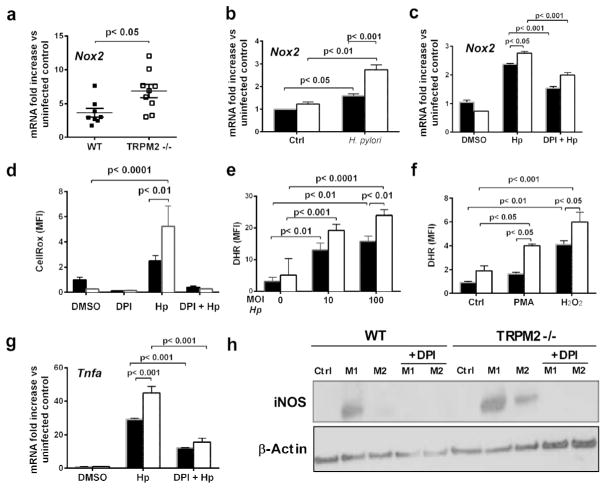
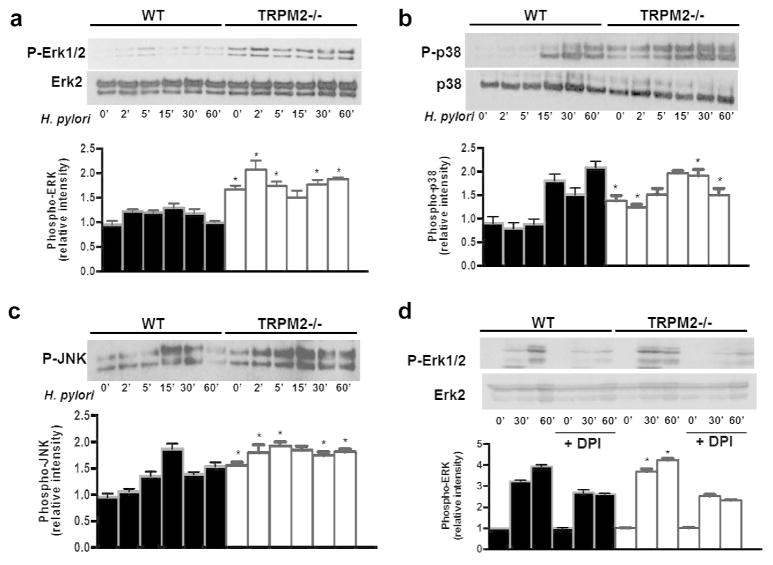
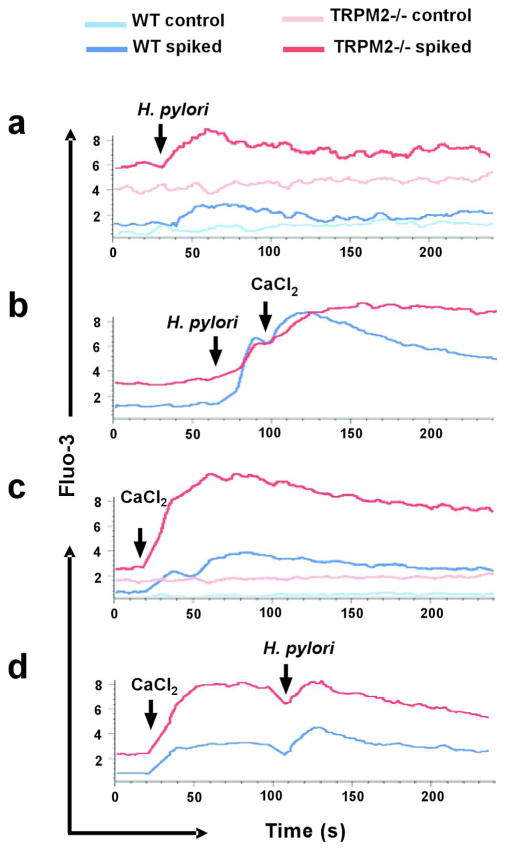
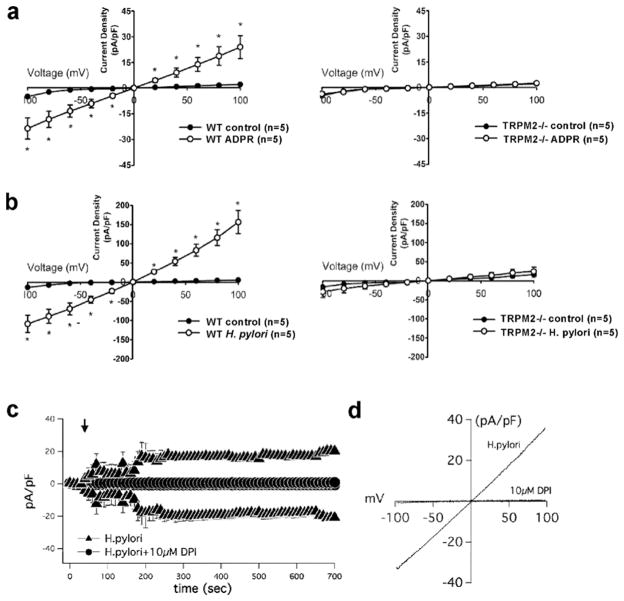
Calcium signaling in phagocytes is essential for cellular activation, migration, and the potential resolution of infection or inflammation. The generation of reactive oxygen species (ROS) via activation of NADPH (nicotinamide adenine dinucleotide phosphate)-oxidase activity in macrophages has been linked to altered intracellular calcium concentrations. Because of its role as an oxidative stress sensor in phagocytes, we investigated the function of the cation channel transient receptor potential melastatin 2 (TRPM2) in macrophages during oxidative stress responses induced by Helicobacter pylori infection. We show that Trpm2/ mice, when chronically infected with H. pylori, exhibit increased gastric inflammation and decreased bacterial colonization compared with wild-type (WT) mice. The absence of TRPM2 triggers greater macrophage production of inflammatory mediators and promotes classically activated macrophage M1 polarization in response to H. pylori. TRPM2-deficient macrophages upon H. pylori stimulation are unable to control intracellular calcium levels, which results in calcium overloading. Furthermore, increased intracellular calcium in TRPM2/ macrophages enhanced mitogen-activated protein kinase and NADPH-oxidase activities, compared with WT macrophages. Our data suggest that augmented production of ROS and inflammatory cytokines with TRPM2 deletion regulates oxidative stress in macrophages and consequently decreases H. pylori gastric colonization while increasing inflammation in the gastric mucosa.
吞噬细胞中的钙信号传导对于细胞活化、迁移以及感染或炎症的潜在消退至关重要。巨噬细胞中通过激活烟酰胺腺嘌呤二核苷酸磷酸(NADPH)氧化酶活性产生的活性氧(ROS)与细胞内钙浓度的改变有关。由于其作为吞噬细胞中氧化应激传感器的作用,我们研究了阳离子通道瞬时受体电位褪黑素2(TRPM2)在幽门螺杆菌感染诱导的氧化应激反应期间巨噬细胞中的功能。我们发现,与野生型(WT)小鼠相比,慢性感染幽门螺杆菌的Trpm2-/-小鼠表现出胃炎症增加和细菌定植减少。TRPM2的缺失引发巨噬细胞产生更多的炎症介质,并促进对幽门螺杆菌反应的经典激活巨噬细胞M1极化。幽门螺杆菌刺激后,TRPM2缺陷型巨噬细胞无法控制细胞内钙水平,导致钙超载。此外,与WT巨噬细胞相比,TRPM2-/-巨噬细胞中细胞内钙增加增强了丝裂原活化蛋白激酶和NADPH氧化酶活性。我们的数据表明,TRPM2缺失导致ROS和炎性细胞因子产生增加,调节巨噬细胞中的氧化应激,从而减少幽门螺杆菌在胃中的定植,同时增加胃黏膜中的炎症。