Liang Meihua, Zhan Fei, Zhao Juan, Li Qi, Wuyang Jiazi, Mu Guannan, Li Dianjun, Zhang Yanqiao, Huang Xiaoyi
Department of Endocrinology, the Second Affiliated Hospital of Harbin Medical University, Harbin, 150086, China.
Department of Gastrointestinal Medical Oncology, The Affiliated Tumor Hospital of Harbin Medical University, Harbin, 150081, China.
BMC Cancer. 2016 Jul 19;16:504. doi: 10.1186/s12885-016-2488-6.
Platinum-based chemotherapy is emerging as the first line of treatment for castration resistant prostate cancer. Among the family of platinum (IV)-based compounds, a member known as CPA-7 inhibits the growth of multiple cancer cell lines. However, how and to what extent CPA-7 elicits its anti-prostate cancer effects in vivo is largely unknown.
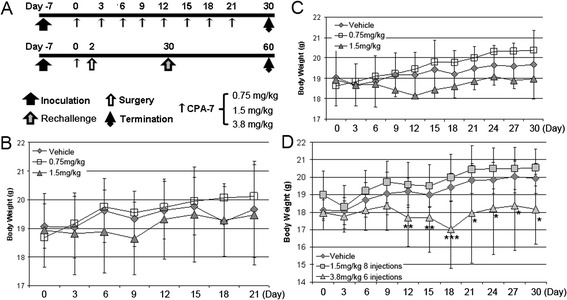
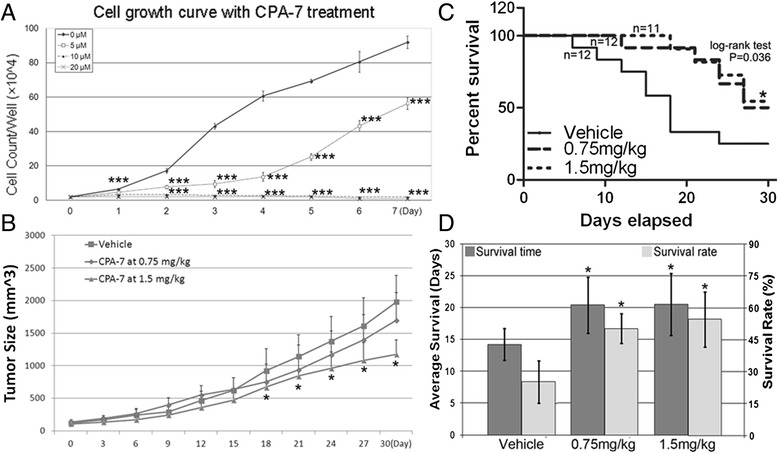
In this study, we firstly assessed the potential toxicity of the synthesized CPA-7 in a prostate cancer model as well as in normal mice. Next, we evaluated the in vitro effects of CPA-7 on the growth of prostate cancer cells using cell counting assay, and calculated the tumor sizes and cumulative survival rate of the tumor bearing mice by Kaplan-Meier method during CPA-7 treatment. Then we measured the expression level of the activated form of STAT3 (one targets of CPA-7) and its transcriptive activity post CPA-7 treatment by synergistically using western blot, IHC, and firefly luciferase reporter assays. Finally, effects of CPA-7 on immune cell trafficking in the tumor draining lymph nodes and in the spleens are evaluated with flow cytometry.
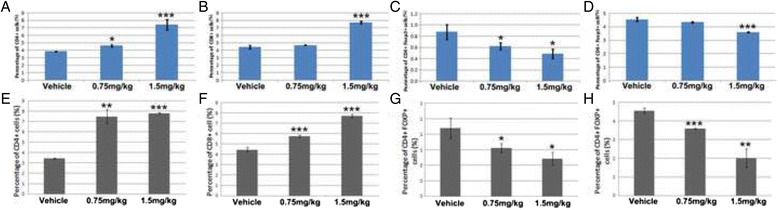
Treatment with CPA-7 significantly inhibited growth of prostate cancer cells in vitro, and also in mice resulting in a prolonged survival and a decreased recurrence rate. These therapeutic effects are due, at least in part, to functional depletion of STAT3 in prostate tumor tissue as well as in the surrounding areas of tumor cell invasion. CPA-7 treatment also resulted in a reduced level of regulatory T cells and increased levels of cytotoxic T and T helper cells in the spleen and in tumor infiltrating lymph nodes. This favorable effect on immune cell trafficking may account for the amnestic immune response against recurrent prostate cancer.
CPA-7 is a promising new therapeutic agent for prostate cancer that both inhibits tumor cell proliferation and stimulates anti-tumor immunity. It has potential as first line treatment and/or as an adjuvant for refractory prostate cancer.
铂类化疗正成为去势抵抗性前列腺癌的一线治疗方法。在铂(IV)类化合物家族中,一种名为CPA - 7的成员可抑制多种癌细胞系的生长。然而,CPA - 7在体内如何以及在多大程度上发挥其抗前列腺癌作用在很大程度上尚不清楚。
在本研究中,我们首先在前列腺癌模型以及正常小鼠中评估了合成的CPA - 7的潜在毒性。接下来,我们使用细胞计数法评估了CPA - 7对前列腺癌细胞生长的体外影响,并在CPA - 7治疗期间通过Kaplan - Meier方法计算了荷瘤小鼠的肿瘤大小和累积生存率。然后,我们通过蛋白质免疫印迹法、免疫组化法和萤火虫荧光素酶报告基因检测法协同检测了CPA - 7治疗后STAT3(CPA - 7的一个靶点)的活化形式的表达水平及其转录活性。最后,用流式细胞术评估CPA - 7对肿瘤引流淋巴结和脾脏中免疫细胞迁移的影响。
CPA - 7治疗显著抑制了前列腺癌细胞的体外生长,在小鼠体内也有同样效果,延长了生存期并降低了复发率。这些治疗效果至少部分归因于前列腺肿瘤组织以及肿瘤细胞侵袭周围区域中STAT3的功能缺失。CPA - 7治疗还导致脾脏和肿瘤浸润淋巴结中调节性T细胞水平降低,细胞毒性T细胞和辅助性T细胞水平升高。这种对免疫细胞迁移的有利影响可能解释了对复发性前列腺癌的记忆性免疫反应。
CPA - 7是一种有前景的新型前列腺癌治疗药物,既能抑制肿瘤细胞增殖又能刺激抗肿瘤免疫。它有潜力作为一线治疗药物和/或难治性前列腺癌的辅助药物。