Shanmugasundaram Uma, Kovarova Martina, Ho Phong T, Schramm Nathaniel, Wahl Angela, Parniak Michael A, Garcia J Victor
Division of Infectious Diseases, Center for AIDS Research, University of North Carolina at Chapel Hill, School of Medicine, Chapel Hill, North Carolina, United States of America.
Department of Microbiology and Molecular Genetics, University of Pittsburgh School of Medicine, Pittsburgh, Pennsylvania, United States of America.
PLoS One. 2016 Jul 20;11(7):e0159517. doi: 10.1371/journal.pone.0159517. eCollection 2016.
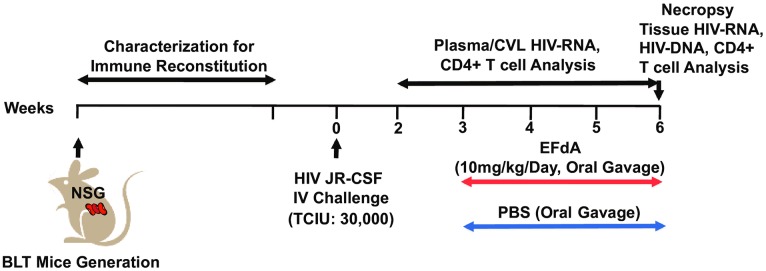
The nucleoside reverse transcriptase inhibitor (NRTI) 4'-ethynyl-2-fluoro-2'-deoxyadenosine (EFdA) in preclinical development exhibits improved safety and antiviral activity profiles with minimal drug resistance compared to approved NRTIs. However, the systemic antiviral efficacy of EFdA has not been fully evaluated. In this study, we utilized bone marrow/liver/thymus (BLT) humanized mice to investigate the systemic effect of EFdA treatment on HIV replication and CD4+ T cell depletion in the peripheral blood (PB) and tissues. In particular, we performed a comprehensive analysis of the female reproductive tract (FRT) and gastrointestinal (GI) tract, major sites of transmission, viral replication, and CD4+ T cell depletion and where some current antiretroviral drugs have a sub-optimal effect.
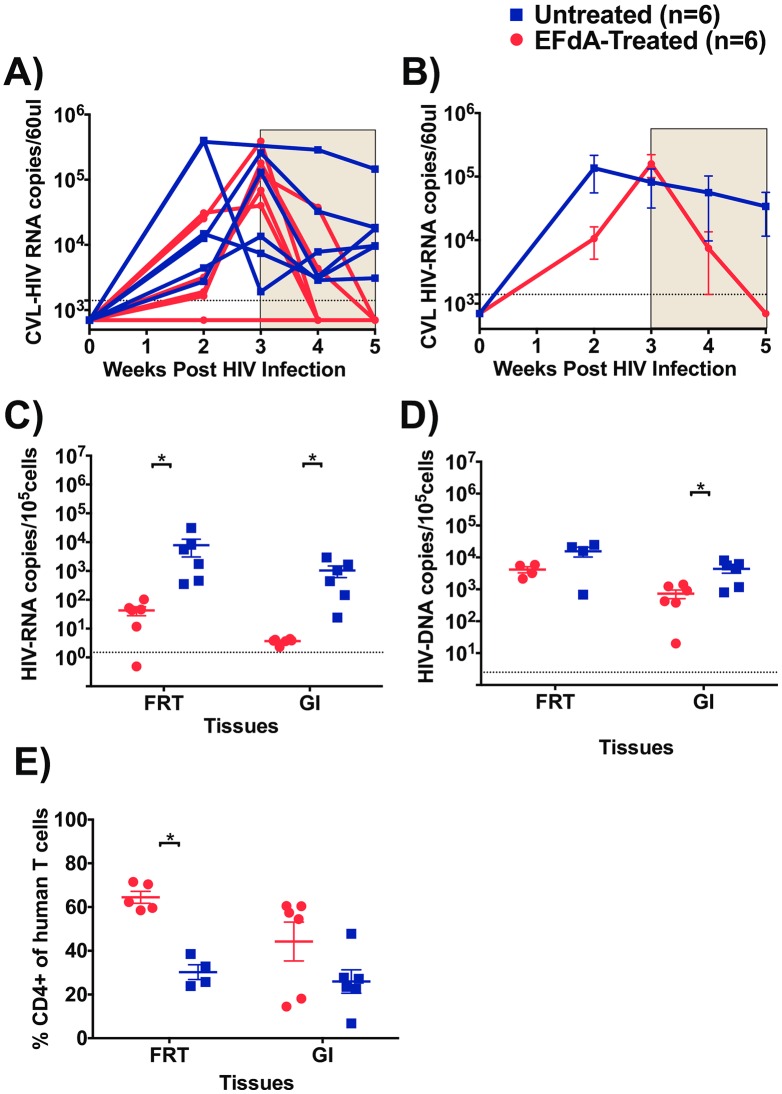
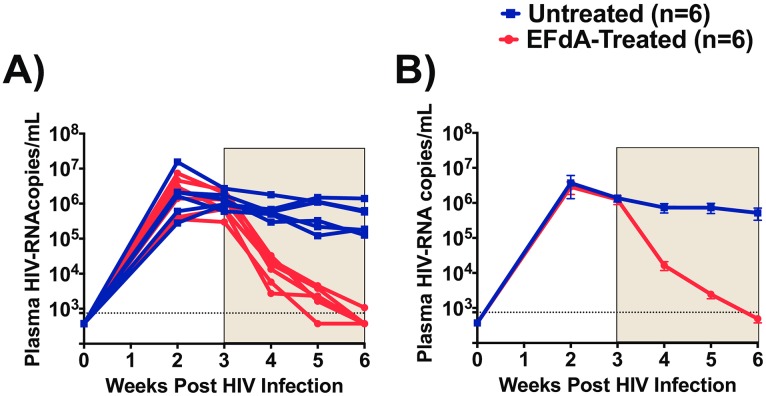
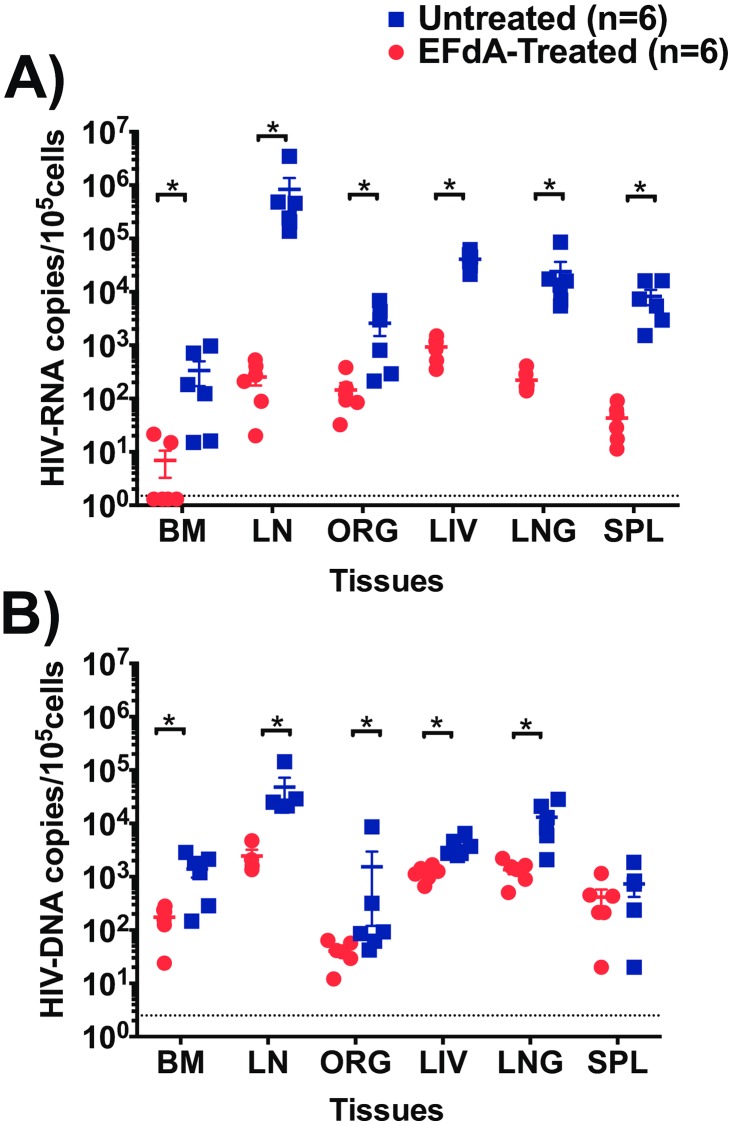
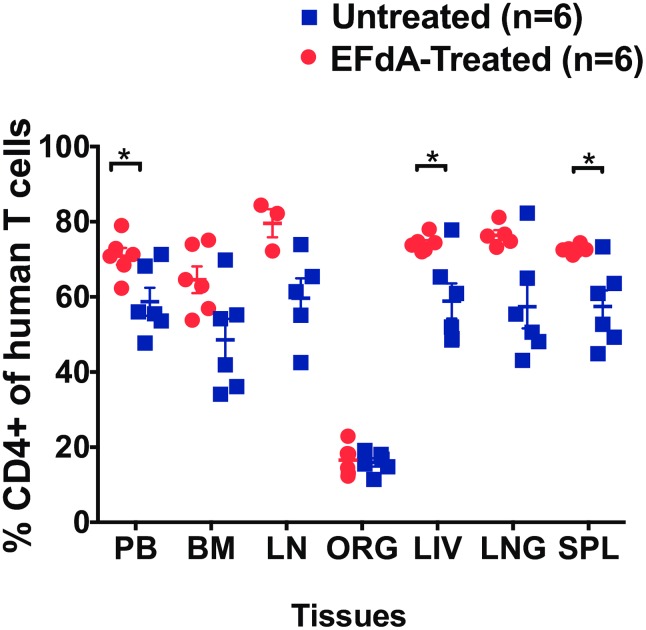
EFdA treatment resulted in reduction of HIV-RNA in PB to undetectable levels in the majority of treated mice by 3 weeks post-treatment. HIV-RNA levels in cervicovaginal lavage of EFdA-treated BLT mice also declined to undetectable levels demonstrating strong penetration of EFdA into the FRT. Our results also demonstrate a strong systemic suppression of HIV replication in all tissues analyzed. In particular, we observed more than a 2-log difference in HIV-RNA levels in the GI tract and FRT of EFdA-treated BLT mice compared to untreated HIV-infected control mice. In addition, HIV-RNA was also significantly lower in the lymph nodes, liver, lung, spleen of EFdA-treated BLT mice compared to untreated HIV-infected control mice. Furthermore, EFdA treatment prevented the depletion of CD4+ T cells in the PB, mucosal tissues and lymphoid tissues.
Our findings indicate that EFdA is highly effective in controlling viral replication and preserving CD4+ T cells in particular with high efficiency in the GI and FRT tract. Thus, EFdA represents a strong potential candidate for further development as a part of antiretroviral therapy regimens.
处于临床前开发阶段的核苷类逆转录酶抑制剂(NRTI)4'-乙炔基-2-氟-2'-脱氧腺苷(EFdA),与已获批的NRTI相比,显示出更好的安全性和抗病毒活性,且耐药性极小。然而,EFdA的全身抗病毒疗效尚未得到充分评估。在本研究中,我们利用骨髓/肝脏/胸腺(BLT)人源化小鼠来研究EFdA治疗对HIV复制以及外周血(PB)和组织中CD4+ T细胞耗竭的全身影响。特别是,我们对女性生殖道(FRT)和胃肠道(GI)进行了全面分析,这两个部位是病毒传播、复制以及CD4+ T细胞耗竭的主要场所,并且目前一些抗逆转录病毒药物在这些部位的效果欠佳。
EFdA治疗使大多数接受治疗的小鼠在治疗后3周时外周血中的HIV-RNA降至检测不到的水平。EFdA治疗的BLT小鼠宫颈阴道灌洗液中的HIV-RNA水平也降至检测不到的水平,表明EFdA能有效渗透至女性生殖道。我们的结果还表明,在所有分析的组织中,HIV复制均受到强烈的全身抑制。特别是,我们观察到,与未治疗的HIV感染对照小鼠相比,EFdA治疗的BLT小鼠胃肠道和女性生殖道中的HIV-RNA水平存在超过2个对数的差异。此外,与未治疗的HIV感染对照小鼠相比,EFdA治疗的BLT小鼠的淋巴结、肝脏、肺和脾脏中的HIV-RNA也显著更低。此外,EFdA治疗可防止外周血、黏膜组织和淋巴组织中CD4+ T细胞的耗竭。
我们的研究结果表明,EFdA在控制病毒复制和保护CD4+ T细胞方面非常有效,尤其是在胃肠道和女性生殖道中效率很高。因此,EFdA作为抗逆转录病毒治疗方案的一部分,具有很强的进一步开发潜力。