Xu Tianle, Shen Xiangzhen, Seyfert Hans-Martin
Leibniz Institute for Farm Animal Biology, Institute for Genome Biology, Wilhelm-Stahl-Allee 2, 18196, Dummerstorf, Germany.
College of Veterinary Medicine, Nanjing Agricultural University, Weigang 1, Nanjing, 210095, People's Republic of China.
BMC Mol Biol. 2016 Jul 20;17(1):16. doi: 10.1186/s12867-016-0069-5.
Stearoyl-CoA desaturase 1 (SCD1) desaturates long chain fatty acids and is therefore a key enzyme in fat catabolism. Its synthesis is downregulated in liver during illnesses caused by high levels of circulating lipopolysaccharide (LPS). SCD1 expression is known to be stimulated under adipogenic conditions through a variety of transcription factors, notably SREBP1 and C/EBPα and -β. However, mechanisms downregulating SCD1 expression during illness related reprograming of the metabolism were unknown. Escherichia coli elicited mastitis is an example of such a condition and was found to downregulates milk and milk fat synthesis. This is in part mediated through epigenetic mechanisms. We analyzed here mechanism controlling SCD1 expression in livers and udders from cows suffering from experimentally induced E. coli mastitis.
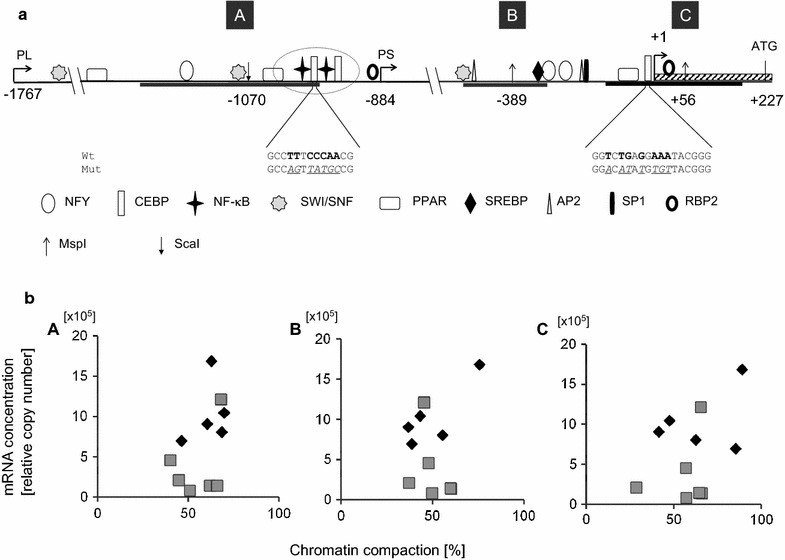
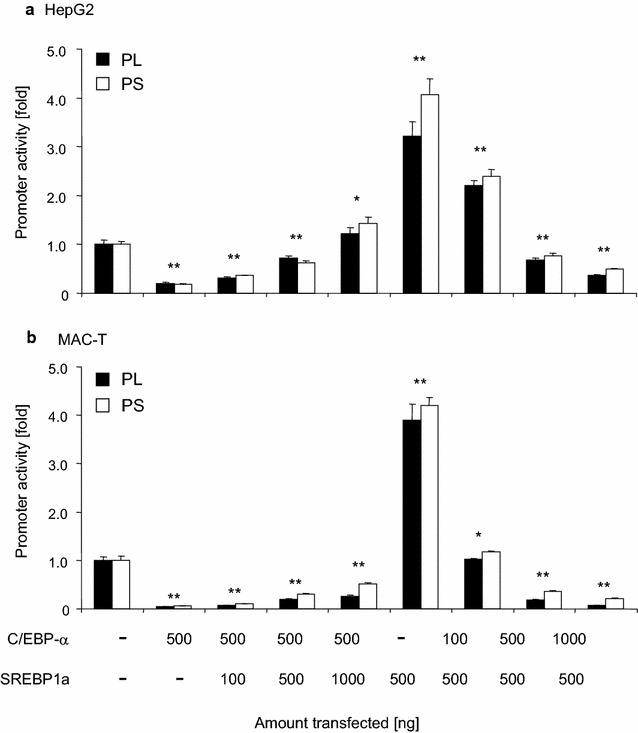
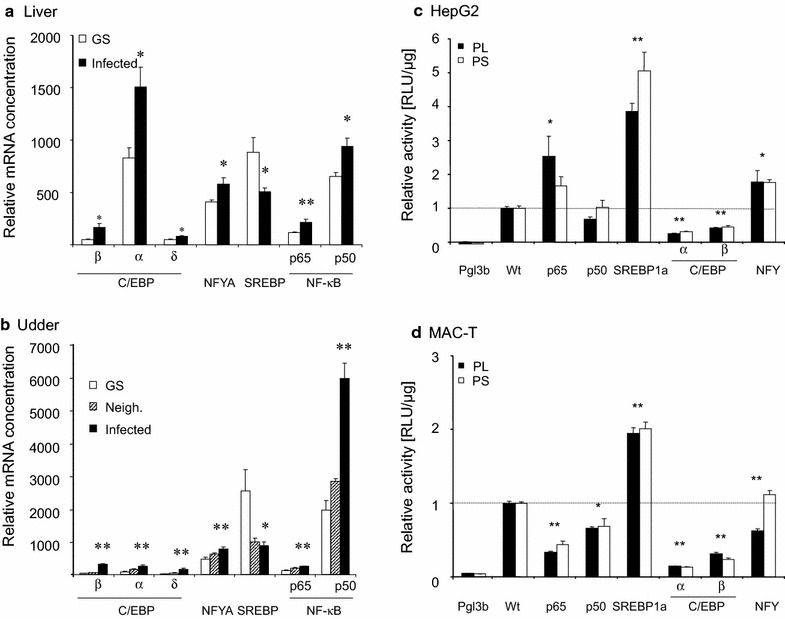
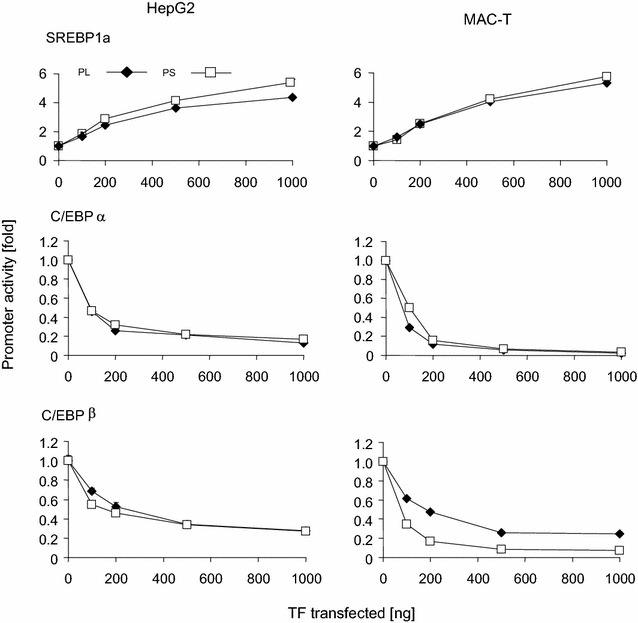
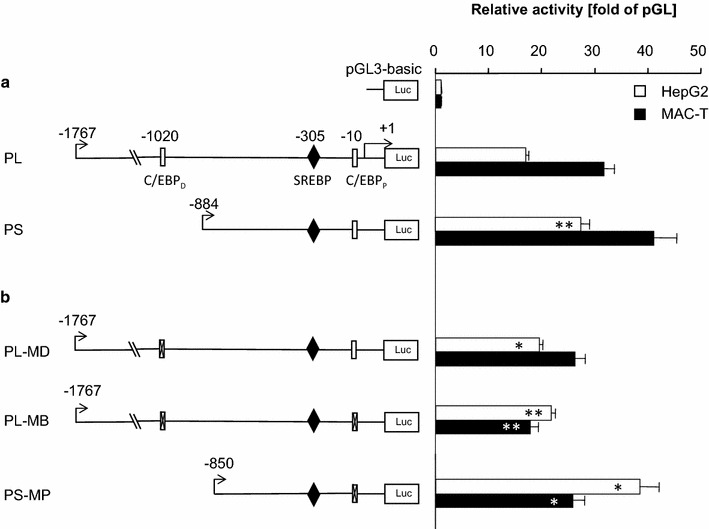
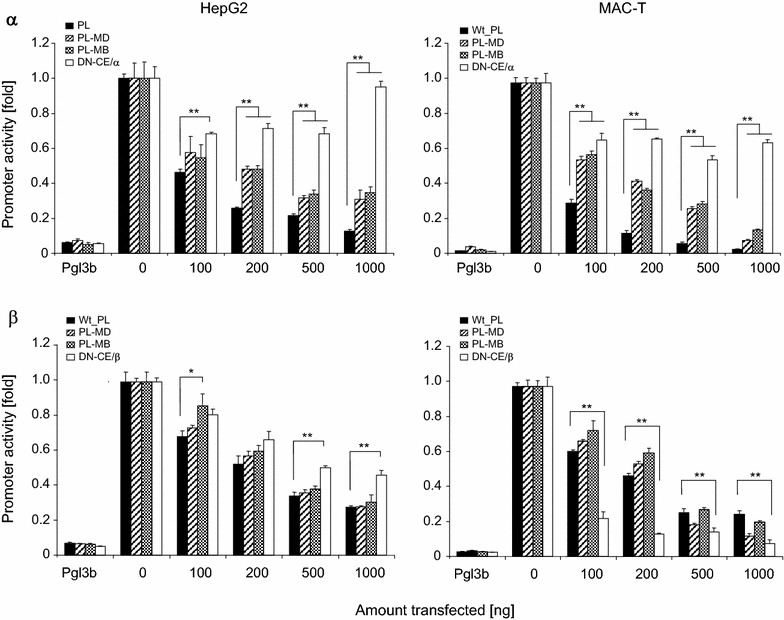
We validated with RT-qPCR that SCD1 expression was reduced in these organs of the experimental cows. They also featured decreased levels of mRNAs encoding SREBP1a but increased levels for C/EBP α and -β. Chromatin accessibility PCR (CHART) revealed that downregulation of SCD1 expression in liver was not caused by tighter chromatin compaction of the SCD1 promoter. Reporter gene analyses showed in liver (HepG2) and mammary epithelial (MAC-T) model cells that overexpression of SREBP1a expectedly activated the promoter, while unexpectedly C/EBPα and -β strongly quenched the promoter activity. Abrogation of two from among of the three C/EBP DNA-binding motifs of the promoter revealed that C/EBPα acts in cis but C/EBPβ in trans. Overexpressing truncated C/EBPα or -β factors lacking their repressive domains confirmed in both model cells the direct action of C/EBPα, but not of C/EBPβ on the promoter.
We found no evidence that epigenetic mechanism remodeling the chromatin compaction of the SCD1 promoter would contribute to downregulate SCD1 expression during infection. Instead, our data show for the first time that C/EBP factors may repress SCD1 expression in liver and udder rather than stimulating as it was previously shown in adipocytes. This cell type specific dual and opposite function of C/EBP factors for regulating SCD1 expression was previously unknown. Infection related activation of their expression combined with downregulated expression of SREBP1a explains reduced SCD1 expression in liver and udder during acute mastitis.
硬脂酰辅酶A去饱和酶1(SCD1)可使长链脂肪酸去饱和,因此是脂肪分解代谢中的关键酶。在由高水平循环脂多糖(LPS)引起的疾病期间,其在肝脏中的合成会下调。已知在成脂条件下,SCD1的表达会通过多种转录因子被刺激,尤其是固醇调节元件结合蛋白1(SREBP1)以及CCAAT增强子结合蛋白α(C/EBPα)和β(C/EBPβ)。然而,在与疾病相关的代谢重编程过程中下调SCD1表达的机制尚不清楚。大肠杆菌引起的乳腺炎就是这样一种情况,并且发现它会下调牛奶和乳脂肪的合成。这部分是通过表观遗传机制介导的。我们在此分析了控制实验性诱导的大肠杆菌乳腺炎奶牛肝脏和乳房中SCD1表达的机制。
我们通过逆转录定量聚合酶链反应(RT-qPCR)验证了实验奶牛这些器官中SCD1的表达降低。它们还表现出编码SREBP1a的mRNA水平降低,但C/EBPα和β的水平升高。染色质可及性PCR(CHART)显示,肝脏中SCD1表达的下调不是由SCD1启动子更紧密的染色质压缩引起的。报告基因分析表明,在肝脏(HepG2)和乳腺上皮(MAC-T)模型细胞中,SREBP1a的过表达如预期那样激活了启动子,而意外的是C/EBPα和β强烈抑制了启动子活性。去除启动子三个C/EBP DNA结合基序中的两个后发现,C/EBPα顺式作用,而C/EBPβ反式作用。在两种模型细胞中过表达缺乏其抑制结构域的截短型C/EBPα或β因子,证实了C/EBPα对启动子的直接作用,但C/EBPβ没有。
我们没有发现证据表明重塑SCD1启动子染色质压缩的表观遗传机制会在感染期间下调SCD1表达。相反,我们的数据首次表明,C/EBP因子可能在肝脏和乳房中抑制SCD1表达,而不是像之前在脂肪细胞中显示的那样起刺激作用。C/EBP因子在调节SCD1表达方面这种细胞类型特异性的双重和相反功能以前是未知的。它们表达的感染相关激活与SREBP1a表达的下调共同解释了急性乳腺炎期间肝脏和乳房中SCD1表达的降低。