ElHefnawi Mahmoud, Kim TaeKyu, Kamar Mona A, Min Saehong, Hassan Nafisa M, El-Ahwany Eman, Kim Heeyoung, Zada Suher, Amer Marwa, Windisch Marc P
Informatics and Systems Department, Biomedical Informatics and Chemo-Informatics Group, Centre of Excellence for Advanced Sciences (CEAS), Division of Engineering Research, National Research Centre, Cairo, Egypt.
Centre for Informatics, Nile University, Shiekh Zayed City, Egypt.
PLoS One. 2016 Jul 21;11(7):e0159211. doi: 10.1371/journal.pone.0159211. eCollection 2016.
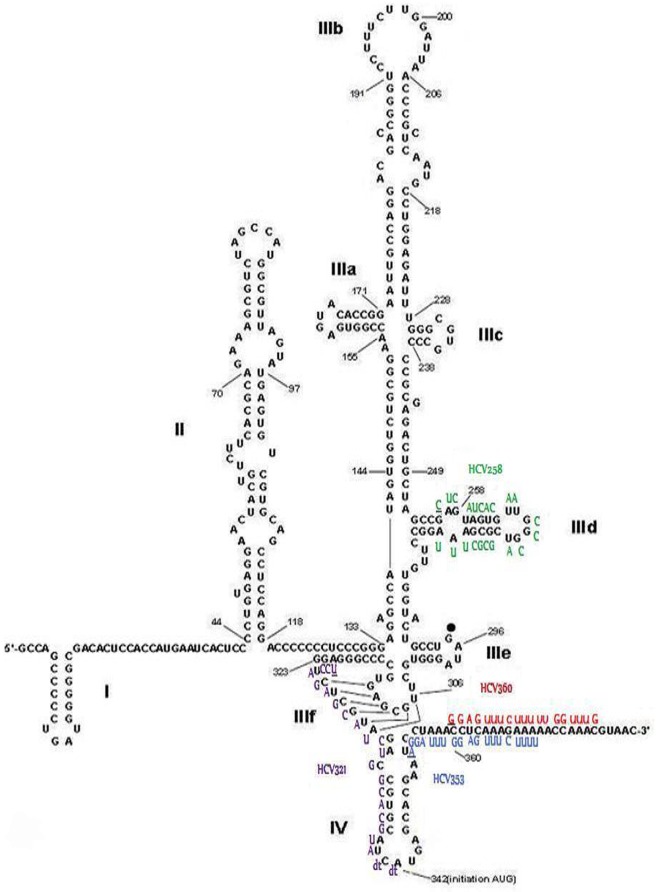
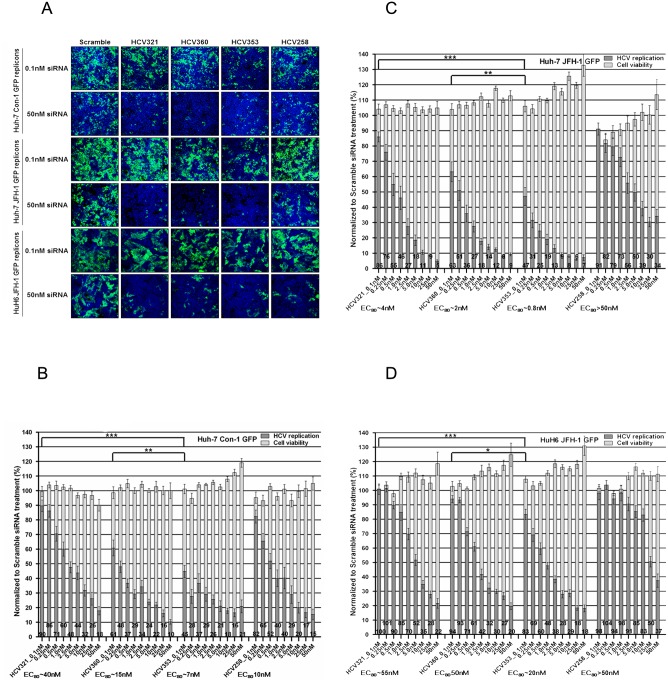
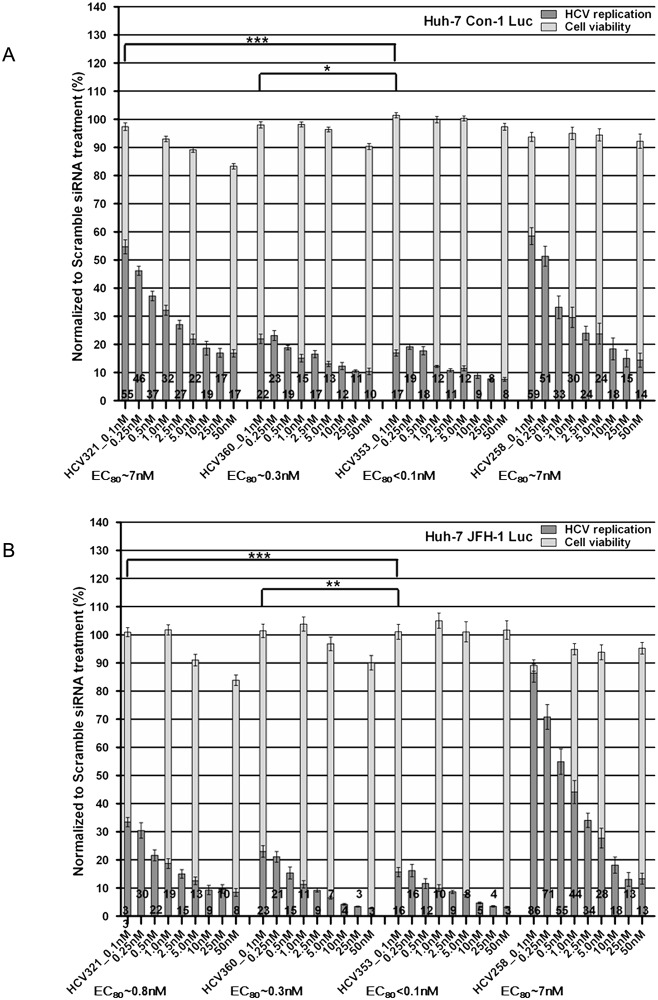
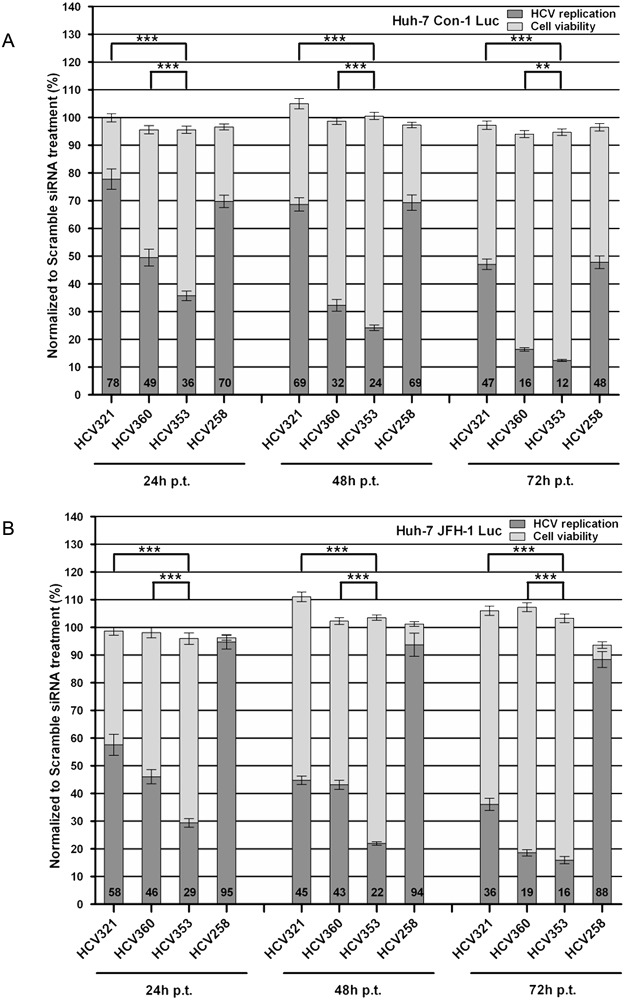
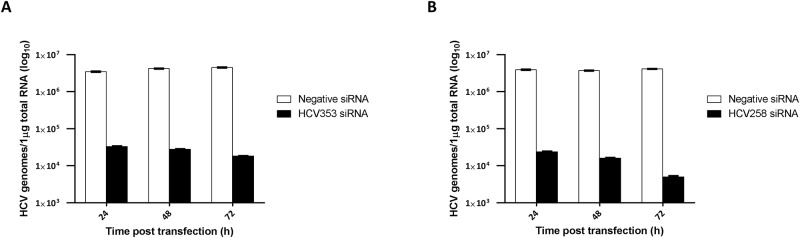
RNA interference (RNAi) is a post-transcriptional gene silencing mechanism that mediates the sequence-specific degradation of targeted RNA and thus provides a tremendous opportunity for development of oligonucleotide-based drugs. Here, we report on the design and validation of small interfering RNAs (siRNAs) targeting highly conserved regions of the hepatitis C virus (HCV) genome. To aim for therapeutic applications by optimizing the RNAi efficacy and reducing potential side effects, we considered different factors such as target RNA variations, thermodynamics and accessibility of the siRNA and target RNA, and off-target effects. This aim was achieved using an in silico design and selection protocol complemented by an automated MysiRNA-Designer pipeline. The protocol included the design and filtration of siRNAs targeting highly conserved and accessible regions within the HCV internal ribosome entry site, and adjacent core sequences of the viral genome with high-ranking efficacy scores. Off-target analysis excluded siRNAs with potential binding to human mRNAs. Under this strict selection process, two siRNAs (HCV353 and HCV258) were selected based on their predicted high specificity and potency. These siRNAs were tested for antiviral efficacy in HCV genotype 1 and 2 replicon cell lines. Both in silico-designed siRNAs efficiently inhibited HCV RNA replication, even at low concentrations and for short exposure times (24h); they also exceeded the antiviral potencies of reference siRNAs targeting HCV. Furthermore, HCV353 and HCV258 siRNAs also inhibited replication of patient-derived HCV genotype 4 isolates in infected Huh-7 cells. Prolonged treatment of HCV replicon cells with HCV353 did not result in the appearance of escape mutant viruses. Taken together, these results reveal the accuracy and strength of our integrated siRNA design and selection protocols. These protocols could be used to design highly potent and specific RNAi-based therapeutic oligonucleotide interventions.
RNA干扰(RNAi)是一种转录后基因沉默机制,介导靶向RNA的序列特异性降解,从而为基于寡核苷酸的药物开发提供了巨大机遇。在此,我们报告了针对丙型肝炎病毒(HCV)基因组高度保守区域的小干扰RNA(siRNA)的设计与验证。为了通过优化RNAi疗效和减少潜在副作用来实现治疗应用,我们考虑了不同因素,如靶RNA变异、siRNA和靶RNA的热力学及可及性,以及脱靶效应。通过计算机设计和筛选方案,并辅以自动化的MysiRNA-Designer流程,实现了这一目标。该方案包括设计和筛选靶向HCV内部核糖体进入位点内高度保守且可及区域以及病毒基因组相邻核心序列的siRNA,这些siRNA具有高效能评分。脱靶分析排除了与人类mRNA有潜在结合的siRNA。在这一严格的筛选过程中,基于预测的高特异性和高效能,选择了两种siRNA(HCV353和HCV258)。在HCV 1型和2型复制子细胞系中测试了这些siRNA的抗病毒疗效。两种计算机设计的siRNA即使在低浓度和短暴露时间(24小时)下也能有效抑制HCV RNA复制;它们还超过了靶向HCV的参考siRNA的抗病毒效能。此外,HCV353和HCV258 siRNA也抑制了感染的Huh-7细胞中患者来源的HCV 4型分离株的复制。用HCV353对HCV复制子细胞进行长时间处理未导致逃逸突变病毒的出现。综上所述,这些结果揭示了我们综合的siRNA设计和筛选方案的准确性和优势。这些方案可用于设计高效能且特异性的基于RNAi的治疗性寡核苷酸干预措施。