Wang Ping, Zhang Xianzhi, Tang Nan, Liu Jianjun, Xu Langran, Wang Kai
College of Forestry, Northwest A&F University, Yangling, Shaanxi, China.
Plateau Flower Research Centre, Qinghai University, Xining, Qinghai, China.
PLoS One. 2016 Jul 21;11(7):e0159790. doi: 10.1371/journal.pone.0159790. eCollection 2016.
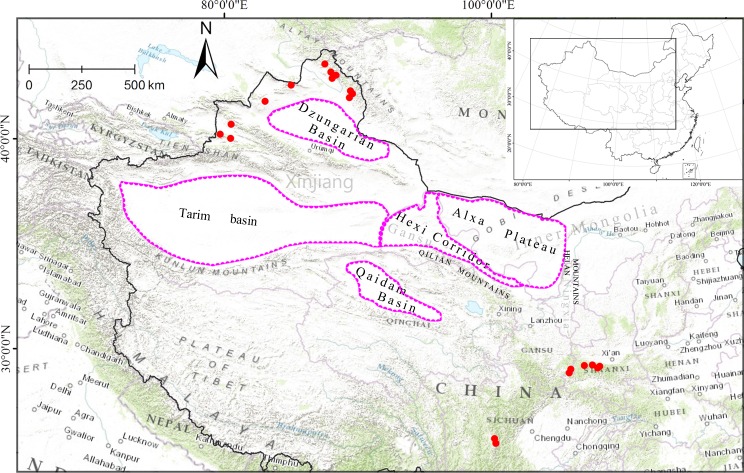
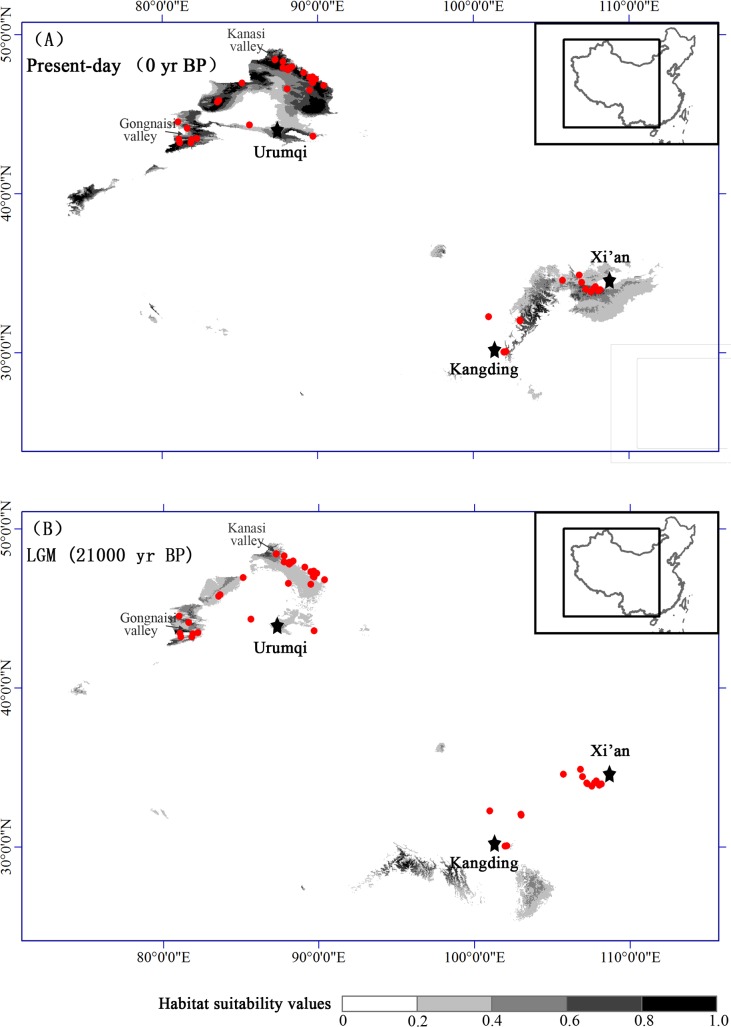
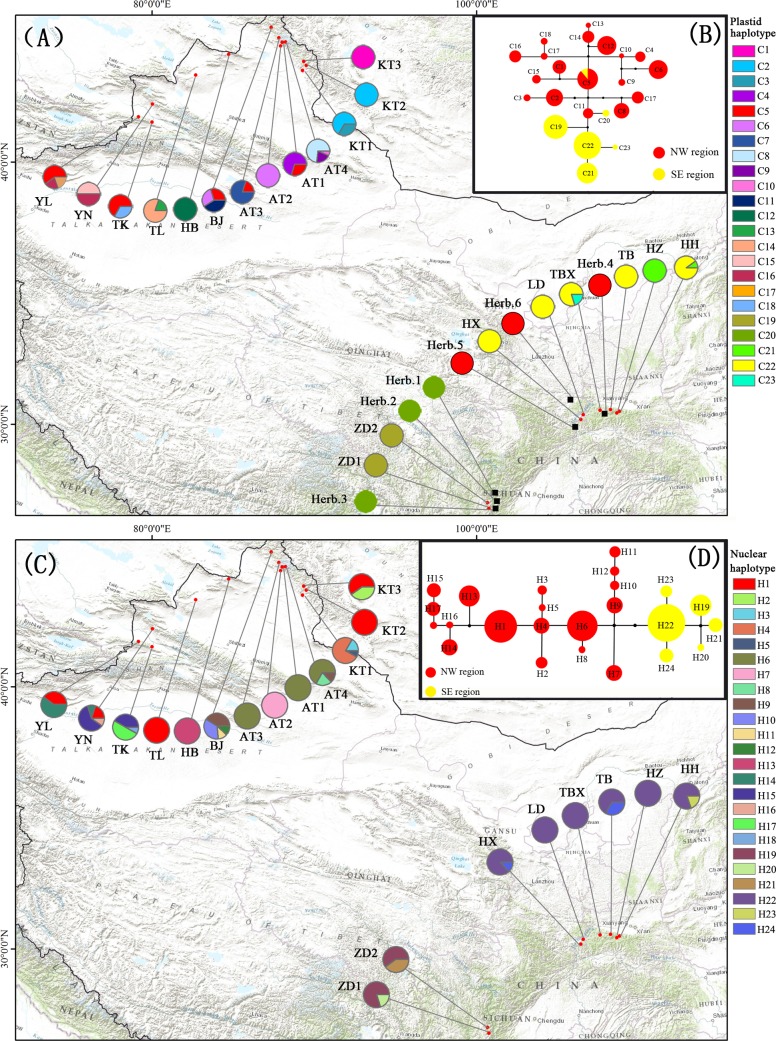
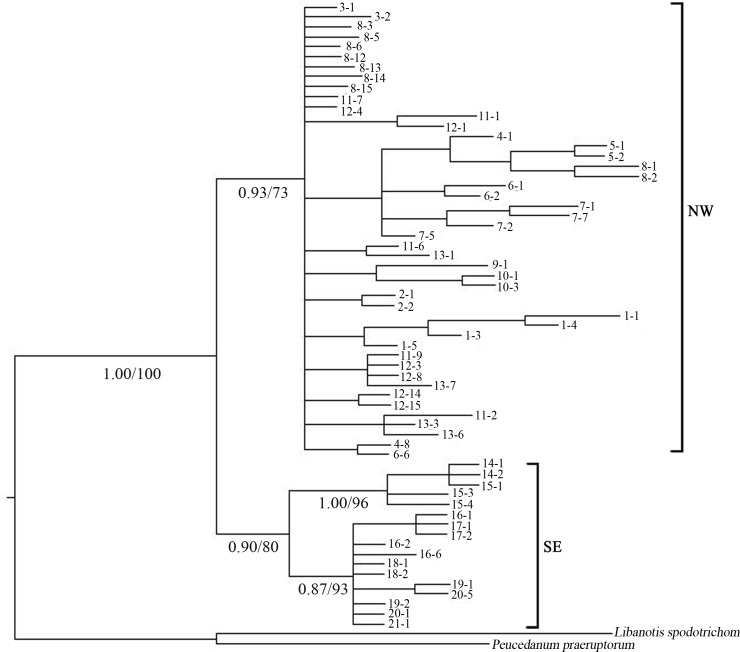
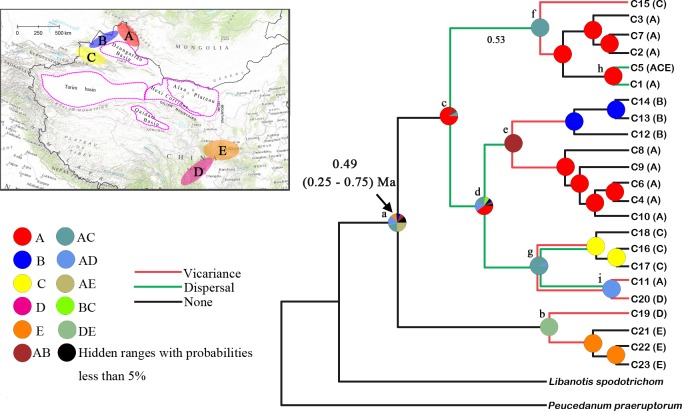
In Northwest China, aridification and desert expansion play significant roles in promoting desert plant diversification and speciation. However, to date, little is known about the effects of the desert barrier on the population structure of montane, non-desert species in the area. In this study, we sequenced chloroplast DNA regions (trnL-trnF and trnS-trnG) and a nuclear gene (rpb2) to investigate the population differentiation and phylogeographical history of Libanotis buchtormensis, a perennial montane species possessing a disjunct distribution at the periphery of the central desert. In total, 23 chloroplast haplotypes and 24 nuclear haplotypes were recovered from the 21 natural populations and six hebarium specimens. Phylogenetic analysis based on the combined plastid and nuclear dataset revealed two distinct lineages of L. buchtormensis, which inhabit the disjunct areas on both sides of the desert zone. The molecular dating analysis indicated that the divergence between the southeastern and the northwestern populations occurred in the middle Pleistocene, concomitantly with the desert expansion. The geographical vicariance likely contributed to the present disjunct distribution of L. buchtormensis across the deserts in Northwest China. Populations in the southeastern region may have migrated from the northwestern region, and seem to be a peripheral distribution of L. buchtormensis.
在中国西北部,干旱化和沙漠扩张在促进沙漠植物多样化和物种形成方面发挥着重要作用。然而,迄今为止,对于沙漠屏障对该地区山地非沙漠物种种群结构的影响知之甚少。在本研究中,我们对叶绿体DNA区域(trnL-trnF和trnS-trnG)和一个核基因(rpb2)进行了测序,以研究分布于中央沙漠边缘的多年生山地物种布赫特糙苏(Libanotis buchtormensis)的种群分化和系统发育历史。从21个自然种群和6份标本中总共获得了23种叶绿体单倍型和24种核单倍型。基于叶绿体和核数据集的系统发育分析揭示了布赫特糙苏的两个不同谱系,它们分布在沙漠带两侧的间断区域。分子年代测定分析表明,东南部和西北部种群之间的分化发生在中更新世,与沙漠扩张同时发生。地理隔离可能导致了布赫特糙苏目前在中国西北部沙漠地区的间断分布。东南部的种群可能是从西北部迁移而来,似乎是布赫特糙苏的边缘分布。