Misyura S Y
Institute of Thermophysics Siberian Branch, Russian Academy of Sciences, 1. Akad. Lavrentyev Ave., Novosibirsk, 630090, Russia.
Sci Rep. 2016 Jul 22;6:30324. doi: 10.1038/srep30324.
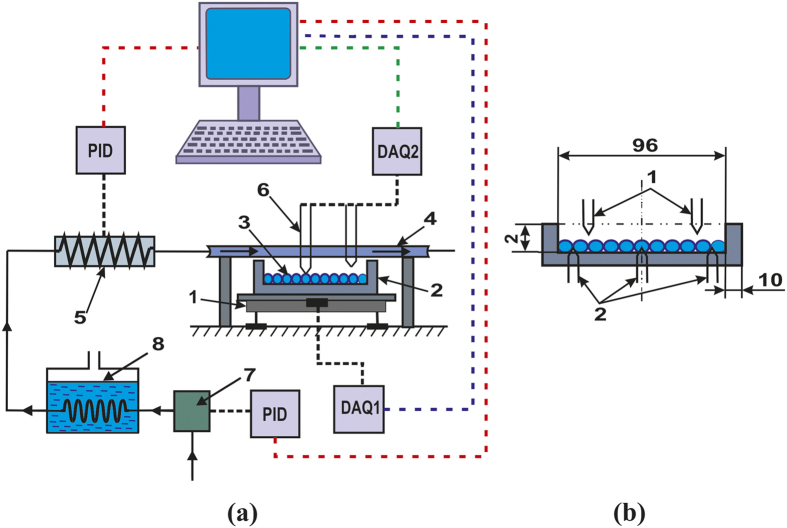
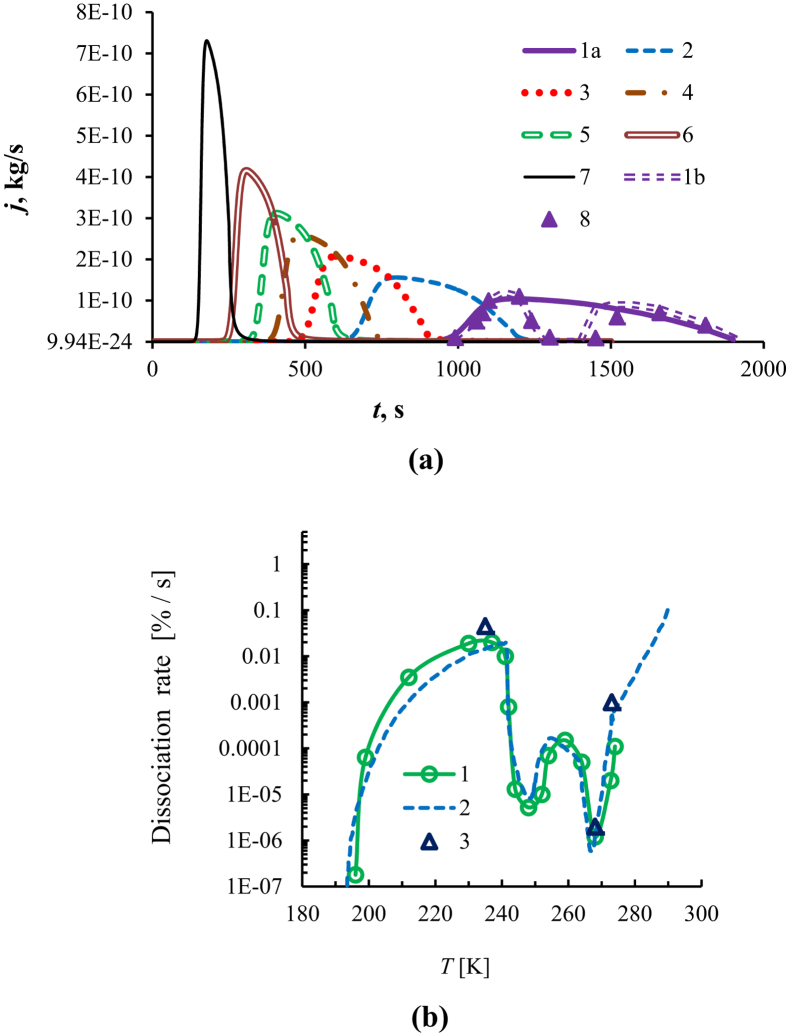
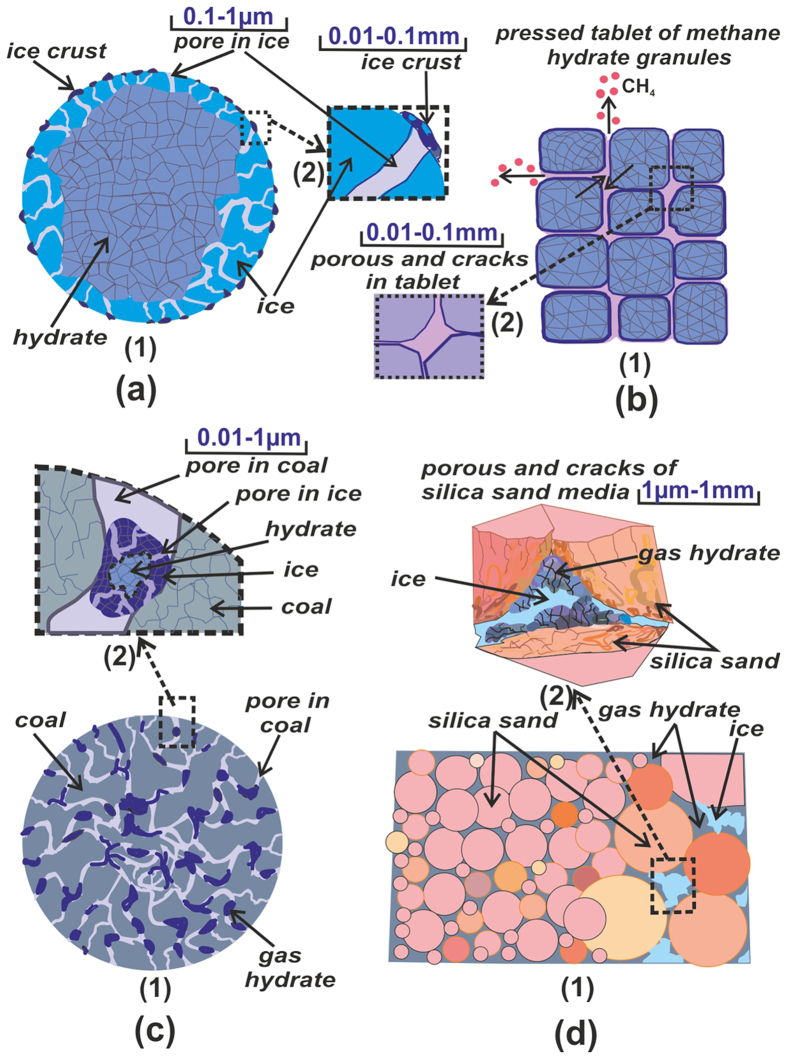
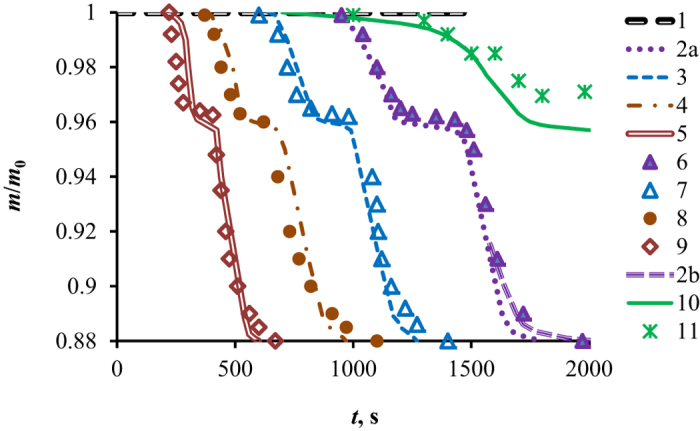
Methane hydrate dissociation at negative temperatures was studied experimentally for different artificial and natural samples, differing by macro- and micro-structural parameters. Four characteristic dissociation types are discussed in the paper. The internal kinetics of artificial granule gas hydrates and clathrate hydrates in coal is dependent on the porosity, defectiveness and gas filtration rate. The density of pores distribution in the crust of formed ice decreases by the several orders of magnitude and this change significantly the rate of decay. Existing models for describing dissociation at negative temperatures do not take into account the structural parameters of samples. The dissociation is regulated by internal physical processes that must be considered in the simulation. Non-isothermal dissociation with constant external heat flux was simulated numerically. The dissociation is simulated with consideration of heat and mass transfer, kinetics of phase transformation and gas filtering through a porous medium of granules for the negative temperatures. It is shown that the gas hydrate dissociation in the presence of mainly microporous structures is fundamentally different from the disintegration of gas hydrates containing meso and macropores.
针对不同的人工和天然样品,研究了负温度下甲烷水合物的分解情况,这些样品在宏观和微观结构参数上存在差异。本文讨论了四种特征分解类型。人工颗粒状气体水合物和煤中笼形水合物的内部动力学取决于孔隙率、缺陷程度和气体过滤速率。形成的冰层中孔隙分布的密度降低了几个数量级,这种变化显著影响了分解速率。现有的描述负温度下分解的模型没有考虑样品的结构参数。分解受内部物理过程调节,在模拟中必须予以考虑。对恒定外部热通量下的非等温分解进行了数值模拟。考虑到热质传递、相变动力学以及负温度下气体通过颗粒多孔介质的过滤,对分解进行了模拟。结果表明,主要存在微孔结构时的气体水合物分解与含有中孔和大孔的气体水合物分解在本质上是不同的。