Boukais Kamel, Bayles Richard, Borges Luciano de Figueiredo, Louedec Liliane, Boulaftali Yacine, Ho-Tin-Noé Benoit, Arocas Véronique, Bouton Marie-Christine, Michel Jean-Baptiste
UMR 1148, Laboratory for Vascular Translational Science, Institut National de la Santé et de la Recherche MédicaleParis, France; Paris7 Denis Diderot UniversityParis, France.
UMR 1148, Laboratory for Vascular Translational Science, Institut National de la Santé et de la Recherche MédicaleParis, France; Department of Physiology and Pharmacology, Oregon Health and Science UniversityPortland, OR, USA.
Front Physiol. 2016 Jun 30;7:273. doi: 10.3389/fphys.2016.00273. eCollection 2016.
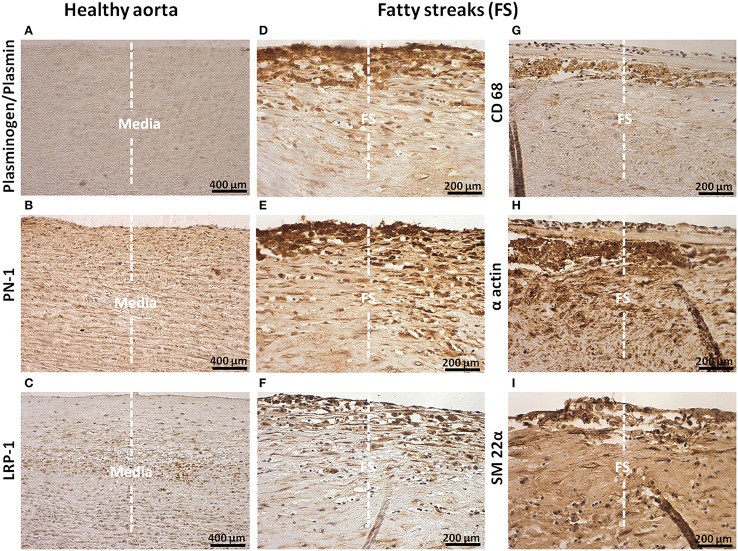
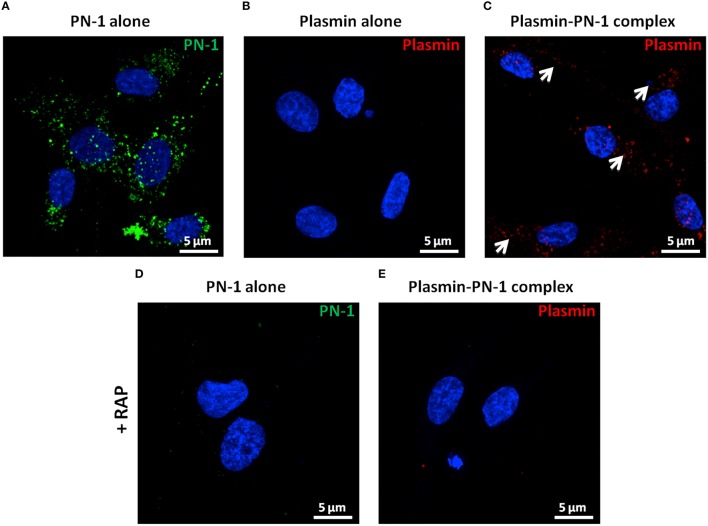
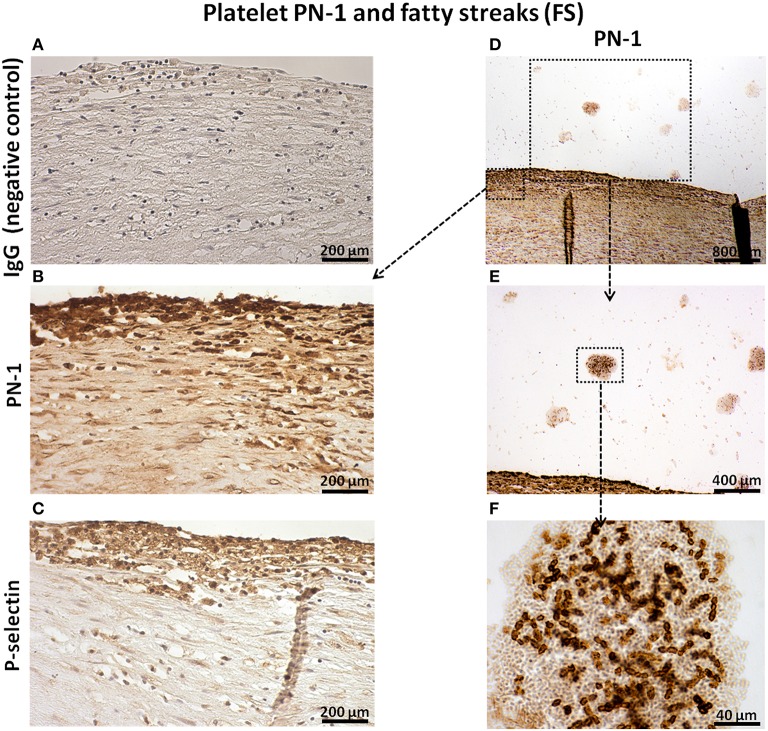
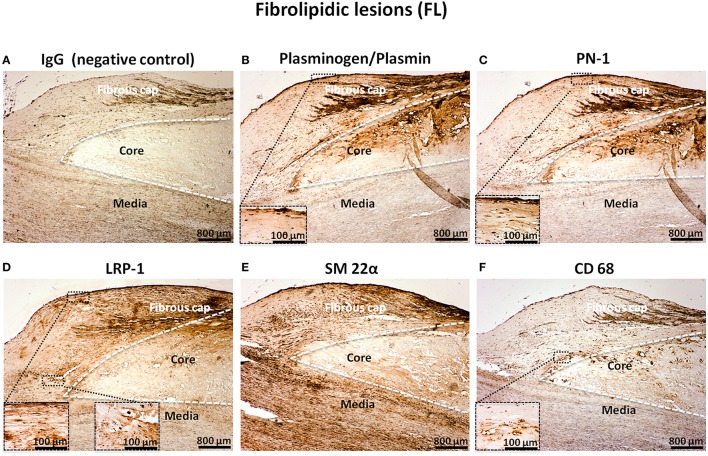
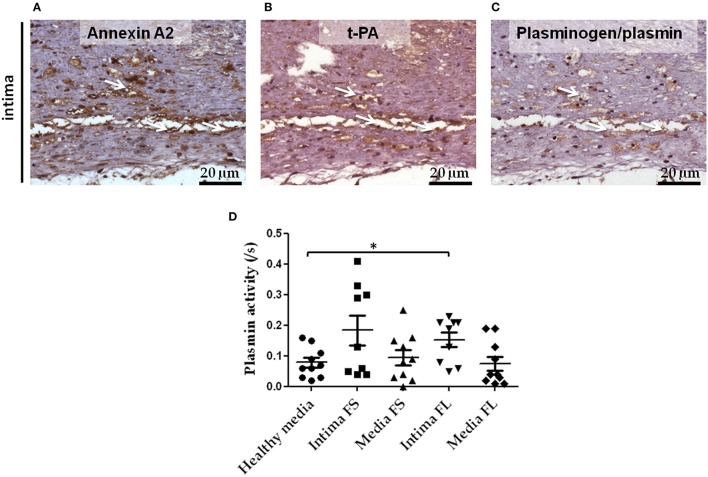
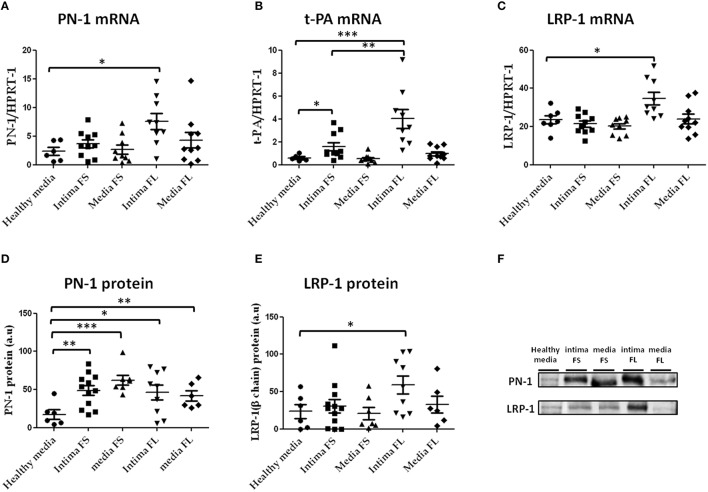
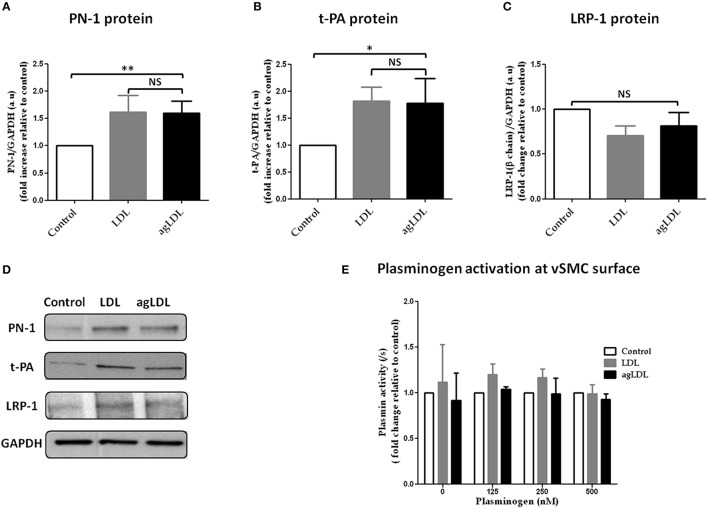
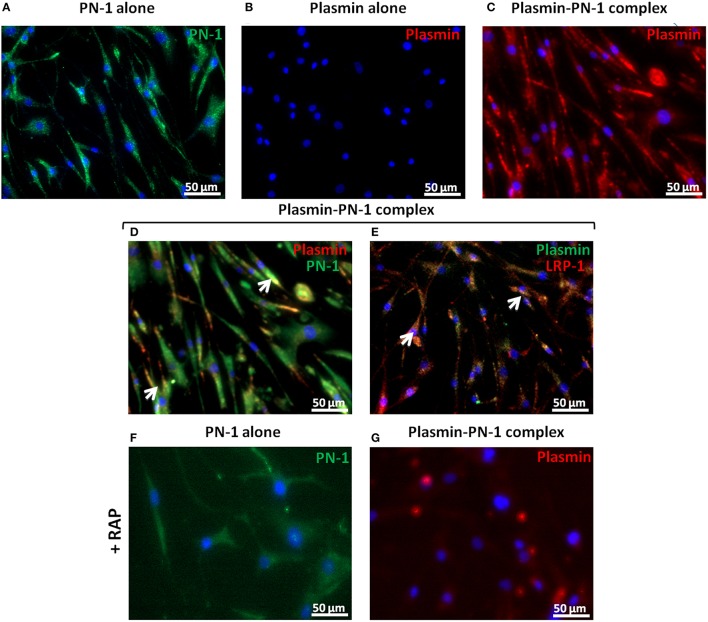
Zymogens are delivered to the arterial wall by radial transmural convection. Plasminogen can be activated within the arterial wall to produce plasmin, which is involved in evolution of the atherosclerotic plaque. Vascular smooth muscle cells (vSMCs) protect the vessels from proteolytic injury due to atherosclerosis development by highly expressing endocytic LDL receptor-related protein-1 (LRP-1), and by producing anti-proteases, such as Protease Nexin-1 (PN-1). PN-1 is able to form covalent complexes with plasmin. We hypothesized that plasmin-PN-1 complexes could be internalized via LRP-1 by vSMCs during the early stages of human atheroma. LRP-1 is also responsible for the capture of aggregated LDL in human atheroma. Plasmin activity and immunohistochemical analyses of early human atheroma showed that the plasminergic system is activated within the arterial wall, where intimal foam cells, including vSMCs and platelets, are the major sites of PN-1 accumulation. Both PN-1 and LRP-1 are overexpressed in early atheroma at both messenger and protein levels. Cell biology studies demonstrated an increased expression of PN-1 and tissue plasminogen activator by vSMCs in response to LDL. Plasmin-PN-1 complexes are internalized via LRP-1 in vSMCs, whereas plasmin alone is not. Tissue PN-1 interacts with plasmin in early human atheroma via two complementary mechanisms: plasmin inhibition and tissue uptake of plasmin-PN-1 complexes via LRP-1 in vSMCs. Despite this potential protective effect, plasminogen activation by vSMCs remains abnormally elevated in the intima in early stages of human atheroma.
酶原通过径向透壁对流输送至动脉壁。纤溶酶原可在动脉壁内被激活产生纤溶酶,其参与动脉粥样硬化斑块的演变。血管平滑肌细胞(vSMC)通过高表达内吞性低密度脂蛋白受体相关蛋白-1(LRP-1)以及产生抗蛋白酶(如蛋白酶连接蛋白-1,PN-1)来保护血管免受动脉粥样硬化发展所致的蛋白水解损伤。PN-1能够与纤溶酶形成共价复合物。我们推测在人类动脉粥样硬化早期,纤溶酶-PN-1复合物可通过LRP-1被vSMC内化。LRP-1还负责在人类动脉粥样硬化中捕获聚集的低密度脂蛋白。对早期人类动脉粥样硬化的纤溶酶活性和免疫组织化学分析表明,纤溶酶系统在动脉壁内被激活,其中内膜泡沫细胞(包括vSMC和血小板)是PN-1积累的主要部位。在早期动脉粥样硬化中,PN-1和LRP-1在信使水平和蛋白质水平均过度表达。细胞生物学研究表明,vSMC对低密度脂蛋白的反应会使PN-1和组织纤溶酶原激活剂的表达增加。纤溶酶-PN-1复合物通过LRP-1在vSMC中内化,而单独纤溶酶则不能。在早期人类动脉粥样硬化中,组织PN-1通过两种互补机制与纤溶酶相互作用:纤溶酶抑制以及通过vSMC中的LRP-1对纤溶酶-PN-1复合物进行组织摄取。尽管有这种潜在的保护作用,但在人类动脉粥样硬化早期,vSMC介导的纤溶酶原激活在内膜中仍异常升高。