Yang Yiwei, Huang Yitong, Wang Zhantong, Wang Hsin-Tzu, Duan Baoyu, Ye Dan, Wang Chenxin, Jing Ruiqi, Leng Ye, Xi Jiajie, Chen Wen, Wang Guiying, Jia Wenwen, Zhu Songcheng, Kang Jiuhong
Clinical and Translational Research Center of Shanghai First Maternity & Infant Hospital, Shanghai Key Laboratory of Signaling and Disease Research, Collaborative Innovation Center for Brain Science, School of Life Science and Technology, Tongji University, Shanghai 200092, P. R. China.
Oncotarget. 2016 Sep 13;7(37):59388-59401. doi: 10.18632/oncotarget.10673.
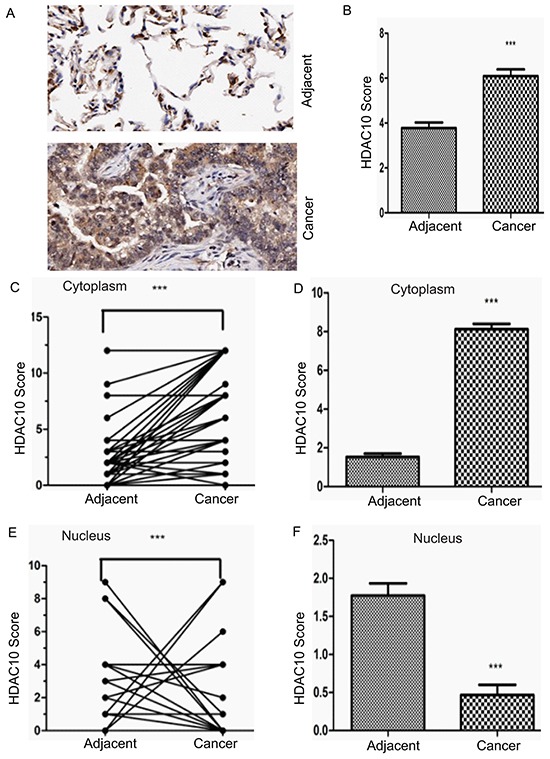
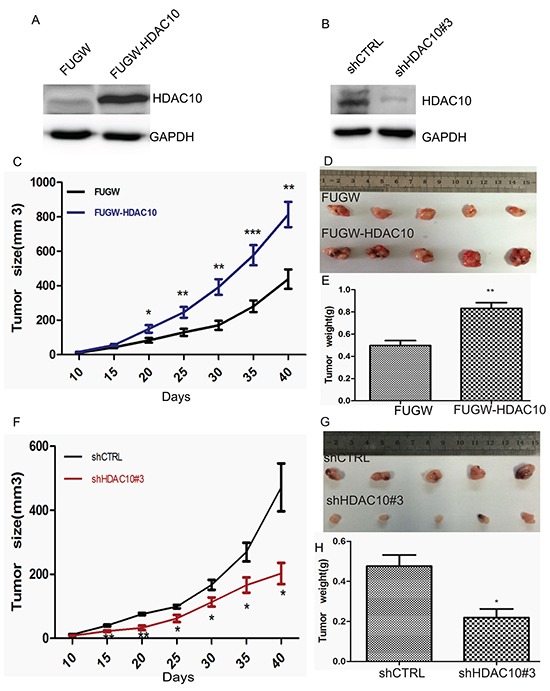
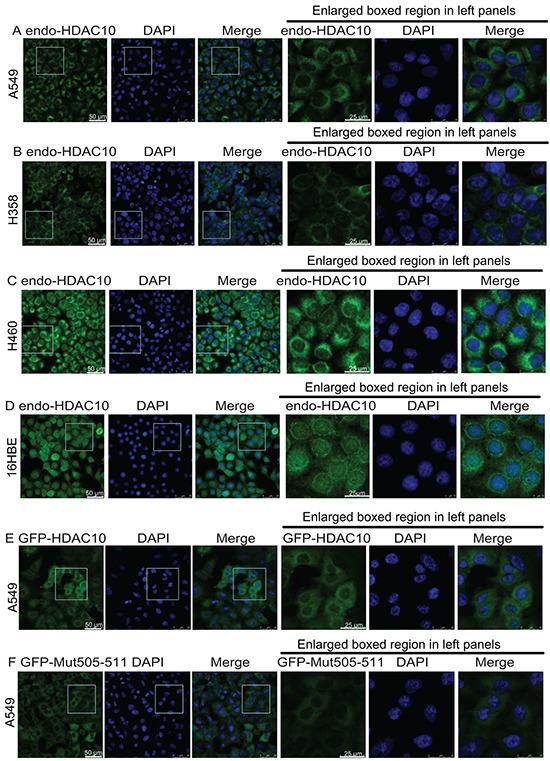
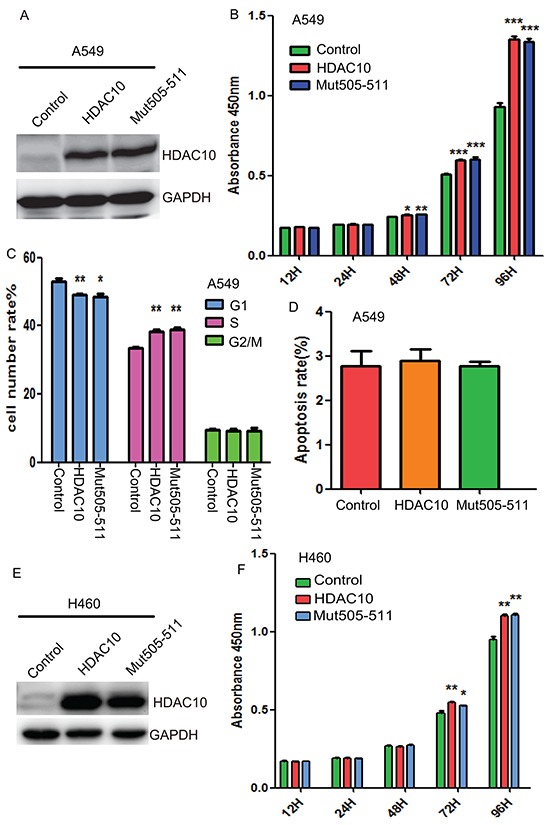
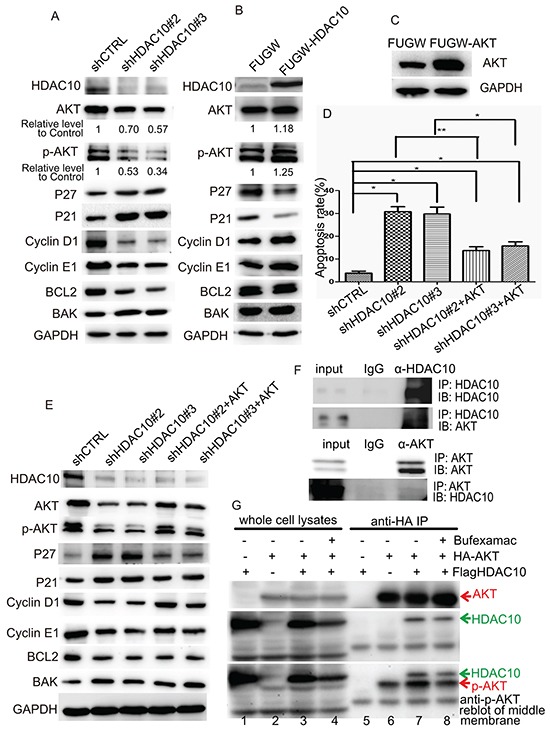
Histone deacetylase 10 (HDAC10) is a member of the class II HDACs, and its role in cancer is emerging. In this study, we found that HDAC10 is highly expressed in lung cancer tissues. It resides mainly in the cytoplasm of lung cancer cells but resides in the nucleus of adjacent normal cells. Further examinations revealed that HDAC10 resides in the cytoplasm in multiple lung cancer cell lines, including the A549, H358 and H460 cell lines, but mainly resides in the nucleus of normal lung epithelial 16HBE cells. A leucine-rich motif, R505L506L507C508V509A510L511, was identified as its nuclear localization signal (NLS), and a mutant (Mut-505-511) featuring mutations to A at each of its original R and L positions was found to be nuclear-localization defective. Functional analysis revealed that HDAC10 promoted lung cancer cell growth and that its knockdown induced cell cycle arrest and apoptosis. Mechanistic studies showed that HDAC10 knockdown significantly decreased the phosphorylation of AKT at Ser473 and that AKT expression significantly rescued the cell cycle arrest and apoptosis elicited by HDAC10 knockdown. A co-immunoprecipitation assay suggested that HDAC10 interacts with AKT and that inhibition of HDAC10 activity decreases its interaction with and phosphorylation of AKT. Finally, we confirmed that HDAC10 promoted lung cancer proliferation in a mouse model. Our study demonstrated that HDAC10 localizes and functions in the cytoplasm of lung cancer cells, thereby underscoring its potential role in the diagnosis and treatment of lung cancer.
组蛋白去乙酰化酶10(HDAC10)是II类组蛋白去乙酰化酶的成员之一,其在癌症中的作用正逐渐显现。在本研究中,我们发现HDAC10在肺癌组织中高表达。它主要存在于肺癌细胞的细胞质中,但存在于相邻正常细胞的细胞核中。进一步研究发现,HDAC10在多种肺癌细胞系中,包括A549、H358和H460细胞系,都存在于细胞质中,但主要存在于正常肺上皮16HBE细胞的细胞核中。一个富含亮氨酸的基序R505L506L507C508V509A510L511被确定为其核定位信号(NLS),并且发现一个在其原始R和L位置均突变为A的突变体(Mut-505-511)存在核定位缺陷。功能分析表明,HDAC10促进肺癌细胞生长,其敲低可诱导细胞周期停滞和凋亡。机制研究表明,HDAC10敲低显著降低了AKT在Ser473位点的磷酸化,并且AKT表达显著挽救了HDAC10敲低引起的细胞周期停滞和凋亡。免疫共沉淀试验表明,HDAC10与AKT相互作用,并且抑制HDAC10活性会降低其与AKT的相互作用及AKT的磷酸化。最后,我们证实在小鼠模型中HDAC10促进肺癌增殖。我们的研究表明,HDAC10在肺癌细胞的细胞质中定位并发挥作用,从而凸显了其在肺癌诊断和治疗中的潜在作用。