Aleksandrov Aleksander A, Dmitrieva Elena S, Stankevich Ludmila N, Knyazeva Veronika M, Shestakova Anna N
Department of Higher Nervous Activity and Psychophysiology, Saint Petersburg State University Saint Petersburg, Russia.
Centre for Cognition and Decision Making, National Research University Higher School of Economics Moscow, Russia.
Front Syst Neurosci. 2016 May 20;10:44. doi: 10.3389/fnsys.2016.00044. eCollection 2016.
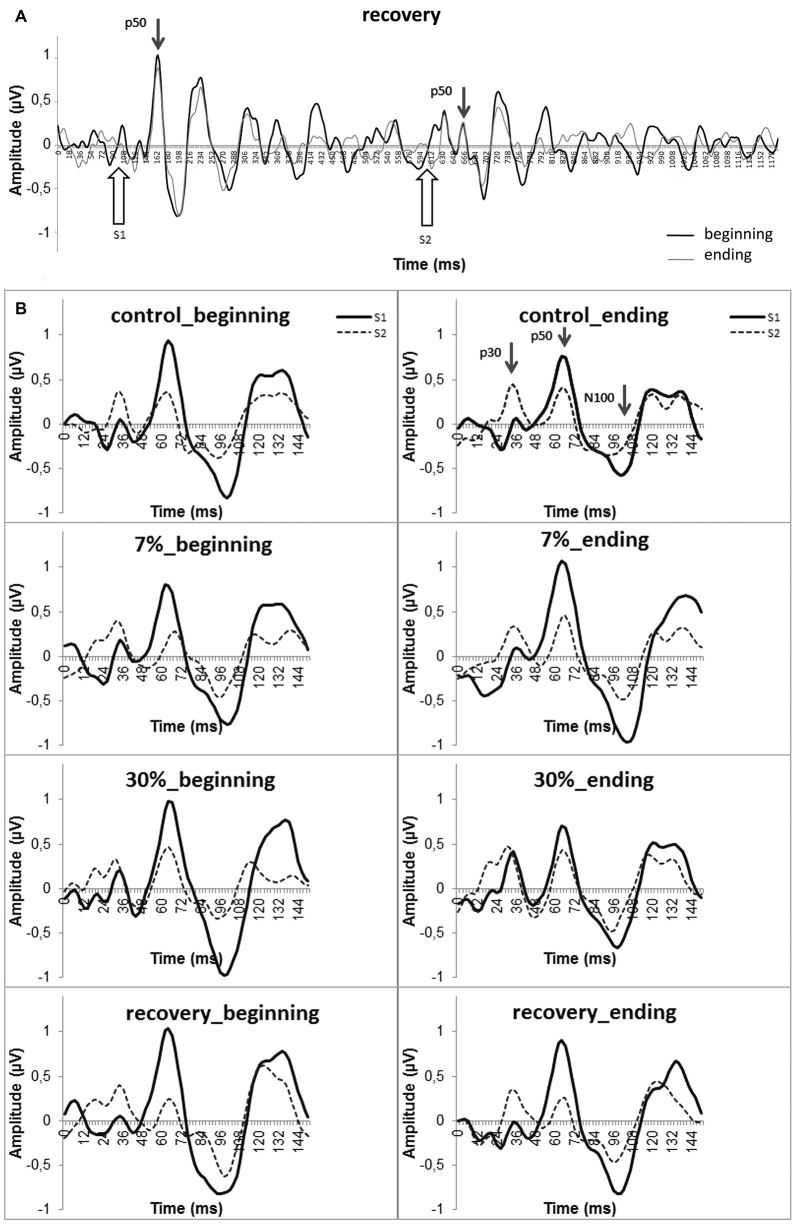
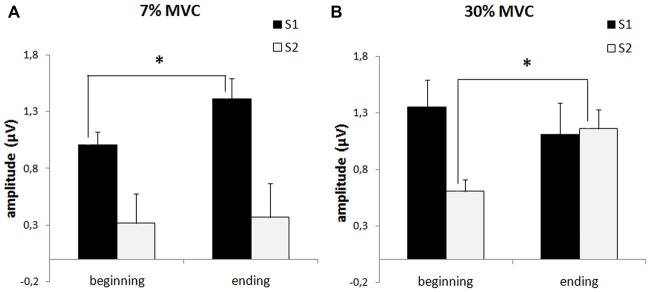
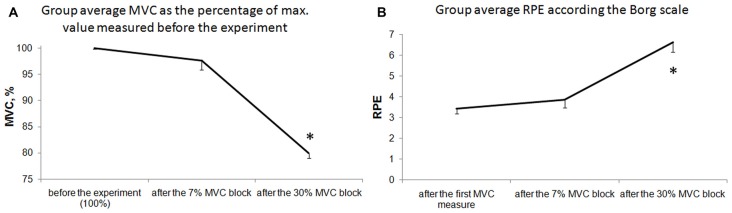
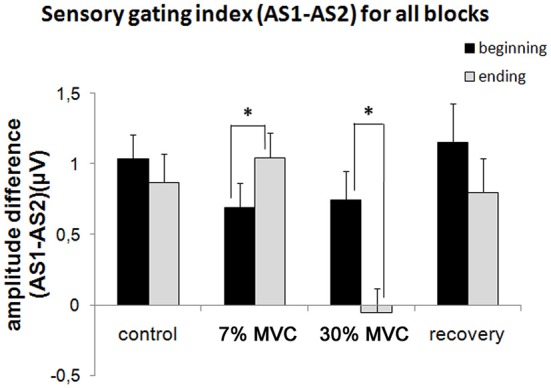
Our aim was to study the influence of fatigue development on sensory gating during a muscle load. The fatiguing task was sustained contraction of a handgrip dynamometer with 7 and 30% maximum voluntary contraction (MVC). The suppression of P50, an auditory event-related potential, was used as the sensory gating index in the paired-click paradigm with a 500 ms interstimulus interval; the difference between the P50 amplitudes of the first and the second stimuli of the pair was used as the sensory gating index. We found that the 30% MVC fatigue development strongly decreased sensory gating, sometimes totally suppressing it. We concluded that central fatigue impaired motor performance and strongly suppressed inhibitory processes, as shown by the decreased P50 amplitude to the second stimulus. Therefore, muscle central fatigue influences sensory gating, similar to schizophrenia spectrum disorders.
我们的目的是研究肌肉负荷期间疲劳发展对感觉门控的影响。疲劳任务是使用最大自主收缩(MVC)的7%和30%对手握式测力计进行持续收缩。在刺激间隔为500毫秒的双声点击范式中,P50(一种听觉事件相关电位)的抑制被用作感觉门控指标;该对刺激中第一个和第二个刺激的P50波幅之差被用作感觉门控指标。我们发现,30%MVC的疲劳发展会显著降低感觉门控,有时甚至会完全抑制它。我们得出结论,中枢疲劳损害了运动表现并强烈抑制了抑制过程,这表现为对第二个刺激的P50波幅降低。因此,肌肉中枢疲劳会影响感觉门控,这与精神分裂症谱系障碍类似。