Forsingdal A, Fejgin K, Nielsen V, Werge T, Nielsen J
Synaptic Transmission, In Vitro, Neuroscience Research DK, H. Lundbeck A/S, Valby, Denmark.
Institute of Biological Psychiatry, Mental Health Center, Sct. Hans, Mental Health Services, Roskilde, Denmark.
Transl Psychiatry. 2016 Jul 26;6(7):e860. doi: 10.1038/tp.2016.125.
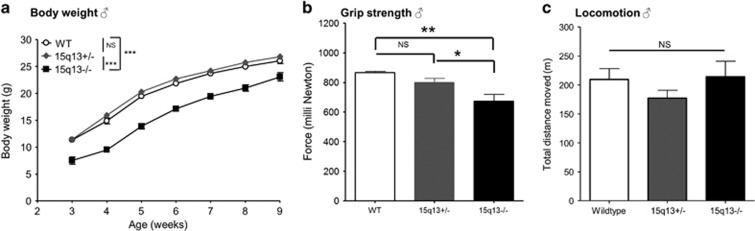
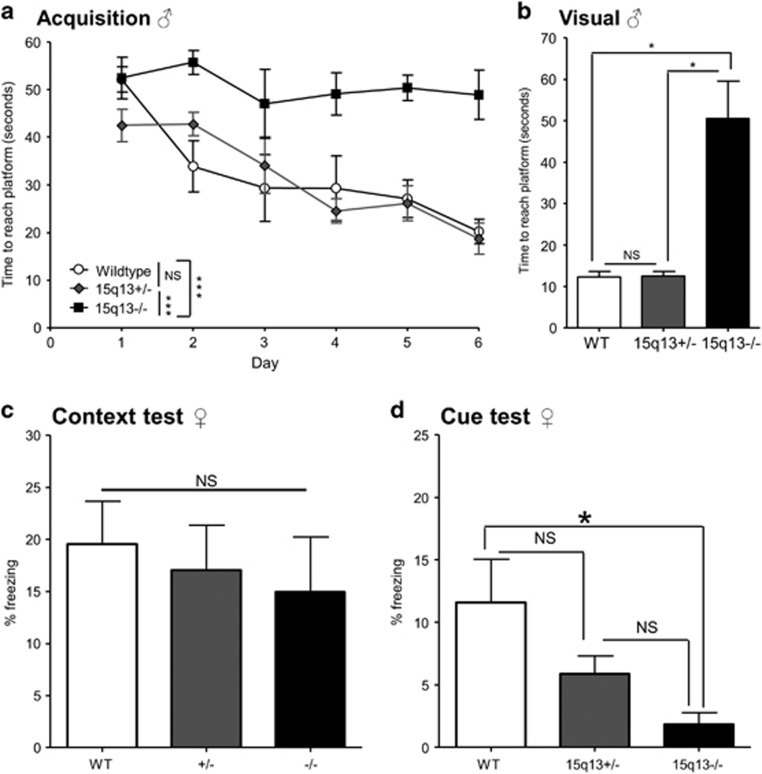
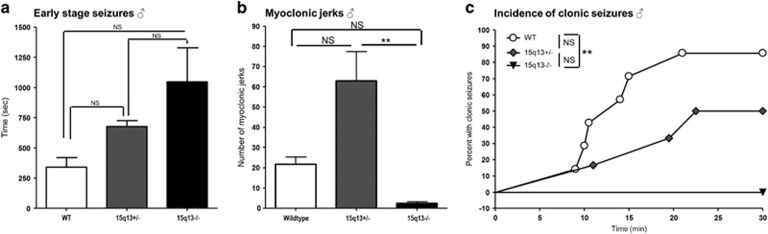
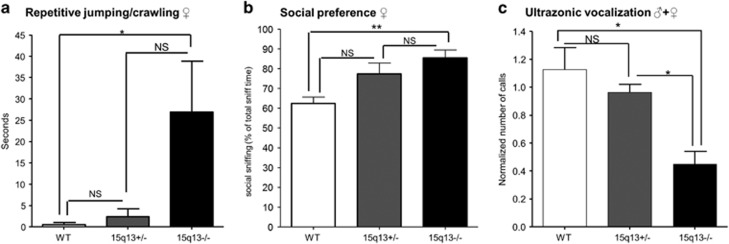
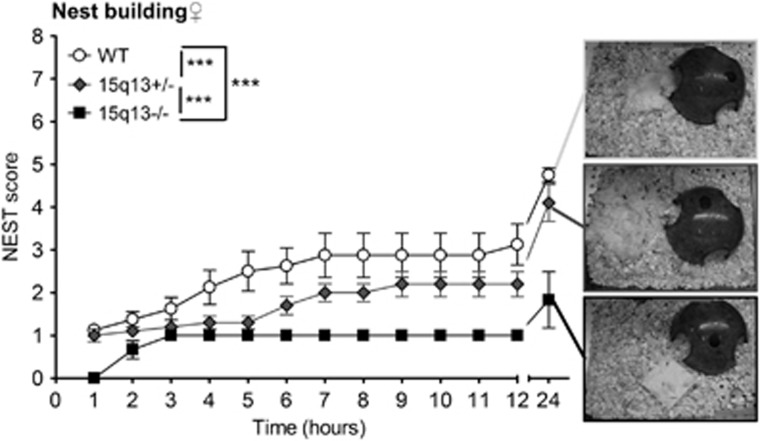
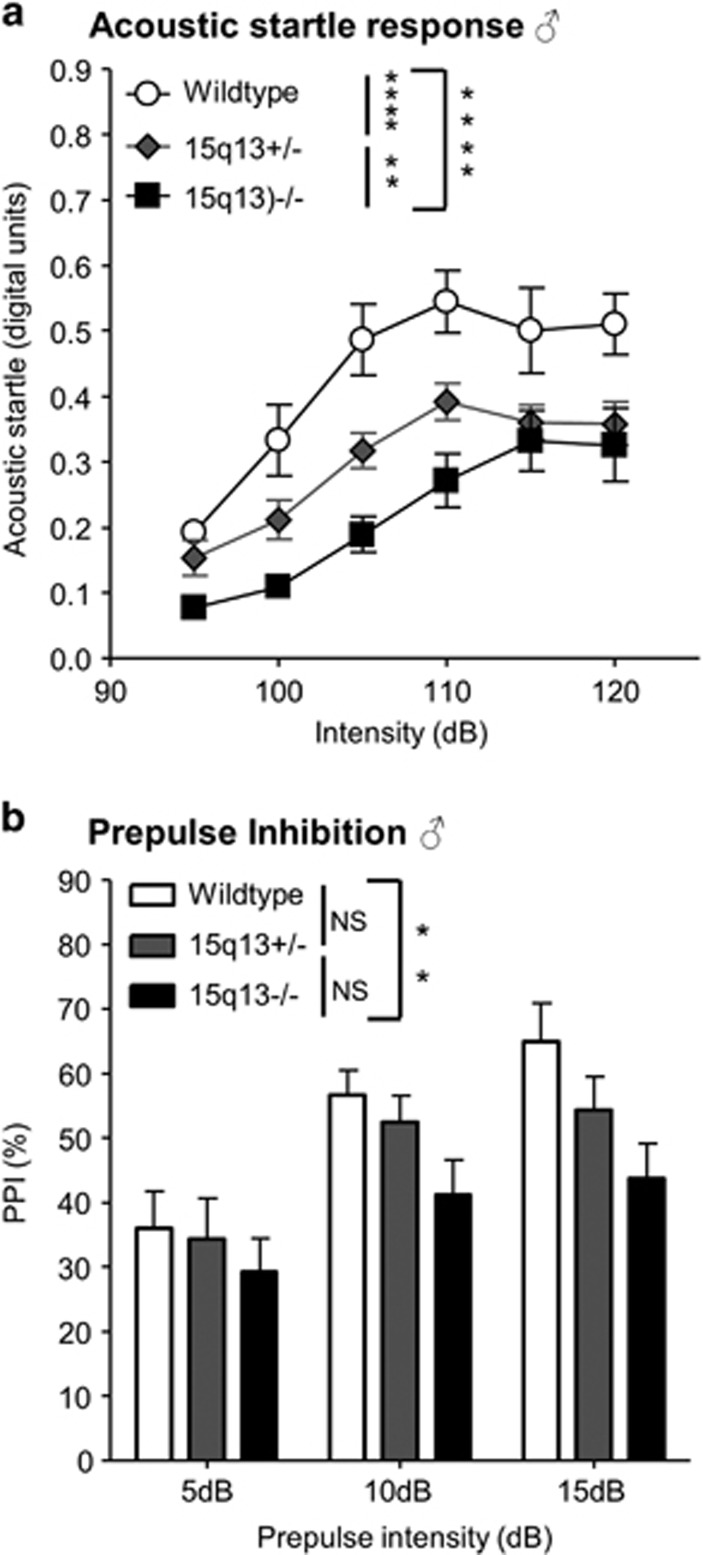
The 15q13.3 microdeletion syndrome is caused by a 1.5-MB hemizygous microdeletion located on 15q13.3 affecting seven genes: FAN1; MTMR10; TRPM1; miR-211; KLF13; OTUD7A; and CHRNA7. The 15q13.3 microdeletion increases the risk of intellectual disability, epilepsy, autism spectrum disorder and schizophrenia, though the clinical profile varies considerably. Two mouse models of this syndrome, with hemizygous deletion of the orthologous region in the murine genome, have recently been shown to recapitulate a number of the behavioral and physiological deficits that characterize the human condition. Still, little is known of the underlying biological mechanisms. Eleven human cases with homozygous deletion of the 15q13.3 region have been reported, all with severe functional and physiological impairments. We therefore hypothesized that a 15q13.3 homozygous knockout would confer more pronounced behavioral and physiological deficits in mice than the 15q13.3 hemizygous deletion. Here we report the characterization of a 15q13.3 knockout mouse. We observed marked deficits including altered seizure susceptibility, autistic behavior-related phenotypes, and auditory sensory processing. Several of these deficits, albeit less pronounced, were also found in the 15q13.3 hemizygous littermates indicating a gene-dosage dependency. Our findings strongly indicate that studies of the hemi- and homozygous 15q13.3 mouse strains will facilitate understanding of the biological mechanisms of severe mental disorders.
15q13.3微缺失综合征是由位于15q13.3的一个1.5兆碱基的半合子微缺失引起的,该微缺失影响七个基因:FAN1、MTMR10、TRPM1、miR - 211、KLF13、OTUD7A和CHRNA7。15q13.3微缺失会增加智力残疾、癫痫、自闭症谱系障碍和精神分裂症的风险,尽管临床症状差异很大。最近有研究表明,该综合征的两种小鼠模型,其小鼠基因组中同源区域存在半合子缺失,能够重现许多表征人类疾病的行为和生理缺陷。然而,其潜在的生物学机制仍知之甚少。据报道,有11例人类病例存在15q13.3区域的纯合缺失,均伴有严重的功能和生理损伤。因此,我们推测15q13.3纯合敲除小鼠比15q13.3半合子缺失小鼠会表现出更明显的行为和生理缺陷。在此,我们报告了一只15q13.3敲除小鼠的特征。我们观察到明显的缺陷,包括癫痫易感性改变、自闭症行为相关表型以及听觉感觉处理异常。在15q13.3半合子同窝小鼠中也发现了其中一些缺陷,尽管不太明显,这表明存在基因剂量依赖性。我们的研究结果有力地表明,对15q13.3半合子和纯合子小鼠品系的研究将有助于理解严重精神障碍的生物学机制。