Wetzl Veronika, Schinner Elisabeth, Kees Frieder, Hofmann Franz, Faerber Lothar, Schlossmann Jens
Department of Pharmacology and Toxicology, University of RegensburgRegensburg, Germany; Novartis Pharma GmbHNuremberg, Germany.
Department of Pharmacology and Toxicology, University of Regensburg Regensburg, Germany.
Front Pharmacol. 2016 Jul 12;7:195. doi: 10.3389/fphar.2016.00195. eCollection 2016.
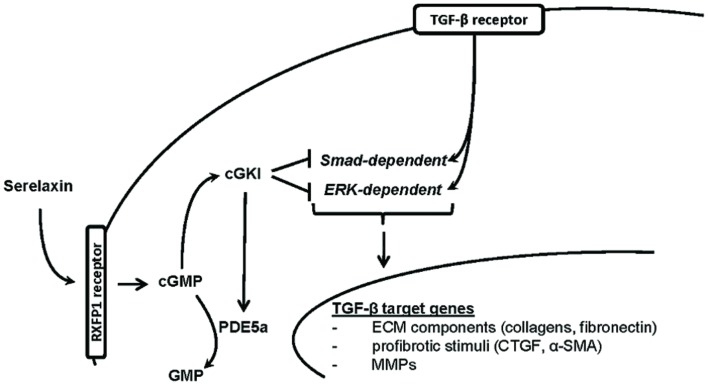
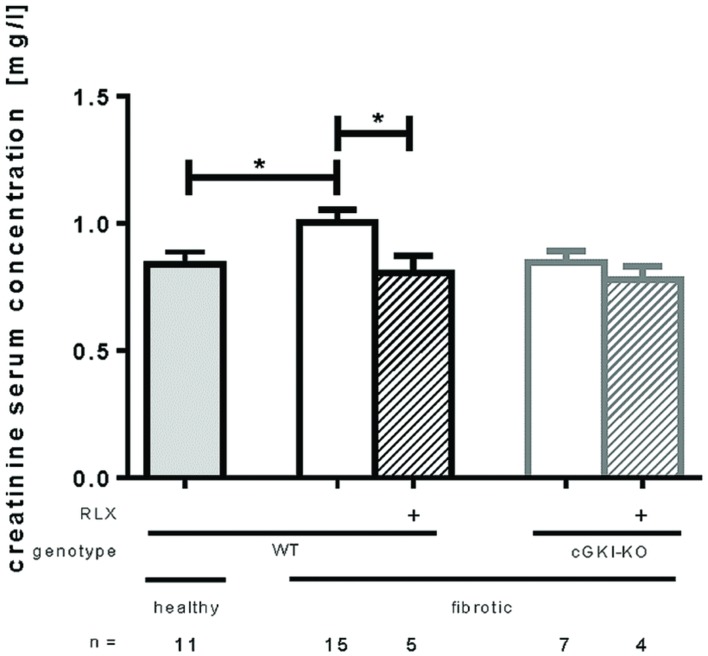
Kidney fibrosis has shown to be ameliorated through the involvement of cyclic guanosine monophosphate (cGMP) and its dependent protein kinase I (cGKI). Serelaxin, the recombinant form of human relaxin-II, increases cGMP levels and has shown beneficial effects on kidney function in acute heart failure patients. Antifibrotic properties of serelaxin are supposed to be mediated via relaxin family peptide receptor 1 and subsequently enhanced nitric oxide/cGMP to inhibit transforming growth factor-β (TGF-β) signaling. This study examines the involvement of cGKI in the antifibrotic signaling of serelaxin.
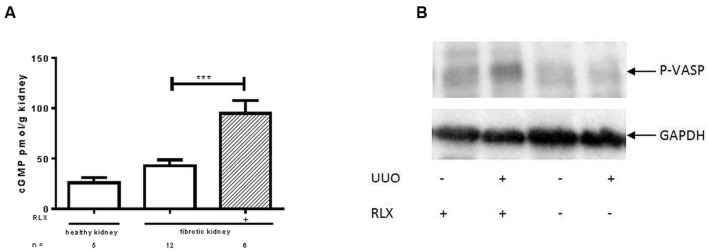
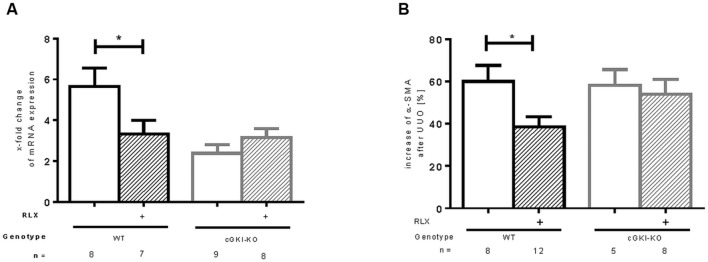
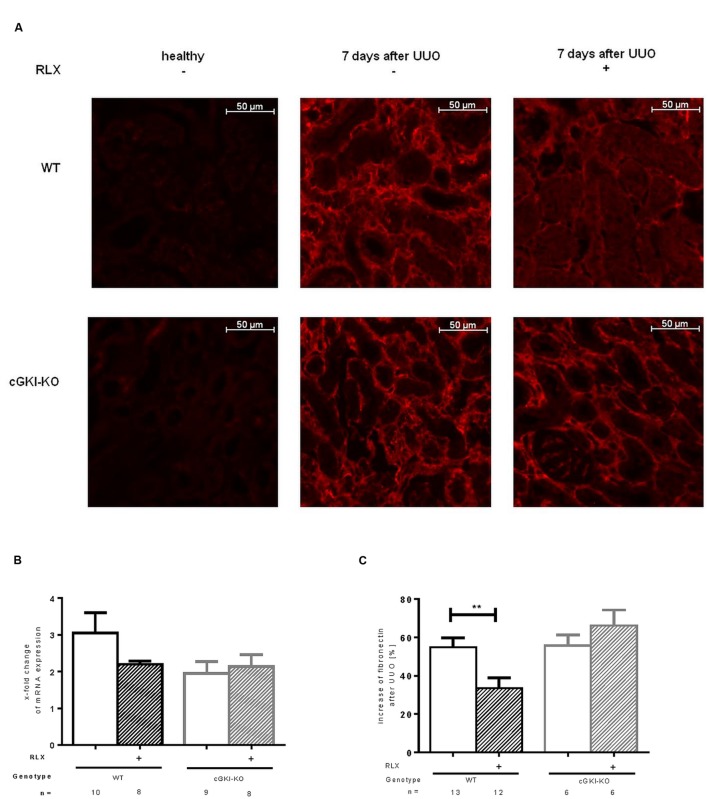
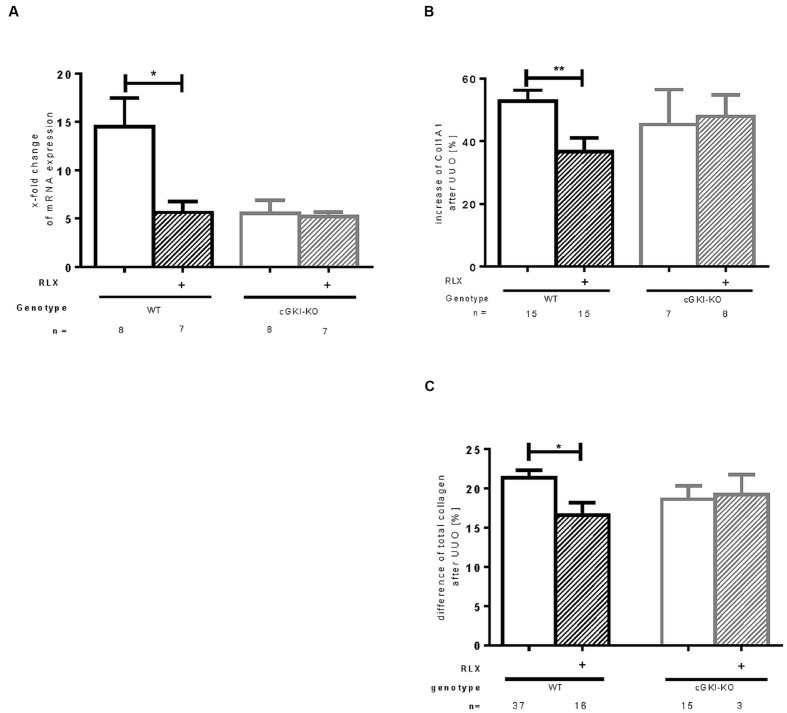
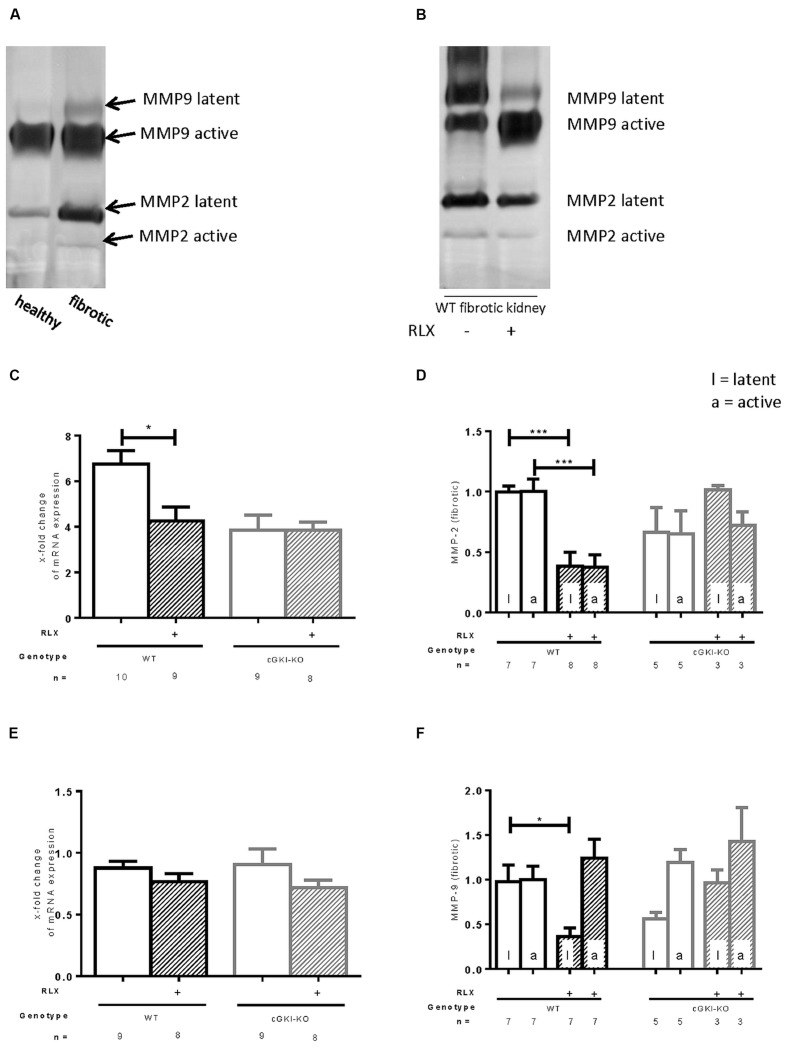
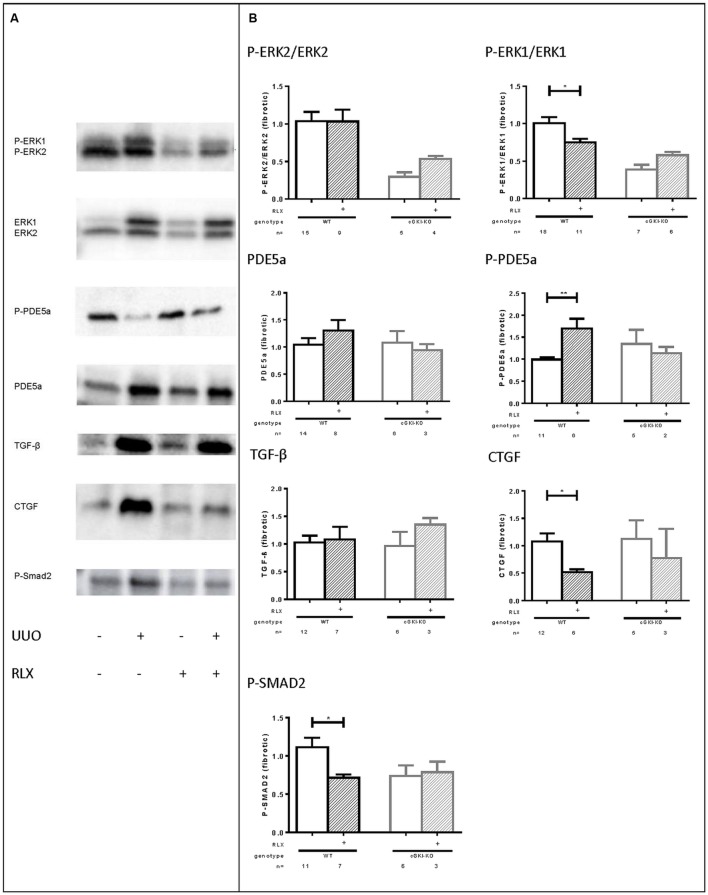
Kidney fibrosis was induced by unilateral ureteral obstruction in wildtype (WT) and cGKI knock-out (KO) mice. After 7 days, renal antifibrotic effects of serelaxin were assessed. Serelaxin treatment for 7 days significantly increased cGMP in the kidney of WT and cGKI-KO. In WT, renal fibrosis was reduced through decreased accumulation of collagen1A1, total collagen, and fibronectin. The profibrotic connective tissue growth factor as well as myofibroblast differentiation were reduced and matrix metalloproteinases-2 and -9 were positively modulated after treatment. Moreover, Smad2 as well as extracellular signal-regulated kinase 1 (ERK1) phosphorylation were decreased, whereas phosphodiesterase (PDE) 5a phosphorylation was increased. However, these effects were not observed in cGKI-KO.
Antifibrotic renal effects of serelaxin are mediated via cGMP/cGKI to inhibit Smad2- and ERK1-dependent TGF-β signaling and increased PDE5a phosphorylation.
肾纤维化已表明可通过环磷酸鸟苷(cGMP)及其依赖性蛋白激酶I(cGKI)得以改善。重组人松弛素II(Serelaxin)可提高cGMP水平,并已证明对急性心力衰竭患者的肾功能有有益作用。Serelaxin的抗纤维化特性被认为是通过松弛素家族肽受体1介导的,随后增强一氧化氮/cGMP以抑制转化生长因子-β(TGF-β)信号传导。本研究探讨了cGKI在Serelaxin抗纤维化信号传导中的作用。
通过单侧输尿管梗阻在野生型(WT)和cGKI基因敲除(KO)小鼠中诱导肾纤维化。7天后,评估Serelaxin的肾脏抗纤维化作用。Serelaxin治疗7天可显著提高WT和cGKI-KO小鼠肾脏中的cGMP水平。在WT小鼠中,通过减少胶原蛋白1A1、总胶原蛋白和纤连蛋白的积累,肾纤维化得以减轻。治疗后,促纤维化的结缔组织生长因子以及肌成纤维细胞分化减少,基质金属蛋白酶-2和-9受到正向调节。此外,Smad2以及细胞外信号调节激酶1(ERK1)的磷酸化减少,而磷酸二酯酶(PDE)5a的磷酸化增加。然而,在cGKI-KO小鼠中未观察到这些效应。
Serelaxin的肾脏抗纤维化作用是通过cGMP/cGKI介导的,以抑制Smad2和ERK1依赖性TGF-β信号传导,并增加PDE5a的磷酸化。