Department of Human and Molecular Genetics, Herbert Wertheim College of Medicine, Florida International University, Miami, FL, USA.
Cardiovascular Disease Theme, Monash Biomedicine Discovery Institute and Department of Pharmacology, Monash University, Clayton, VIC, Australia.
Mol Cell Endocrinol. 2019 May 1;487:59-65. doi: 10.1016/j.mce.2019.01.015. Epub 2019 Jan 17.
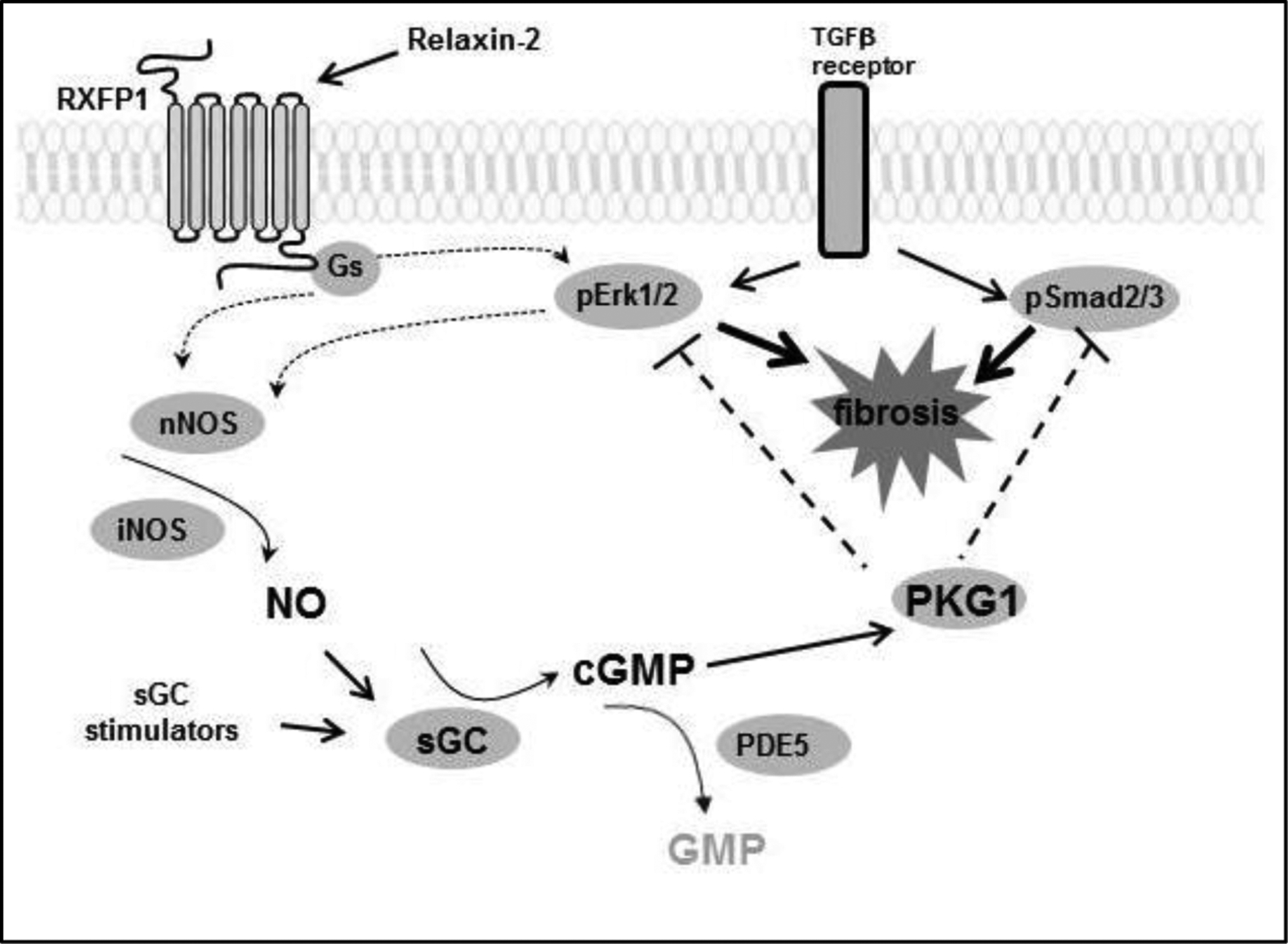
Fibrosis is associated with accumulation of excess fibrillar collagen, leading to tissue dysfunction. Numerous processes, including inflammation, myofibroblast activation, and endothelial-to-mesenchymal transition, play a role in the establishment and progression of fibrosis. Relaxin is a peptide hormone with well-known antifibrotic properties that result from its action on numerous cellular targets to reduce fibrosis. Relaxin activates multiple signal transduction pathways as a mechanism to suppress inflammation and myofibroblast activation in fibrosis. In this review, the general mechanisms underlying fibrotic diseases are described, along with the current state of knowledge regarding cellular targets of relaxin. Finally, an overview is presented summarizing the signaling pathways activated by relaxin and other relaxin family peptide receptor agonists to suppress fibrosis.
纤维化与过量纤维胶原的积累有关,导致组织功能障碍。许多过程,包括炎症、肌成纤维细胞激活和内皮细胞向间充质转化,在纤维化的建立和进展中发挥作用。松弛素是一种具有明显抗纤维化特性的肽类激素,其作用于许多细胞靶点以减少纤维化。松弛素通过激活多种信号转导途径来抑制纤维化中的炎症和肌成纤维细胞激活。在这篇综述中,描述了纤维化疾病的一般机制,以及关于松弛素细胞靶点的现有知识。最后,概述了松弛素和其他松弛素家族肽受体激动剂激活的信号通路,以抑制纤维化。