Ah-Koon Laurent, Lesage Denis, Lemadre Elodie, Souissi Inès, Fagard Remi, Varin-Blank Nadine, Fabre Emmanuelle E, Schischmanoff Olivier
INSERM, U978, Bobigny, France.
Université Paris 13, UFR SMBH, Sorbonne Paris Cité, Laboratoire d'excellence INFLAMEX, Bobigny, France.
J Cell Mol Med. 2016 Oct;20(10):1956-65. doi: 10.1111/jcmm.12887. Epub 2016 Jul 27.
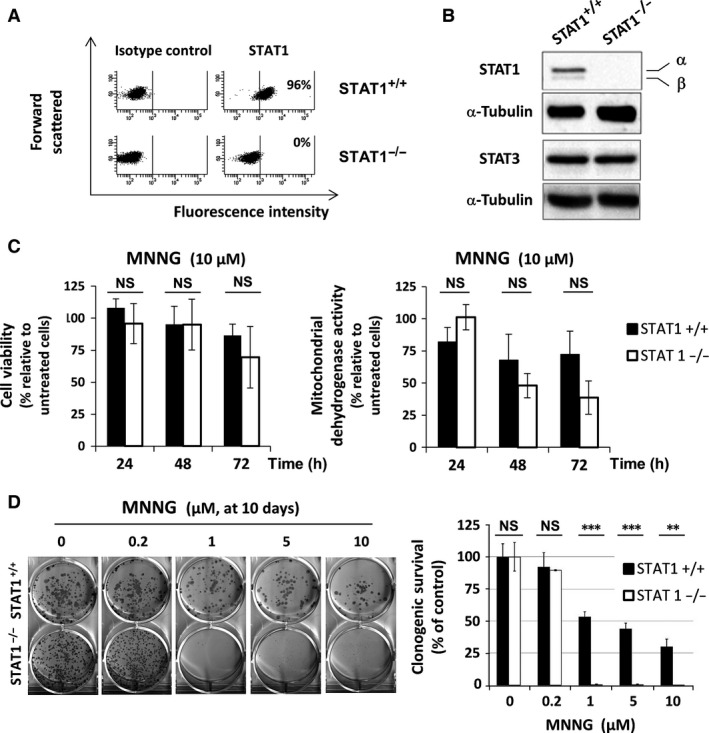
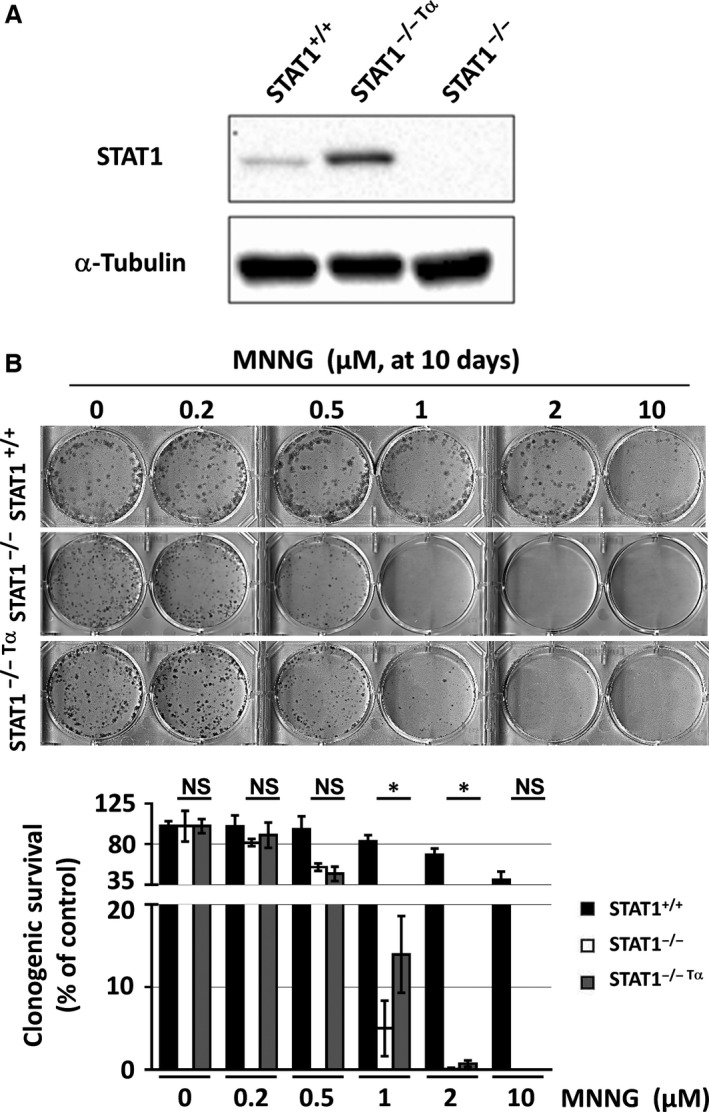
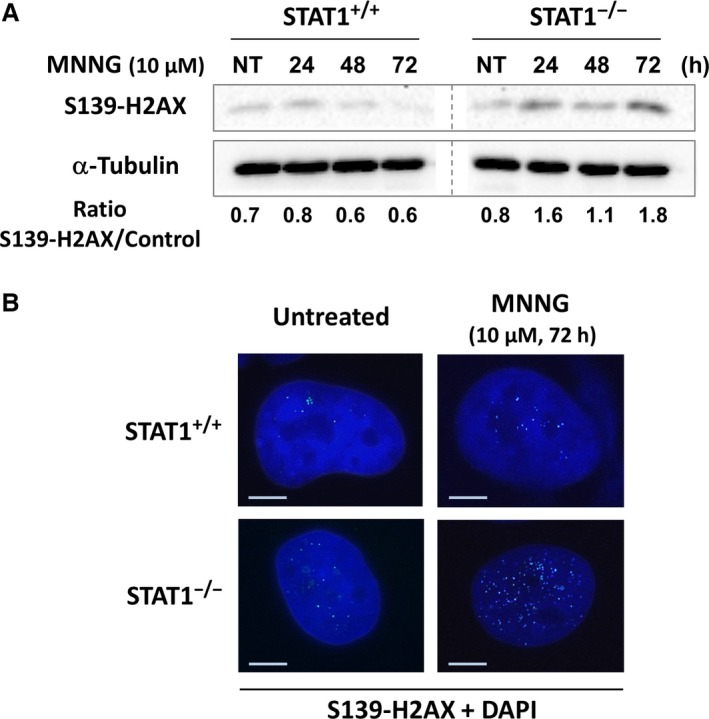
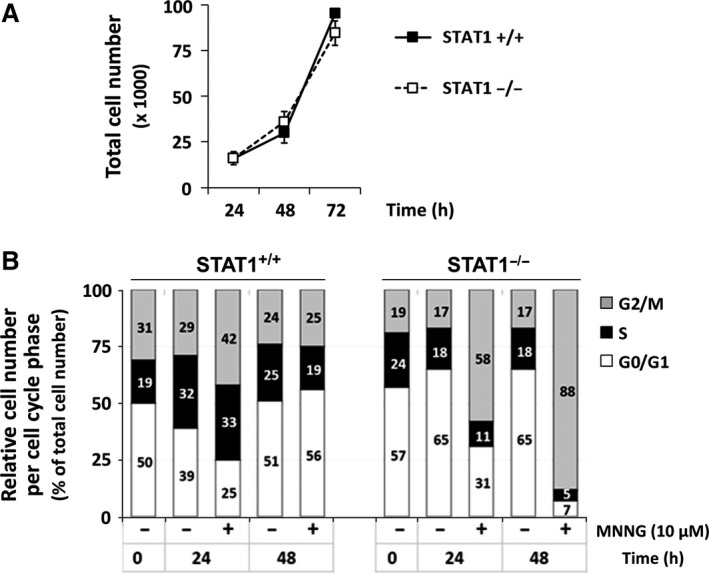
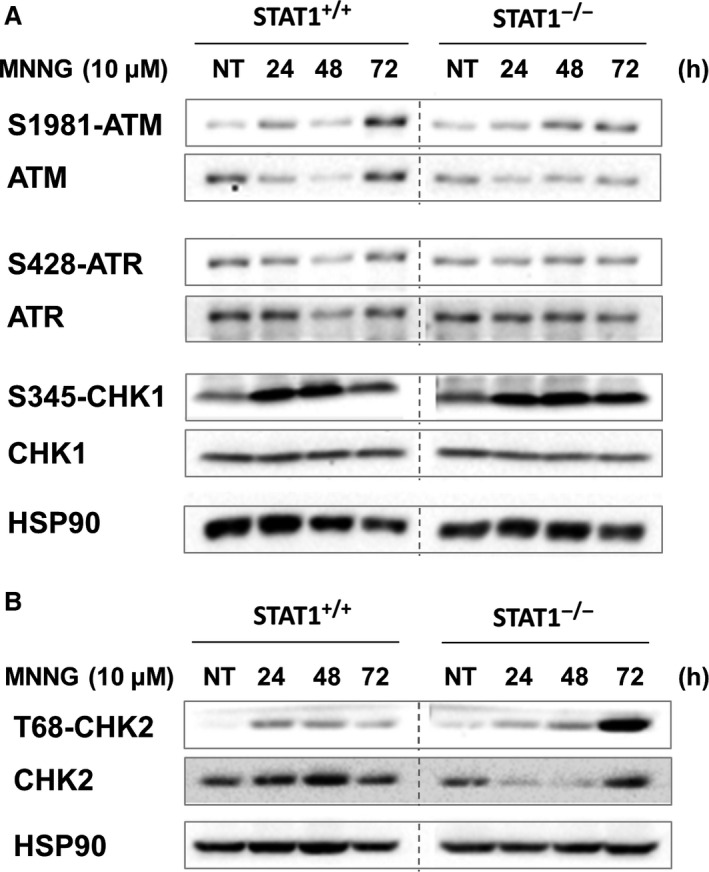
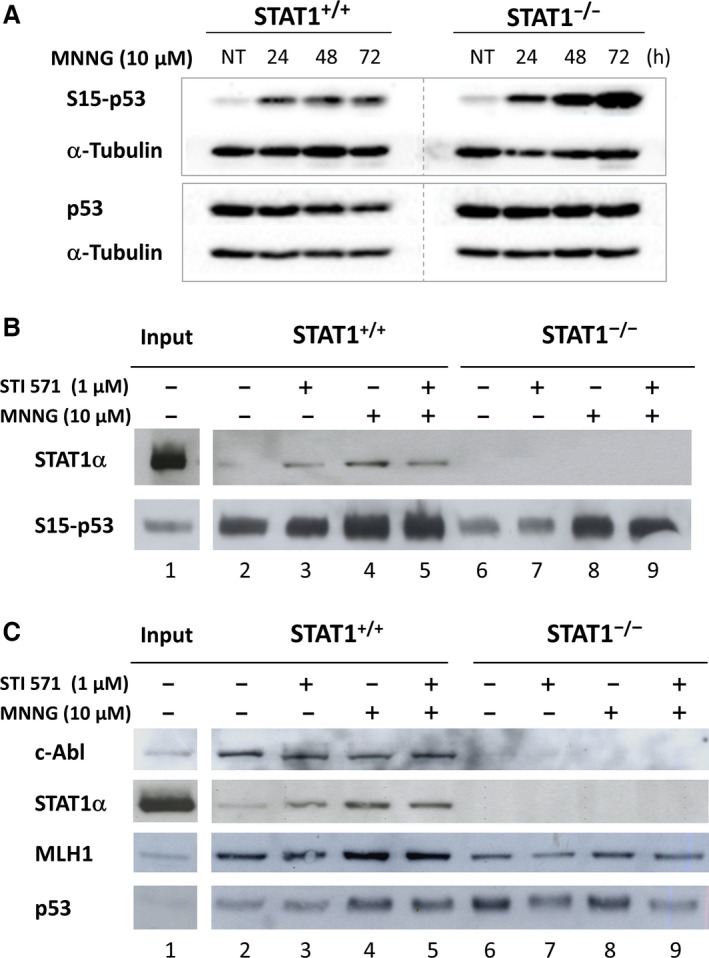
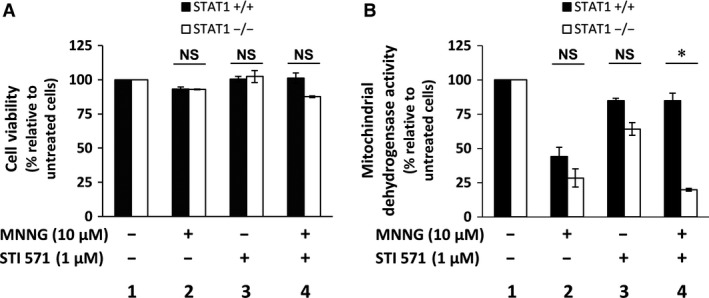
The SN 1 alkylating agents activate the mismatch repair system leading to delayed G2 /M cell cycle arrest and DNA repair with subsequent survival or cell death. STAT1, an anti-proliferative and pro-apoptotic transcription factor is known to potentiate p53 and to affect DNA-damage cellular response. We studied whether STAT1 may modulate cell fate following activation of the mismatch repair system upon exposure to the alkylating agent N-methyl-N'-nitro-N-nitrosoguanidine (MNNG). Using STAT1-proficient or -deficient cell lines, we found that STAT1 is required for: (i) reduction in the extent of DNA lesions, (ii) rapid phosphorylation of T68-CHK2 and of S15-p53, (iii) progression through the G2 /M checkpoint and (iv) long-term survival following treatment with MNNG. Presence of STAT1 is critical for the formation of a p53-DNA complex comprising: STAT1, c-Abl and MLH1 following exposure to MNNG. Importantly, presence of STAT1 allows recruitment of c-Abl to p53-DNA complex and links c-Abl tyrosine kinase activity to MNNG-toxicity. Thus, our data highlight the important modulatory role of STAT1 in the signalling pathway activated by the mismatch repair system. This ability of STAT1 to favour resistance to MNNG indicates the targeting of STAT1 pathway as a therapeutic option for enhancing the efficacy of SN1 alkylating agent-based chemotherapy.
SN1烷基化剂激活错配修复系统,导致G2/M期细胞周期延迟阻滞和DNA修复,随后细胞存活或死亡。信号转导和转录激活因子1(STAT1)是一种抗增殖和促凋亡转录因子,已知其可增强p53活性并影响DNA损伤细胞反应。我们研究了在暴露于烷基化剂N-甲基-N'-硝基-N-亚硝基胍(MNNG)后,激活错配修复系统时STAT1是否可能调节细胞命运。使用STAT1功能正常或缺陷的细胞系,我们发现STAT1对于以下方面是必需的:(i)减少DNA损伤程度;(ii)T68-CHK2和S15-p53的快速磷酸化;(iii)通过G2/M检查点;(iv)MNNG处理后的长期存活。暴露于MNNG后,STAT1的存在对于形成包含STAT1、c-Abl和MLH1的p53-DNA复合物至关重要。重要的是,STAT1的存在允许c-Abl募集到p53-DNA复合物,并将c-Abl酪氨酸激酶活性与MNNG毒性联系起来。因此,我们的数据突出了STAT1在错配修复系统激活的信号通路中的重要调节作用。STAT1这种有利于抵抗MNNG的能力表明,靶向STAT1通路作为一种治疗选择,可提高基于SN1烷基化剂化疗的疗效。