Liu An, Huang Chenggang, Xu Jia, Cai Xuehong
Department of General Surgery, The First People Hospital of Yueyang, 39 Dong mao ling Road, Yueyang, Hunan, 325000, China.
Cancer Med. 2016 Sep;5(9):2417-26. doi: 10.1002/cam4.723. Epub 2016 Jul 27.
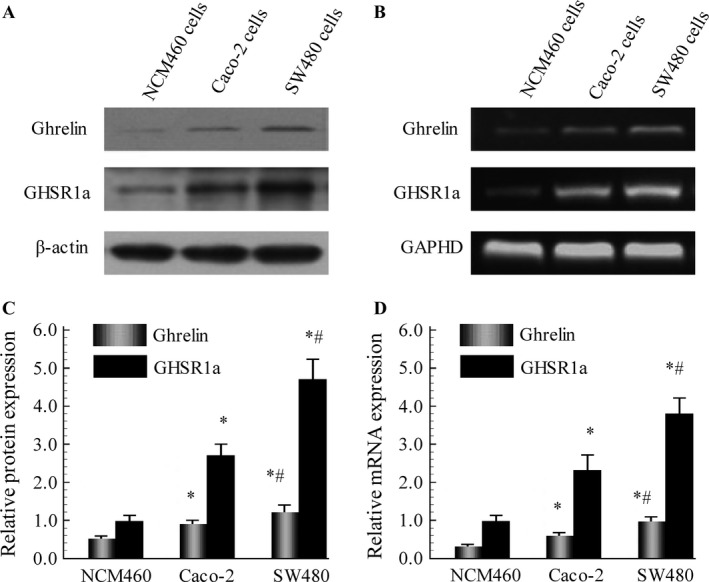
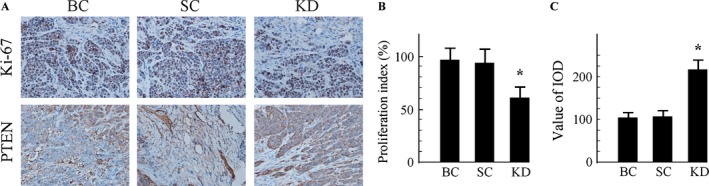
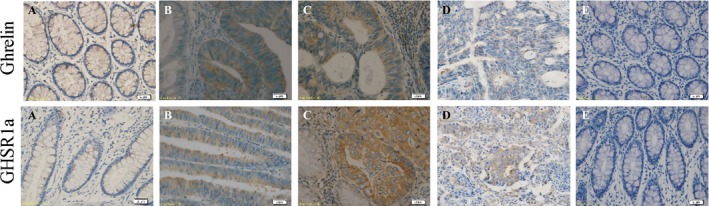
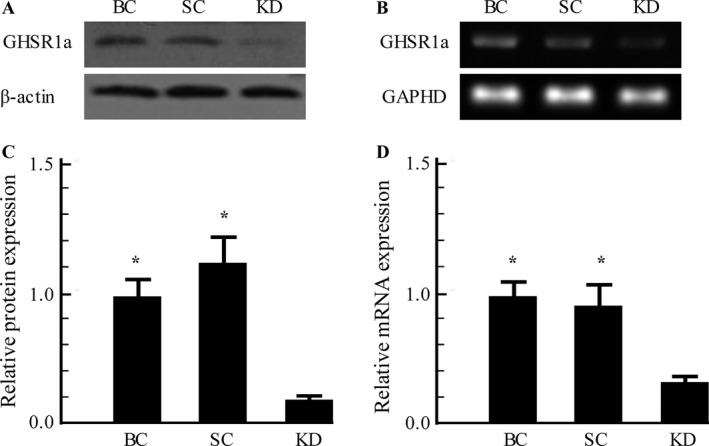
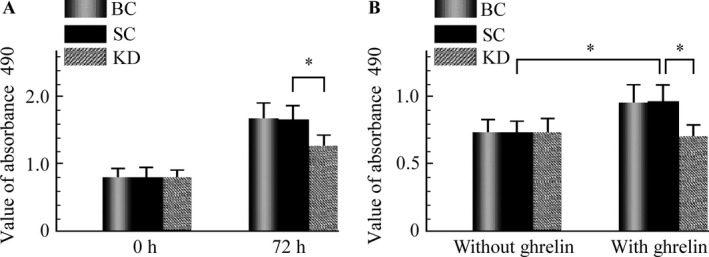
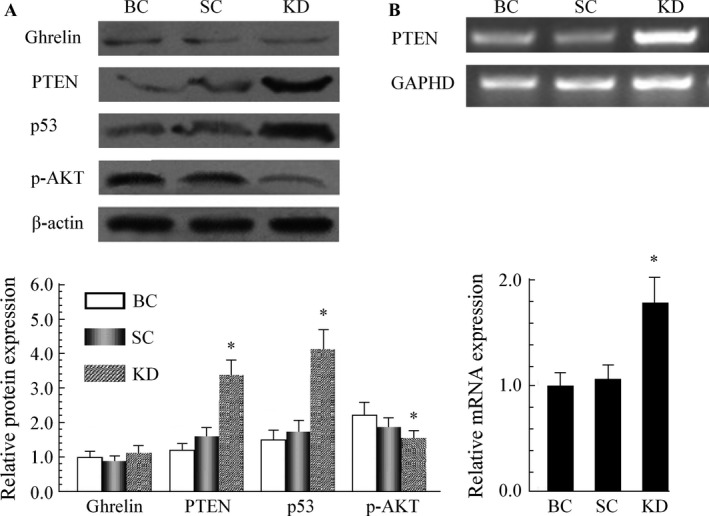
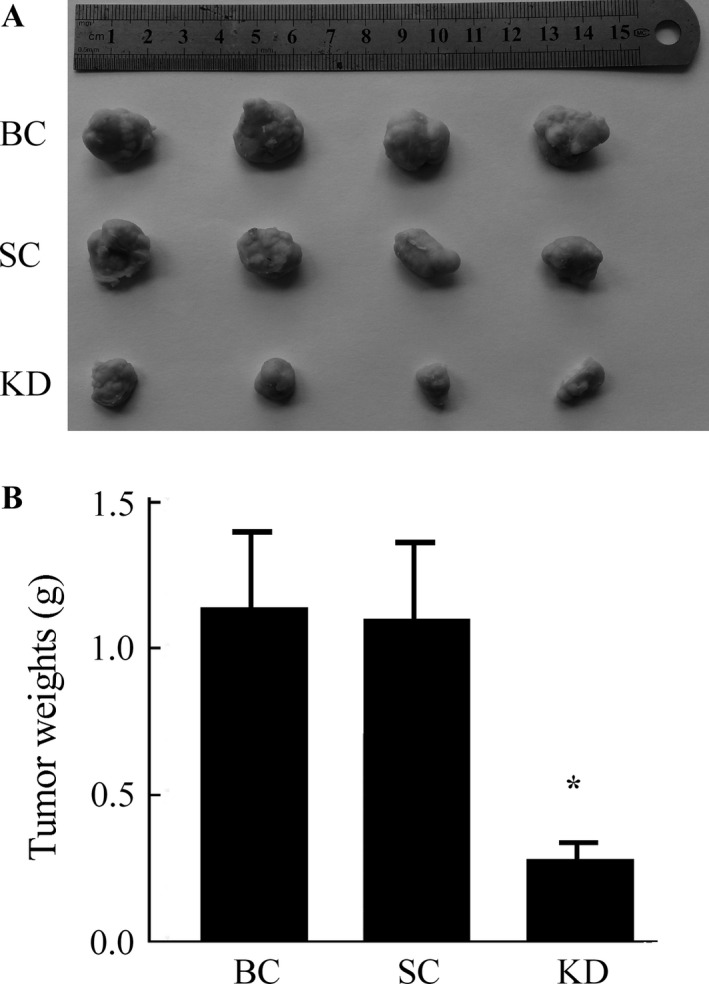
Ghrelin, an orexigenic peptide, acts via the growth hormone secretagogue receptor (GHSR) to stimulate the release of growth hormone. Moreover, it has a range of biological actions, including the stimulation of food intake, modulation of insulin signaling and cardiovascular effects. Recently, it has been demonstrated that ghrelin has a proliferative and antiapoptotic effects in cancers, suggesting a potential role in promoting tumor growth. However, it remains unknown whether GHSR contributes to colorectal cancer proliferation. In this study, the therapeutic effect of lentivirus-mediated short hairpin RNA (shRNA) targeting ghrelin receptor 1a (GHSR1a) was analyzed in colorectal cancer cell line SW480 both in vitro and in vivo. Our study demonstrated that ghrelin and GHSR1a are significantly upregulated in cancerous colorectal tissue samples and cell lines. In vitro, human colorectal cancer cell line SW480 with downregulation of GHSR1a by shRNA showed significant inhibition of cell viability compared with blank control (BC) or scrambled control (SC) regardless of the application of exogenous ghrelin. Furthermore, GHSR1a silencing by target specific shRNA was shown capable of increasing PTEN, inhibiting AKT phosphorylation and promoting the release of p53 in SW480 cells. In addition, the effects of GHSR1a knockdown were further explored in vivo using colorectal tumor xenograft mouse model. The tumor weights were decreased markedly in GHSR1α knockdown SW480 mouse xenograft tumors compared with blank control or negative control tumors. Our results suggested that the expression of GHSR1a is significantly correlated with the growth of colorectal cancer cells, and the GHSR1a knockdown approach may be a potential therapy for the treatment of colorectal cancer.
胃饥饿素是一种促食欲肽,通过生长激素促分泌素受体(GHSR)发挥作用,刺激生长激素的释放。此外,它还具有一系列生物学作用,包括刺激食物摄入、调节胰岛素信号传导以及对心血管的影响。最近,研究表明胃饥饿素在癌症中具有增殖和抗凋亡作用,提示其在促进肿瘤生长方面可能发挥作用。然而,GHSR是否参与结直肠癌增殖仍不清楚。在本研究中,我们在体外和体内分析了慢病毒介导的靶向胃饥饿素受体1a(GHSR1a)的短发夹RNA(shRNA)对结直肠癌细胞系SW480的治疗效果。我们的研究表明,胃饥饿素和GHSR1a在癌性结直肠组织样本和细胞系中显著上调。在体外,与空白对照(BC)或乱序对照(SC)相比,用shRNA下调GHSR1a的人结直肠癌细胞系SW480无论是否应用外源性胃饥饿素,细胞活力均受到显著抑制。此外,靶向特异性shRNA沉默GHSR1a能够增加PTEN、抑制AKT磷酸化并促进SW480细胞中p53的释放。此外,我们使用结直肠癌异种移植小鼠模型在体内进一步探究了GHSR1a敲低的作用。与空白对照或阴性对照肿瘤相比,GHSR1α敲低的SW480小鼠异种移植肿瘤的重量显著降低。我们的结果表明,GHSR1a的表达与结直肠癌细胞的生长显著相关,敲低GHSR1a的方法可能是治疗结直肠癌的一种潜在疗法。