Kameyama Hirokazu, Nakajima Hiroyuki, Nishitsuji Kazuchika, Mikawa Shiho, Uchimura Kenji, Kobayashi Norihiro, Okuhira Keiichiro, Saito Hiroyuki, Sakashita Naomi
Department of Molecular Physical Pharmaceutics, Institute of Biomedical Sciences, Tokushima University Graduate School, 1-78-1 Shomachi, Tokushima 770-8505, Japan.
Department of Molecular Pathology, Institute of Biomedical Sciences, Tokushima University Graduate School, 3-18-15 Kuramoto-cho, Tokushima 770-8503, Japan.
Sci Rep. 2016 Jul 28;6:30391. doi: 10.1038/srep30391.
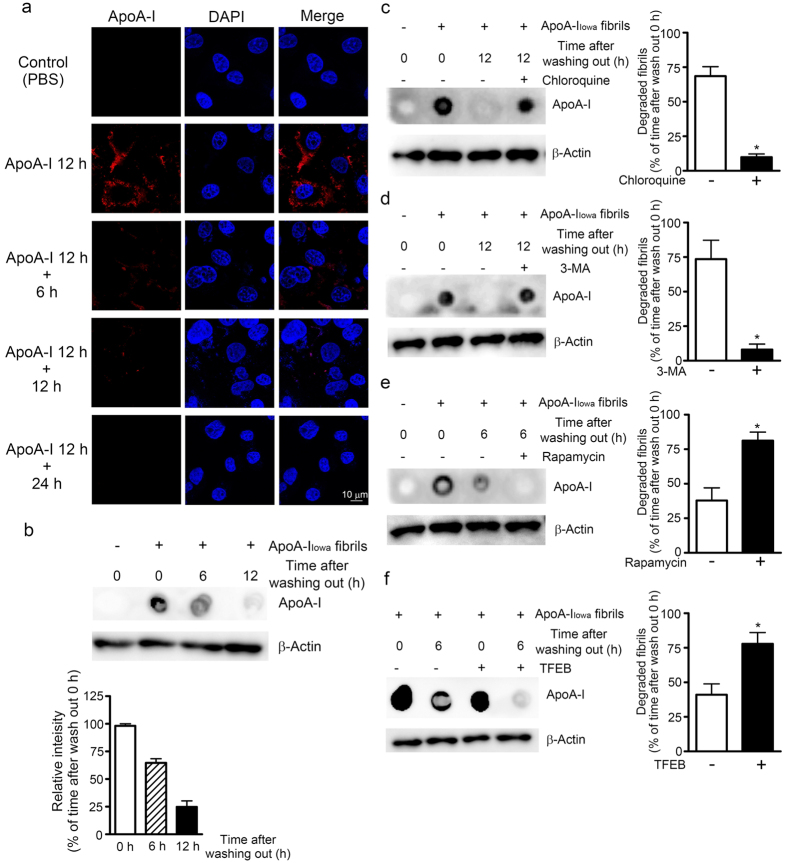
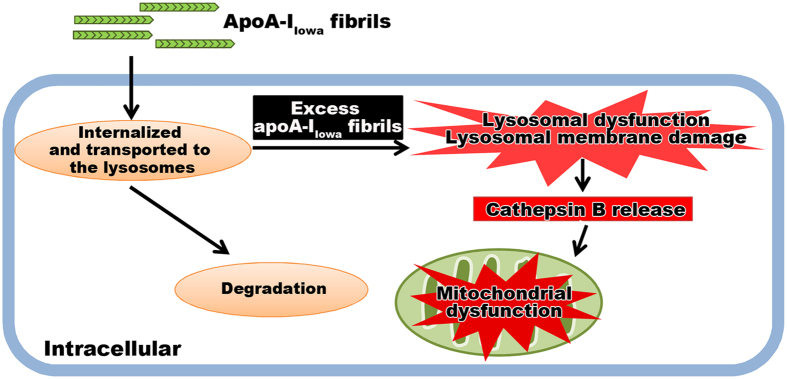
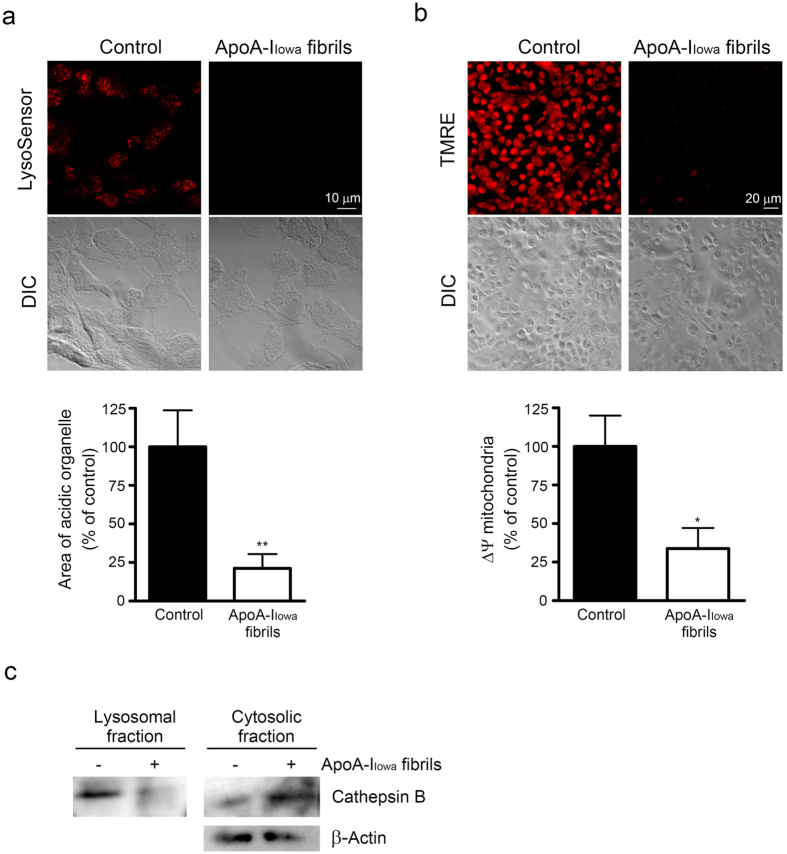
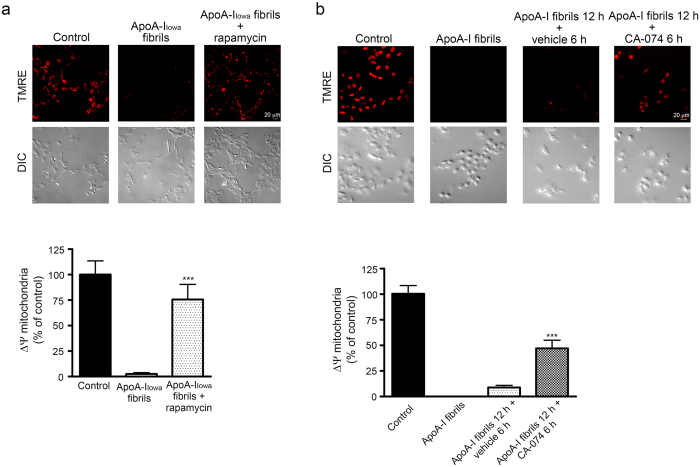
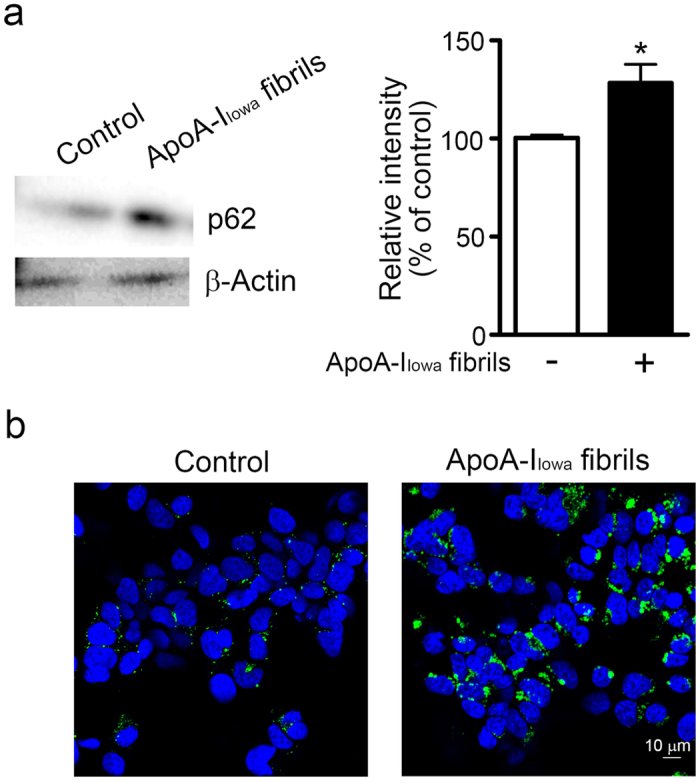
The single amino acid mutation G26R in human apolipoprotein A-I (apoA-IIowa) is the first mutation that was associated with familial AApoA1 amyloidosis. The N-terminal fragments (amino acid residues 1-83) of apoA-I containing this mutation deposit as amyloid fibrils in patients' tissues and organs, but the mechanisms of cellular degradation and cytotoxicity have not yet been clarified. In this study, we demonstrated degradation of apoA-IIowa fibrils via the autophagy-lysosomal pathway in human embryonic kidney 293 cells. ApoA-IIowa fibrils induced an increase in lysosomal pH and the cytosolic release of the toxic lysosomal protease cathepsin B. The mitochondrial dysfunction caused by apoA-IIowa fibrils depended on cathepsin B and was ameliorated by increasing the degradation of apoA-IIowa fibrils. Thus, although apoA-IIowa fibril transport to lysosomes and fibril degradation in lysosomes may have occurred, the presence of an excess number of apoA-IIowa fibrils, more than the lysosomes could degrade, may be detrimental to cells. Our results thus provide evidence that the target of apoA-IIowa fibrils is lysosomes, and we thereby gained a novel insight into the mechanism of AApoA1 amyloidosis.
人类载脂蛋白A-I中的单氨基酸突变G26R(载脂蛋白A-I爱荷华型)是首个与家族性载脂蛋白A1淀粉样变性相关的突变。含有该突变的载脂蛋白A-I的N端片段(氨基酸残基1-83)在患者的组织和器官中以淀粉样原纤维的形式沉积,但细胞降解和细胞毒性的机制尚未阐明。在本研究中,我们证明了在人胚肾293细胞中,载脂蛋白A-I爱荷华型原纤维通过自噬-溶酶体途径降解。载脂蛋白A-I爱荷华型原纤维导致溶酶体pH值升高以及有毒的溶酶体蛋白酶组织蛋白酶B的胞质释放。载脂蛋白A-I爱荷华型原纤维引起的线粒体功能障碍依赖于组织蛋白酶B,并且通过增加载脂蛋白A-I爱荷华型原纤维降解而得到改善。因此,尽管载脂蛋白A-I爱荷华型原纤维可能已转运至溶酶体并在溶酶体中降解,但存在过量的载脂蛋白A-I爱荷华型原纤维(超过溶酶体能够降解的数量)可能对细胞有害。因此,我们的结果提供了证据表明载脂蛋白A-I爱荷华型原纤维的靶标是溶酶体,从而使我们对载脂蛋白A1淀粉样变性的机制有了新的认识。