Martinelli Federico, Reagan Russell L, Dolan David, Fileccia Veronica, Dandekar Abhaya M
Department of Agricultural and Forest Sciences, University of Palermo, viale delle scienze ed. 4, 90128, Palermo, Italy.
Plant Sciences Department, University of California, One Shields Avenue, 95616, Davis, CA, USA.
BMC Plant Biol. 2016 Jul 28;16(1):167. doi: 10.1186/s12870-016-0858-5.
Huanglongbing (HLB) disease is still the greatest threat to citriculture worldwide. Although there is not any resistance source in the Citrus germplasm, a certain level of moderated tolerance is present. A large-scale analysis of proteomic responses of Citrus may help: 1) clarifying physiological and molecular effects of disease progression, 2) validating previous data at transcriptomic level, and 3) identifying biomarkers for development of early diagnostics, short-term therapeutics and long-term genetic resistance.
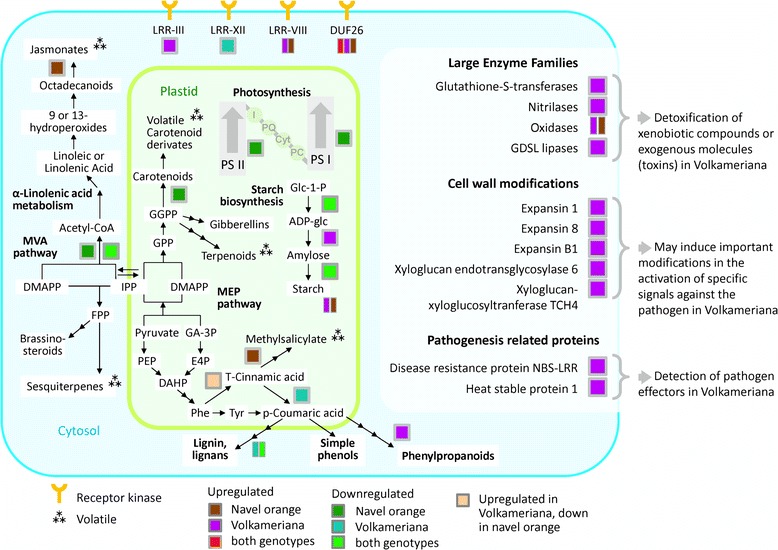
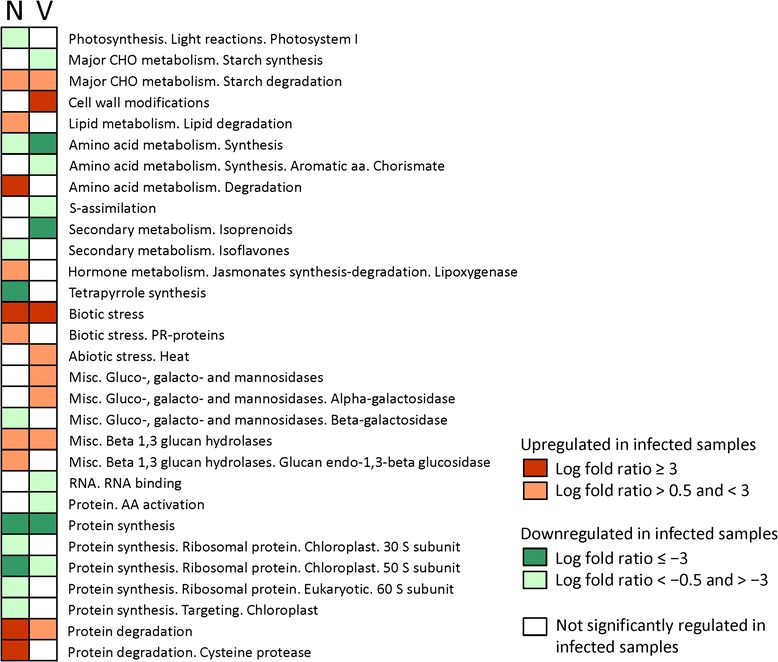
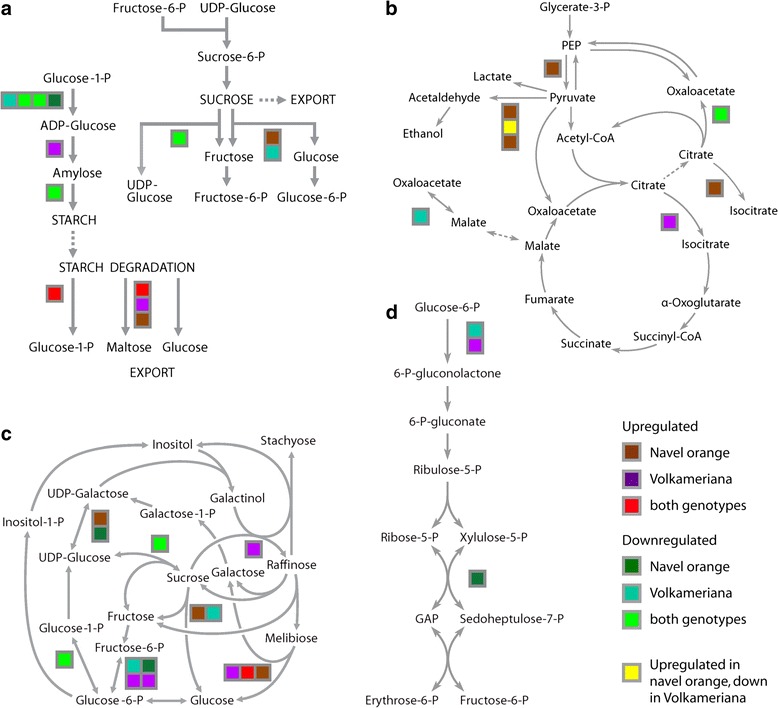
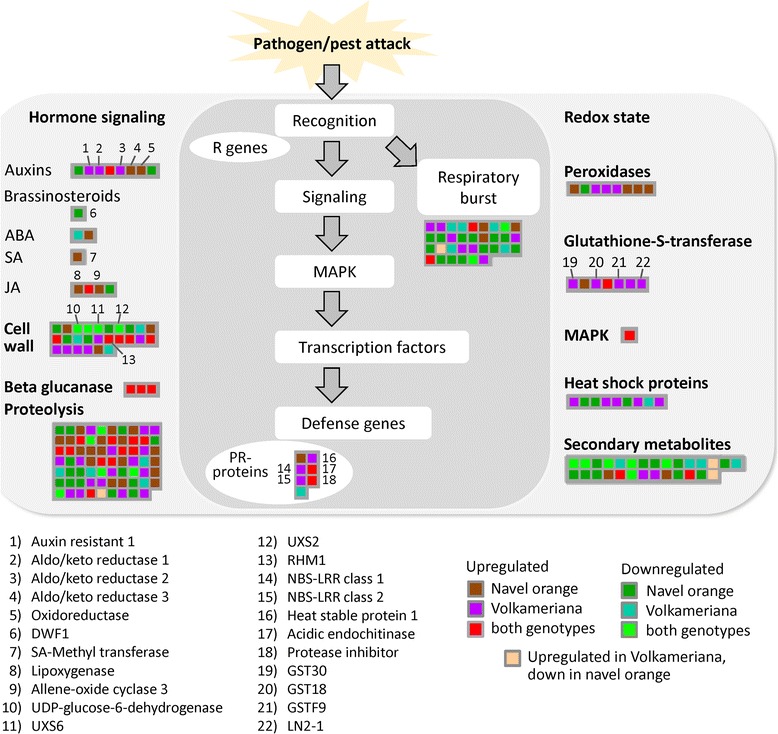
In this work we have conducted a proteomic analysis of mature leaves of two Citrus genotypes with well-known differing tolerances to HLB: Navel orange (highly susceptible) and Volkameriana (moderately tolerant). Pathway enrichment analysis showed that amino acid degradation processes occurred to a larger degree in the Navel orange. No clear differences between the two genotypes were observed for primary metabolic pathways. The most important finding was that four glutathione-S-transferases were upregulated in Volkameriana and not in Navel orange. These proteins are involved in radical ion detoxification.
Upregulation of proteins involved in radical ion detoxification should be considered as an important mechanism of increased tolerance to HLB.
黄龙病(HLB)仍是全球柑橘种植业面临的最大威胁。尽管在柑橘种质中不存在任何抗性来源,但存在一定程度的适度耐受性。对柑橘蛋白质组反应进行大规模分析可能有助于:1)阐明疾病进展的生理和分子效应;2)在转录组水平验证先前的数据;3)识别用于早期诊断、短期治疗和长期遗传抗性开发的生物标志物。
在这项工作中,我们对两种对HLB具有不同耐受性的柑橘基因型的成熟叶片进行了蛋白质组分析:脐橙(高度易感)和伏令夏橙(中度耐受)。通路富集分析表明,氨基酸降解过程在脐橙中发生的程度更大。在两种基因型之间未观察到初级代谢途径的明显差异。最重要的发现是,伏令夏橙中有四种谷胱甘肽 - S - 转移酶上调,而脐橙中没有。这些蛋白质参与自由基离子解毒。
参与自由基离子解毒的蛋白质上调应被视为对HLB耐受性增加的重要机制。