Cluzet Valerie C, Gerber Jeffrey S, Metlay Joshua P, Nachamkin Irving, Zaoutis Theoklis E, Davis Meghan F, Julian Kathleen G, Linkin Darren R, Coffin Susan E, Margolis David J, Hollander Judd E, Bilker Warren B, Han Xiaoyan, Mistry Rakesh D, Gavin Laurence J, Tolomeo Pam, Wise Jacqueleen A, Wheeler Mary K, Hu Baofeng, Fishman Neil O, Royer David, Lautenbach Ebbing
1Division of Infectious Diseases,Department of Medicine,Perelman School of Medicine,University of Pennsylvania,Philadelphia,Pennsylvania.
2Center for Clinical Epidemiology and Biostatistics,Perelman School of Medicine,University of Pennsylvania,Philadelphia,Pennsylvania.
Infect Control Hosp Epidemiol. 2016 Oct;37(10):1226-33. doi: 10.1017/ice.2016.138. Epub 2016 Jul 28.
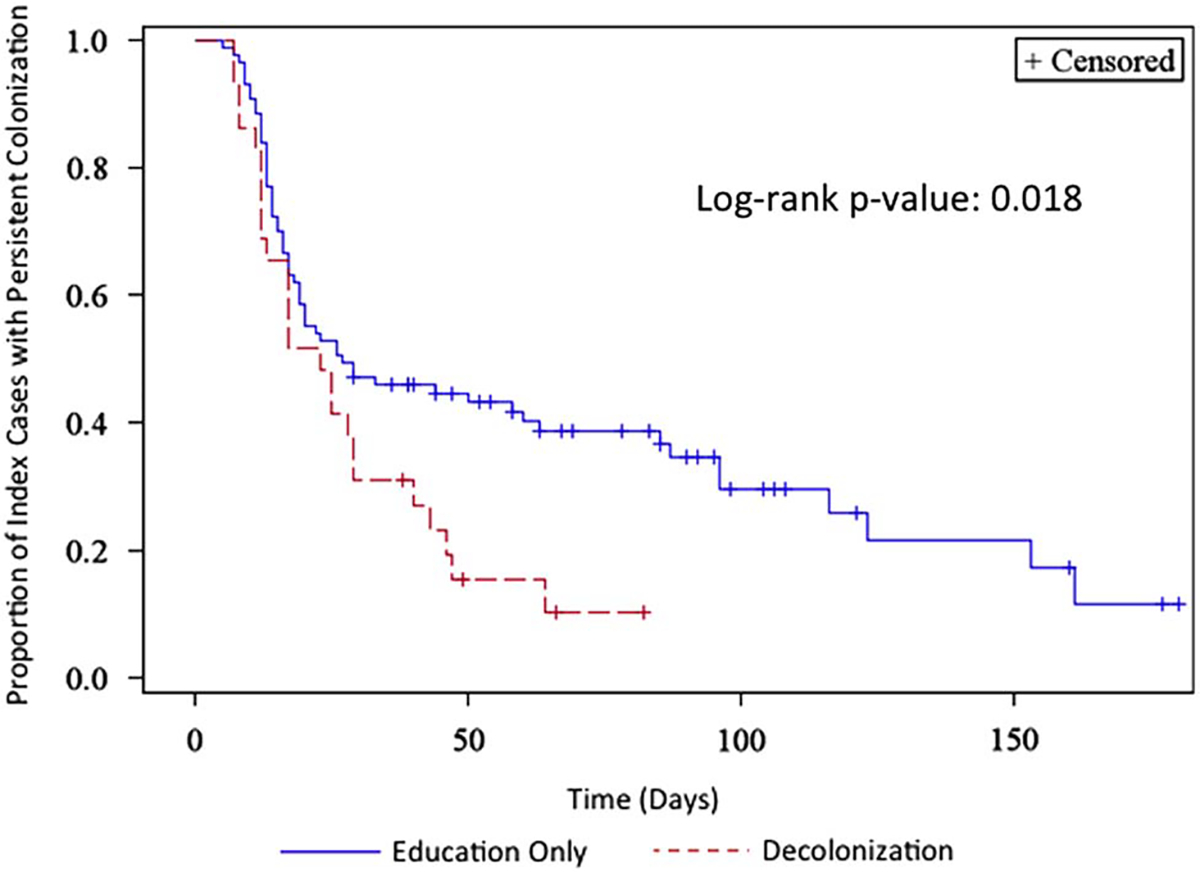
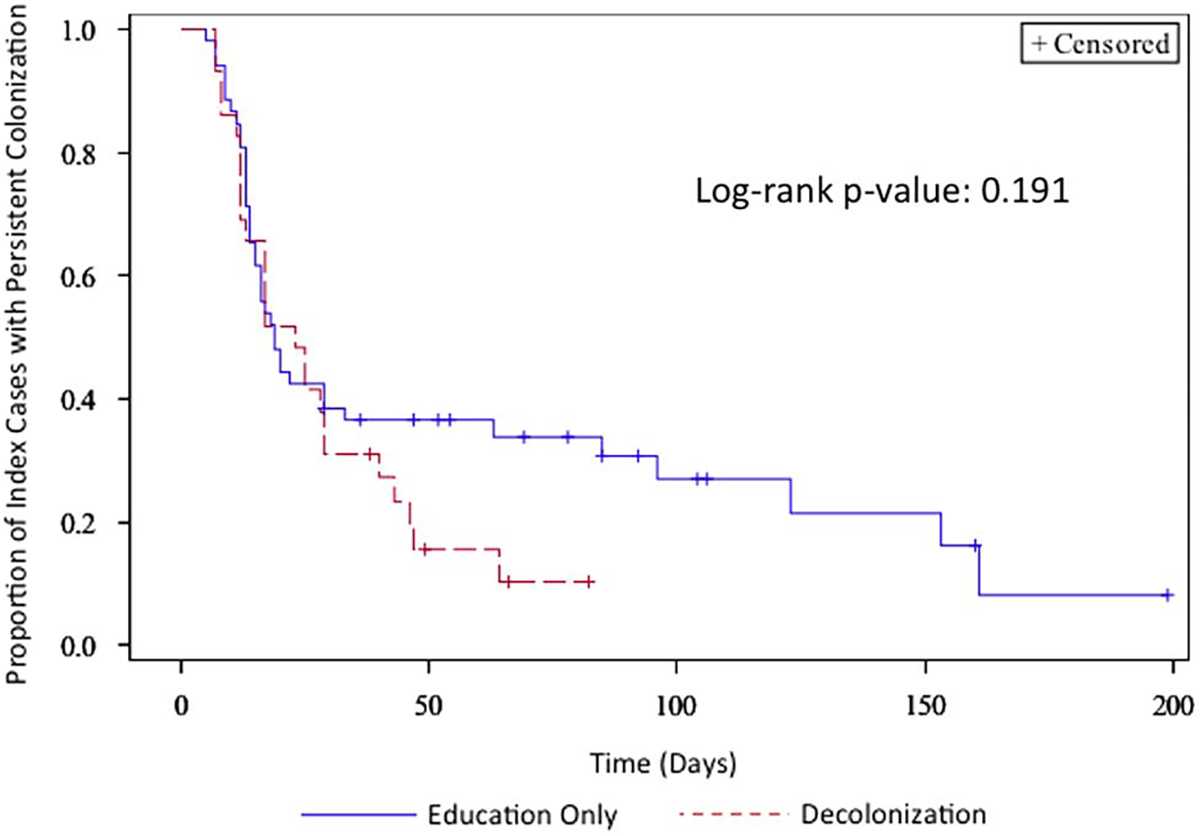
OBJECTIVE To determine the impact of total household decolonization with intranasal mupirocin and chlorhexidine gluconate body wash on recurrent methicillin-resistant Staphylococcus aureus (MRSA) infection among subjects with MRSA skin and soft-tissue infection. DESIGN Three-arm nonmasked randomized controlled trial. SETTING Five academic medical centers in Southeastern Pennsylvania. PARTICIPANTS Adults and children presenting to ambulatory care settings with community-onset MRSA skin and soft-tissue infection (ie, index cases) and their household members. INTERVENTION Enrolled households were randomized to 1 of 3 intervention groups: (1) education on routine hygiene measures, (2) education plus decolonization without reminders (intranasal mupirocin ointment twice daily for 7 days and chlorhexidine gluconate on the first and last day), or (3) education plus decolonization with reminders, where subjects received daily telephone call or text message reminders. MAIN OUTCOME MEASURES Owing to small numbers of recurrent infections, this analysis focused on time to clearance of colonization in the index case. RESULTS Of 223 households, 73 were randomized to education-only, 76 to decolonization without reminders, 74 to decolonization with reminders. There was no significant difference in time to clearance of colonization between the education-only and decolonization groups (log-rank P=.768). In secondary analyses, compliance with decolonization was associated with decreased time to clearance (P=.018). CONCLUSIONS Total household decolonization did not result in decreased time to clearance of MRSA colonization among adults and children with MRSA skin and soft-tissue infection. However, subjects who were compliant with the protocol had more rapid clearance Trial registration. ClinicalTrials.gov identifier: NCT00966446 Infect Control Hosp Epidemiol 2016;1-8.
目的 确定采用鼻内莫匹罗星和葡萄糖酸氯己定沐浴露进行全家庭去定植对耐甲氧西林金黄色葡萄球菌(MRSA)皮肤和软组织感染患者复发性MRSA感染的影响。
设计 三臂非盲随机对照试验。
地点 宾夕法尼亚州东南部的五个学术医疗中心。
参与者 因社区获得性MRSA皮肤和软组织感染(即索引病例)前来门诊就诊的成人和儿童及其家庭成员。
干预措施 登记入组的家庭被随机分为3个干预组之一:(1)常规卫生措施教育;(2)教育加无提醒去定植(每日两次鼻内涂抹莫匹罗星软膏,共7天,第一天和最后一天使用葡萄糖酸氯己定);(3)教育加有提醒去定植,即受试者会收到每日电话或短信提醒。
主要结局指标 由于复发性感染病例数较少,本分析聚焦于索引病例去定植清除的时间。
结果 在223个家庭中,73个被随机分配至仅接受教育组,76个被随机分配至无提醒去定植组,74个被随机分配至有提醒去定植组。仅接受教育组和去定植组在去定植清除时间上无显著差异(对数秩检验P = 0.768)。在二次分析中,去定植的依从性与清除时间缩短相关(P = 0.018)。
结论 对于患有MRSA皮肤和软组织感染的成人和儿童,全家庭去定植并未缩短MRSA定植清除时间。然而,遵循方案的受试者清除速度更快。
试验注册 ClinicalTrials.gov标识符:NCT00966446 感染控制与医院流行病学 2016;1 - 8。