School of Life Sciences, Arizona State University, Tempe, AZ 85287, USA.
Department of Zoology, University of Oxford, Oxford OX1 3PS, UK.
Sci Rep. 2016 Jul 28;6:29828. doi: 10.1038/srep29828.
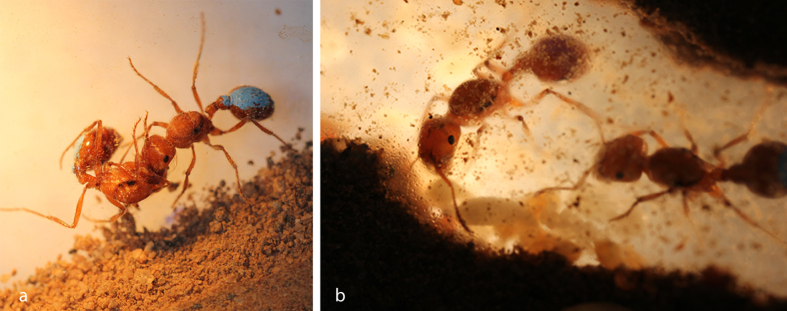
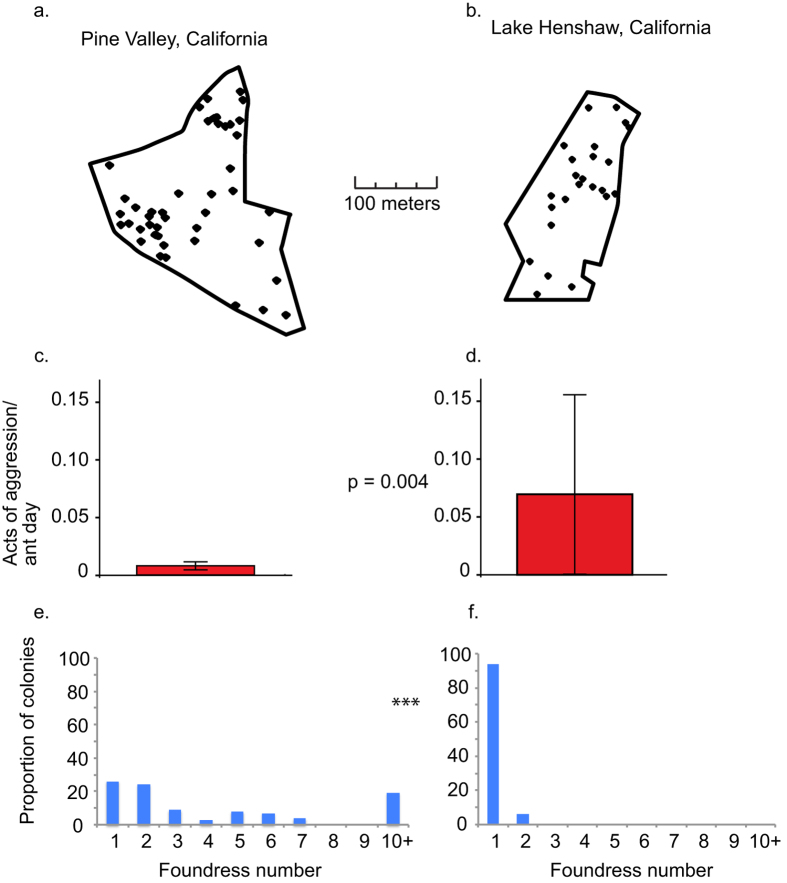
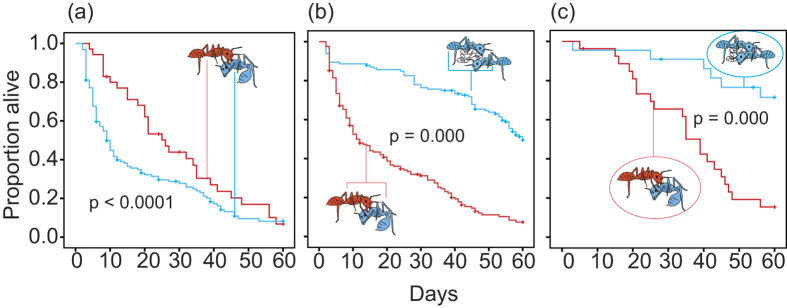
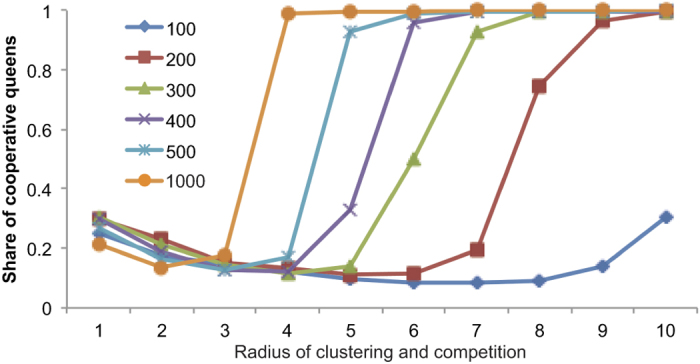
The evolution of cooperation is a fundamental problem in biology, especially for non-relatives, where indirect fitness benefits cannot counter within-group inequalities. Multilevel selection models show how cooperation can evolve if it generates a group-level advantage, even when cooperators are disadvantaged within their group. This allows the possibility of group selection, but few examples have been described in nature. Here we show that group selection can explain the evolution of cooperative nest founding in the harvester ant Pogonomyrmex californicus. Through most of this species' range, colonies are founded by single queens, but in some populations nests are instead founded by cooperative groups of unrelated queens. In mixed groups of cooperative and single-founding queens, we found that aggressive individuals had a survival advantage within their nest, but foundress groups with such non-cooperators died out more often than those with only cooperative members. An agent-based model shows that the between-group advantage of the cooperative phenotype drives it to fixation, despite its within-group disadvantage, but only when population density is high enough to make between-group competition intense. Field data show higher nest density in a population where cooperative founding is common, consistent with greater density driving the evolution of cooperative foundation through group selection.
合作的进化是生物学中的一个基本问题,特别是对于非亲属关系的个体,因为间接适应利益不能抵消群体内部的不平等。多层次选择模型表明,如果合作能够产生群体优势,即使合作者在其群体中处于劣势,合作也可以进化。这允许群体选择的可能性,但在自然界中很少有例子被描述。在这里,我们表明,群体选择可以解释加利福尼亚收获蚁 Pogonomyrmex californicus 中合作巢穴建立的进化。在该物种的大部分分布范围内,殖民地是由单个蚁后建立的,但在一些种群中,巢穴是由不相关的蚁后合作群体建立的。在具有合作和单后建立蚁后的混合群体中,我们发现,在其巢穴中,具有攻击性的个体具有生存优势,但具有这种不合作个体的蚁后群体比只有合作成员的蚁后群体更容易灭绝。基于代理的模型表明,合作表型的群体间优势尽管在群体内部处于劣势,但仍然可以推动其固定,前提是种群密度足够高以使群体间竞争激烈。实地数据显示,在合作建立较为普遍的种群中,巢穴密度更高,这与更高的密度通过群体选择推动合作基础的进化一致。