Weiland-Bräuer Nancy, Kisch Martin J, Pinnow Nicole, Liese Andreas, Schmitz Ruth A
Institute for General Microbiology, Molecular Microbiology, University Kiel Kiel, Germany.
Institute of Technical Biocatalysis, Technical University Hamburg Hamburg, Germany.
Front Microbiol. 2016 Jul 13;7:1098. doi: 10.3389/fmicb.2016.01098. eCollection 2016.
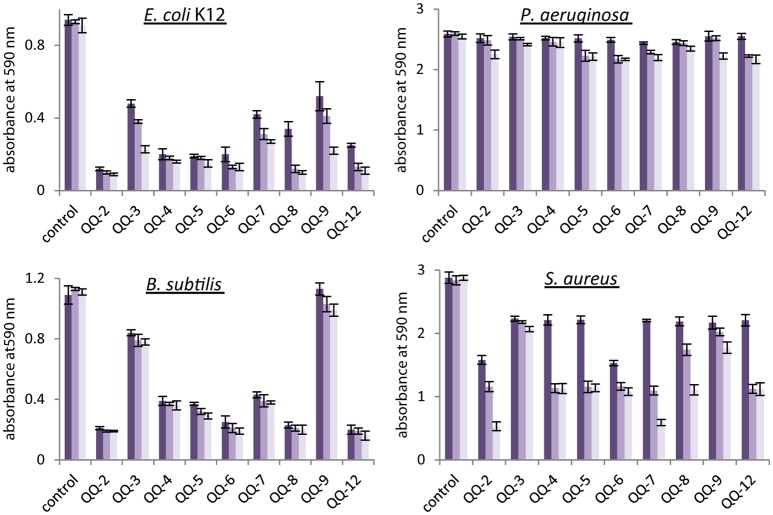
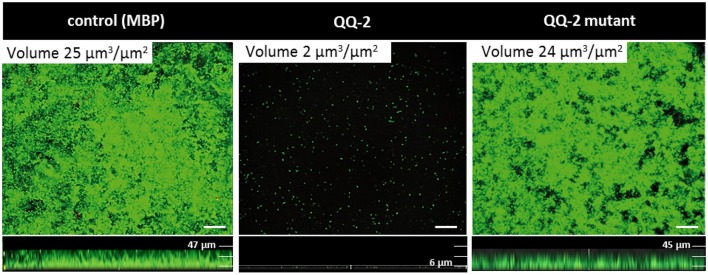
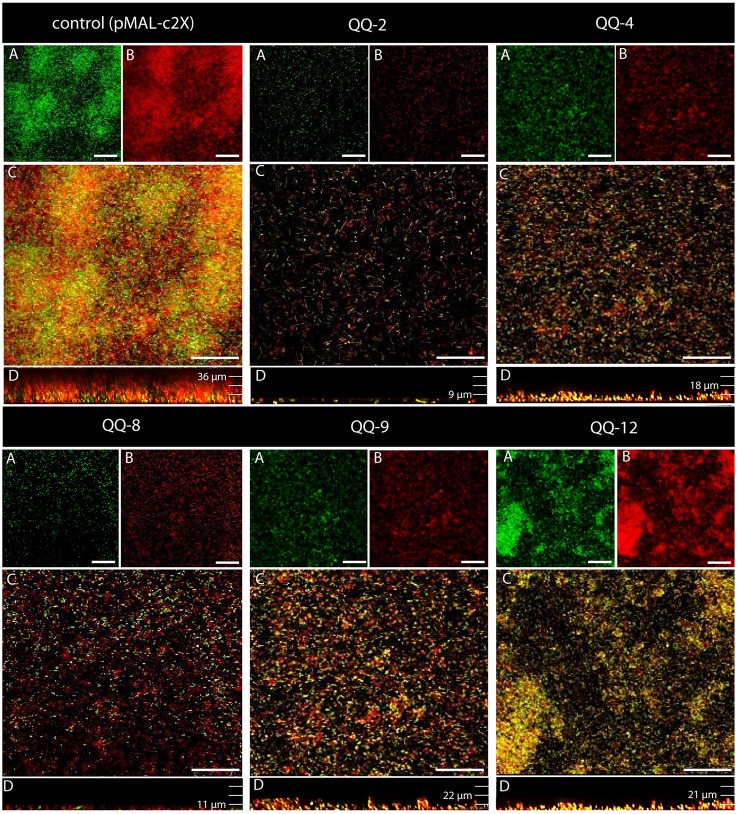
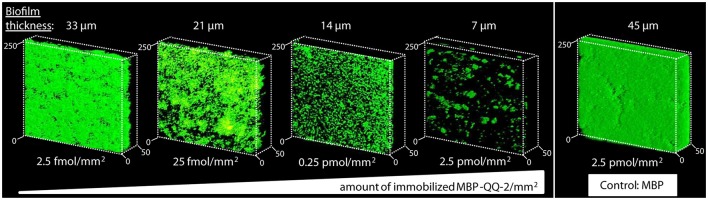
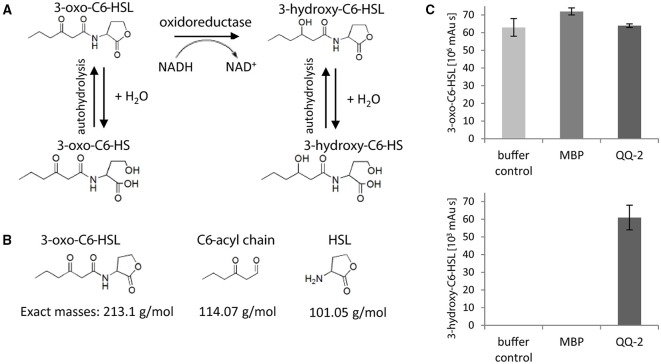
Bacterial cell-cell communication (quorum sensing, QS) represents a fundamental process crucial for biofilm formation, pathogenicity, and virulence allowing coordinated, concerted actions of bacteria depending on their cell density. With the widespread appearance of antibiotic-resistance of biofilms, there is an increasing need for novel strategies to control harmful biofilms. One attractive and most likely effective approach is to target bacterial communication systems for novel drug design in biotechnological and medical applications. In this study, metagenomic large-insert libraries were constructed and screened for QS interfering activities (quorum quenching, QQ) using recently established reporter strains. Overall, 142 out of 46,400 metagenomic clones were identified to interfere with acyl-homoserine lactones (AHLs), 13 with autoinducer-2 (AI-2). Five cosmid clones with highest simultaneous interfering activities were further analyzed and the respective open reading frames conferring QQ activities identified. Those showed homologies to bacterial oxidoreductases, proteases, amidases and aminotransferases. Evaluating the ability of the respective purified QQ-proteins to prevent biofilm formation of several model systems demonstrated highest inhibitory effects of QQ-2 using the crystal violet biofilm assay. This was confirmed by heterologous expression of the respective QQ proteins in Klebsiella oxytoca M5a1 and monitoring biofilm formation in a continuous flow cell system. Moreover, QQ-2 chemically immobilized to the glass surface of the flow cell effectively inhibited biofilm formation of K. oxytoca as well as clinical K. pneumoniae isolates derived from patients with urinary tract infections. Indications were obtained by molecular and biochemical characterizations that QQ-2 represents an oxidoreductase most likely reducing the signaling molecules AHL and AI-2 to QS-inactive hydroxy-derivatives. Overall, we propose that the identified novel QQ-2 protein efficiently inhibits AI-2 modulated biofilm formation by modifying the signal molecule; and thus appears particularly attractive for medical and biotechnological applications.
细菌细胞间通讯(群体感应,QS)是一个基本过程,对生物膜形成、致病性和毒力至关重要,它能使细菌根据细胞密度进行协调一致的行动。随着生物膜抗生素耐药性的广泛出现,控制有害生物膜的新策略需求日益增加。一种有吸引力且很可能有效的方法是在生物技术和医学应用中,针对细菌通讯系统进行新型药物设计。在本研究中,构建了宏基因组大插入文库,并使用最近建立的报告菌株筛选群体感应干扰活性(群体猝灭,QQ)。总体而言,在46400个宏基因组克隆中,有142个被鉴定为干扰酰基高丝氨酸内酯(AHLs),13个干扰自诱导物-2(AI-2)。对具有最高同时干扰活性的5个黏粒克隆进行了进一步分析,并确定了赋予QQ活性的相应开放阅读框。这些开放阅读框与细菌氧化还原酶、蛋白酶、酰胺酶和转氨酶具有同源性。使用结晶紫生物膜测定法评估各纯化的QQ蛋白防止几种模型系统生物膜形成的能力,结果表明QQ-2具有最高抑制作用。通过在产酸克雷伯菌M5a1中异源表达相应的QQ蛋白并在连续流动细胞系统中监测生物膜形成,证实了这一点。此外,化学固定在流动细胞玻璃表面的QQ-2有效抑制了产酸克雷伯菌以及来自尿路感染患者的临床肺炎克雷伯菌分离株的生物膜形成。通过分子和生化表征表明,QQ-2代表一种氧化还原酶,很可能将信号分子AHL和AI-2还原为无QS活性的羟基衍生物。总体而言,我们提出所鉴定的新型QQ-2蛋白通过修饰信号分子有效抑制AI-2调节的生物膜形成;因此在医学和生物技术应用中显得特别有吸引力。