Landgraf-Rauf Katja, Anselm Bettina, Schaub Bianca
Department of Pulmonary and Allergy, Dr. von Hauner Children's Hospital, LMU, Lindwurmstraße 4, 80337, Munich, Germany.
Member of German Lung Centre (DZL), CPC, Munich, Germany.
Mol Cell Pediatr. 2016 Dec;3(1):27. doi: 10.1186/s40348-016-0057-3. Epub 2016 Jul 28.
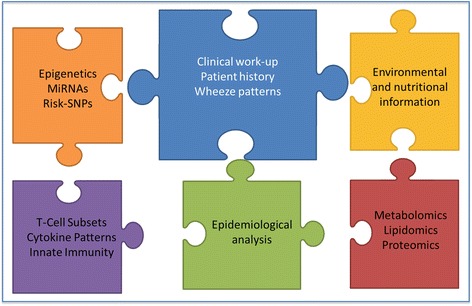
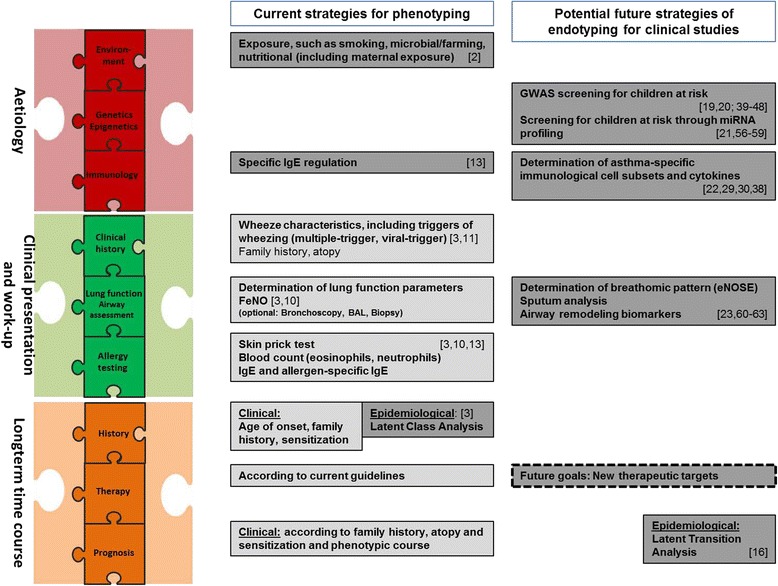
Asthma represents the most common chronic childhood disease worldwide. Whereas preschool children present with wheezing triggered by different factors (multitrigger and viral wheeze), clinical asthma manifestation in school children has previously been classified as allergic and non-allergic asthma. For both, the underlying immunological mechanisms are not yet understood in depth in children. Treatment is still prescribed regardless of underlying mechanisms, and children are not always treated successfully. This review summarizes recent key findings on the complex mechanisms of the development and manifestation of childhood asthma. Whereas traditional classification of childhood asthma is primarily based on clinical symptoms like wheezing and atopy, novel approaches to specify asthma phenotypes are under way and face challenges such as including the stability of phenotypes over time and transition into adulthood. Epidemiological studies enclose more information on the patient's disease history and environmental influences. Latest studies define endotypes based on molecular and cellular mechanisms, for example defining risk and protective single nucleotide polymorphisms (SNPs) and new immune phenotypes, showing promising results. Also, regulatory T cells and recently discovered T helper cell subtypes such as Th9 and Th17 cells were shown to be important for the development of asthma. Innate lymphoid cells (ILC) could play a critical role in asthma patients as they produce different cytokines associated with asthma. Epigenetic findings showed different acetylation and methylation patterns for children with allergic and non-allergic asthma. On a posttranscriptional level, miRNAs are regulating factors identified to differ between asthma patients and healthy controls and also indicate differences within asthma phenotypes. Metabolomics is another exciting chapter important for endotyping asthmatic children. Despite the development of new biomarkers and the discovery of new immunological molecules, the complex puzzle of childhood asthma is still far from being completed. Addressing the current challenges of distinct clinical asthma and wheeze phenotypes, including their stability and underlying endotypes, involves addressing the interplay of innate and adaptive immune regulatory mechanisms in large, interdisciplinary cohorts.
哮喘是全球最常见的儿童慢性疾病。学龄前儿童的喘息由不同因素引发(多触发因素和病毒诱发的喘息),而学龄儿童的临床哮喘表现此前被分为过敏性哮喘和非过敏性哮喘。对于这两种类型,儿童潜在的免疫机制尚未得到深入了解。目前的治疗仍不考虑潜在机制,而且儿童并非总能得到成功治疗。本综述总结了儿童哮喘发生和表现复杂机制的近期关键发现。传统的儿童哮喘分类主要基于喘息和特应性等临床症状,而确定哮喘表型的新方法正在探索中,但面临诸多挑战,如表型随时间的稳定性以及向成年期的转变。流行病学研究包含了更多关于患者病史和环境影响的信息。最新研究基于分子和细胞机制定义了内型,例如确定风险和保护性单核苷酸多态性(SNP)以及新的免疫表型,显示出有前景的结果。此外,调节性T细胞以及最近发现的T辅助细胞亚型如Th9和Th17细胞,被证明对哮喘的发生发展很重要。固有淋巴细胞(ILC)可能在哮喘患者中发挥关键作用,因为它们产生与哮喘相关的不同细胞因子。表观遗传学研究结果显示,过敏性和非过敏性哮喘儿童存在不同的乙酰化和甲基化模式。在转录后水平,微小RNA(miRNA)是已确定在哮喘患者和健康对照之间存在差异的调节因子,也表明哮喘表型内部存在差异。代谢组学是对哮喘儿童进行内型分类的另一个重要且令人兴奋的领域。尽管开发了新的生物标志物并发现了新的免疫分子,但儿童哮喘这个复杂难题仍远未解决。应对当前不同临床哮喘和喘息表型的挑战,包括它们的稳定性和潜在内型,需要在大型跨学科队列中研究固有免疫和适应性免疫调节机制之间的相互作用。