Llosa Nicolas J, Geis Abby L, Thiele Orberg Erik, Housseau Franck
Department of Pediatric Oncology, Johns Hopkins University, Baltimore, MD, USA.
Department of Oncology, Sidney Kimmel Comprehensive Cancer Center, Johns Hopkins University, Baltimore, MD, USA.
Immunotargets Ther. 2014 Mar 10;3:39-54. doi: 10.2147/ITT.S56529. eCollection 2014.
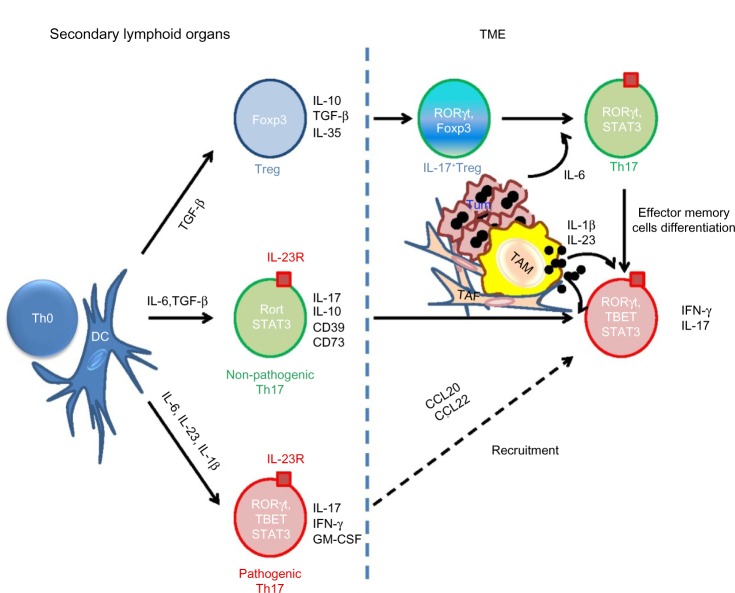
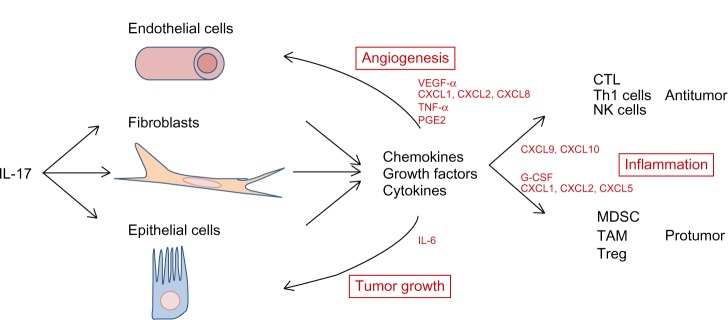
Since their recent discovery, T helper 17 (Th17) cells have been frequently detected in the tumor microenvironment of many malignancies, but their clinical implications remain largely unknown. Interleukin-17 (IL-17) detection is commonly related with poor outcomes in colorectal cancers, yet its presence is associated with antitumor responses in ovarian carcinomas. Numerous experimental models illustrate the divergent roles of Th17 cells in tumor immunity, which appears to be mainly dependent on the tumor context (type, location, and stage of cancer). It is recognized that IL-17 is produced by a variety of cell types and that Th17 cells are endowed with a unique functional plasticity. Therefore, when trying to elucidate potential immune biomarkers and immunotargets, it is extremely important to make a clear dissociation between strategies targeting Th17 versus its hallmark cytokine, IL-17. In this review, we will summarize the data regarding the detection of IL-17 and Th17 in human cancers, consider the experimental evidence on their respective roles in antitumor activity, and discuss the potential of IL-17 as an immune target for therapeutic interventions.
自最近被发现以来,辅助性T细胞17(Th17)在许多恶性肿瘤的肿瘤微环境中经常被检测到,但其临床意义仍大多未知。白细胞介素-17(IL-17)的检测通常与结直肠癌的不良预后相关,但它的存在却与卵巢癌的抗肿瘤反应有关。众多实验模型表明Th17细胞在肿瘤免疫中具有不同作用,这似乎主要取决于肿瘤背景(癌症的类型、位置和阶段)。人们认识到IL-17由多种细胞类型产生,并且Th17细胞具有独特的功能可塑性。因此,在试图阐明潜在的免疫生物标志物和免疫靶点时,明确区分针对Th17及其标志性细胞因子IL-17的策略极其重要。在本综述中,我们将总结关于人类癌症中IL-17和Th17检测的数据,考虑它们在抗肿瘤活性中各自作用的实验证据,并讨论IL-17作为治疗干预免疫靶点的潜力。