Scuola Normale Superiore, Piazza dei Cavalieri 7, I-56126 Pisa, Italy; Istituto Nazionale di Fisica Nucleare (INFN) sezione di Pisa, Largo Bruno Pontecorvo 3, 56127 Pisa, Italy.
Department of Neuroscience, Wohl Institute, King's College London, Denmark Hill Campus, London SE5, UK.
Biochim Biophys Acta Gen Subj. 2017 Jan;1861(1 Pt A):3154-3163. doi: 10.1016/j.bbagen.2016.07.020. Epub 2016 Jul 26.
The bacterial proteins IscS, IscU and CyaY, the bacterial orthologue of frataxin, play an essential role in the biological machine that assembles the prosthetic FeS cluster groups on proteins. They form functionally binary and ternary complexes both in vivo and in vitro. Yet, the mechanism by which they work remains unclear.
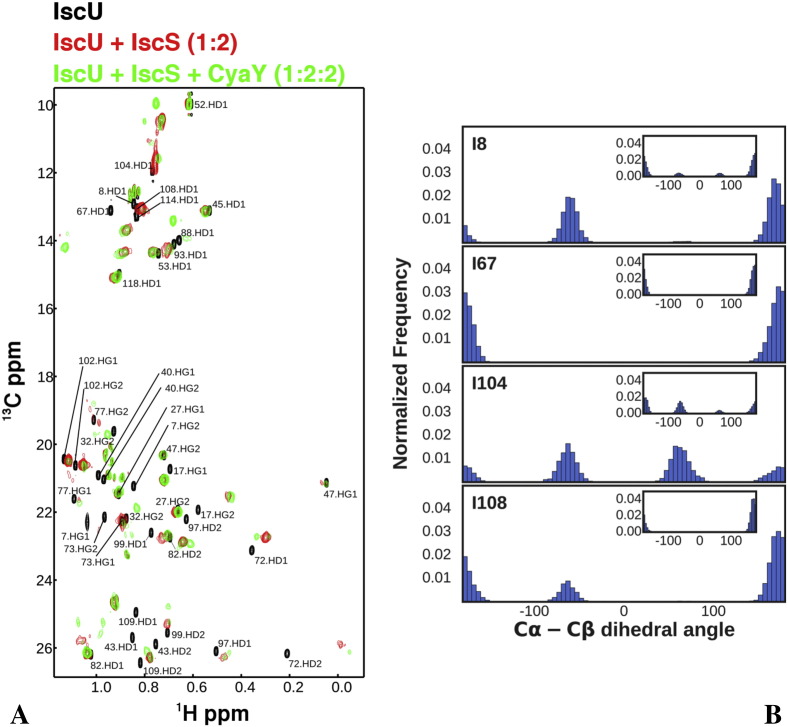
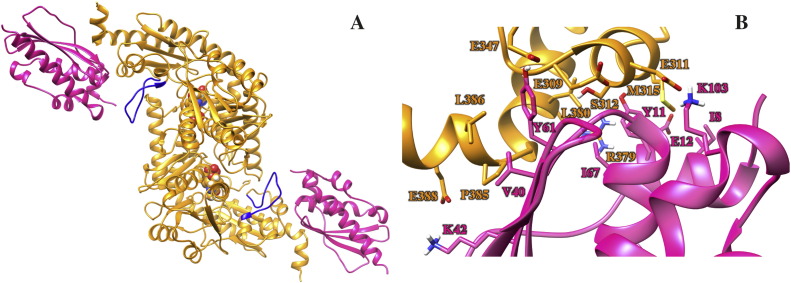
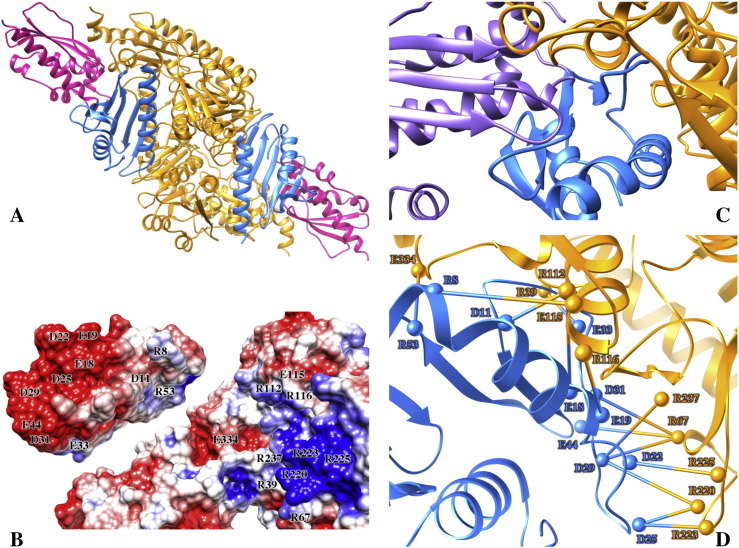
We carried out extensive molecular dynamics simulations to understand the nature of their interactions and the role of dynamics starting from the crystal structure of a IscS-IscU complex and the experimentally-based model of a ternary IscS-IscU-CyaY complex and used nuclear magnetic resonance to experimentally test the interface.
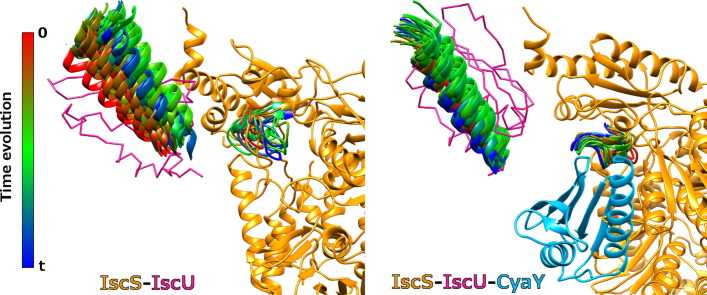
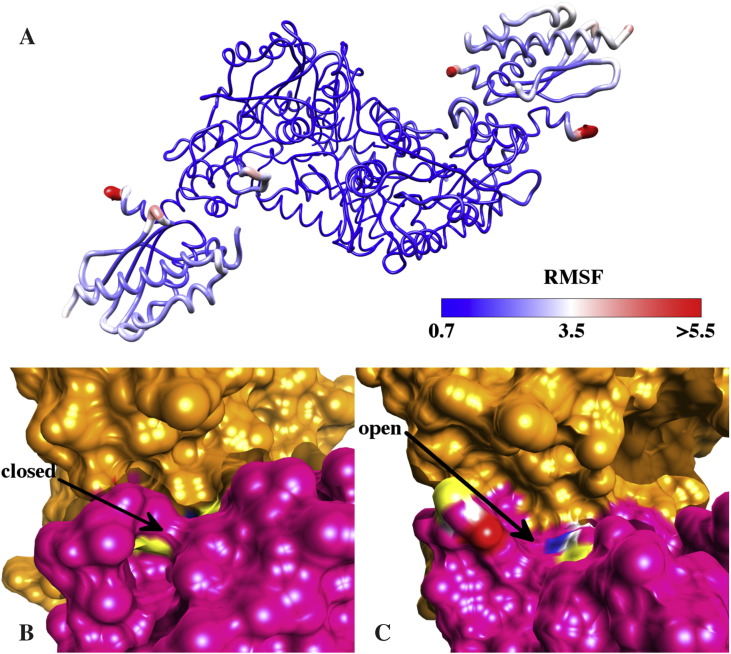
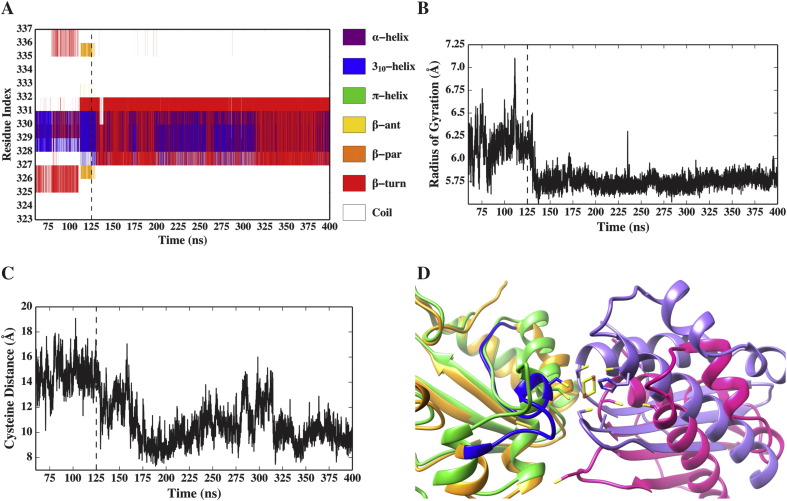
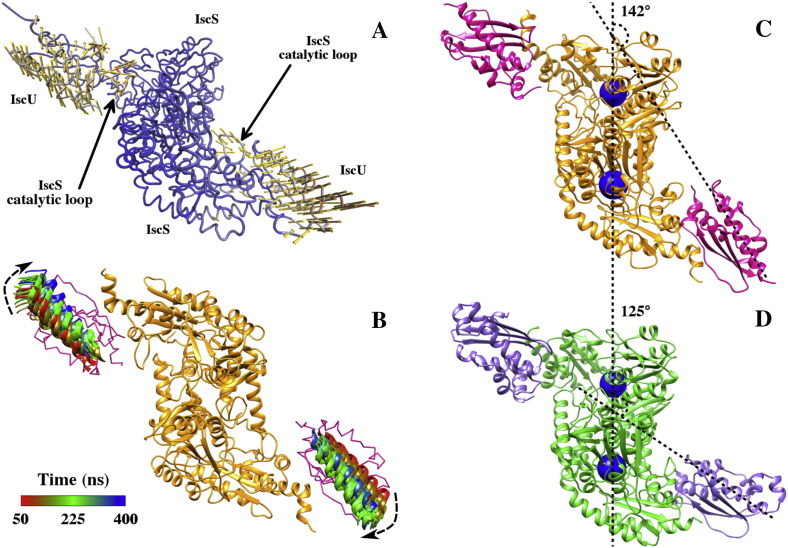
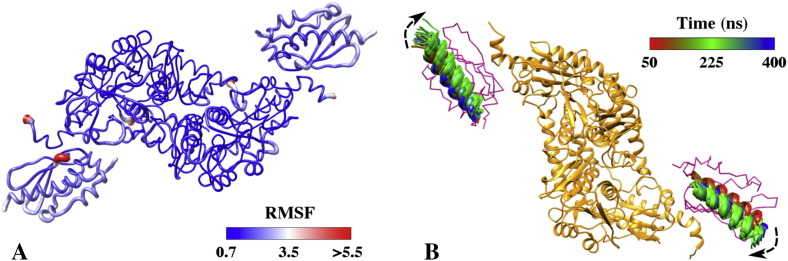
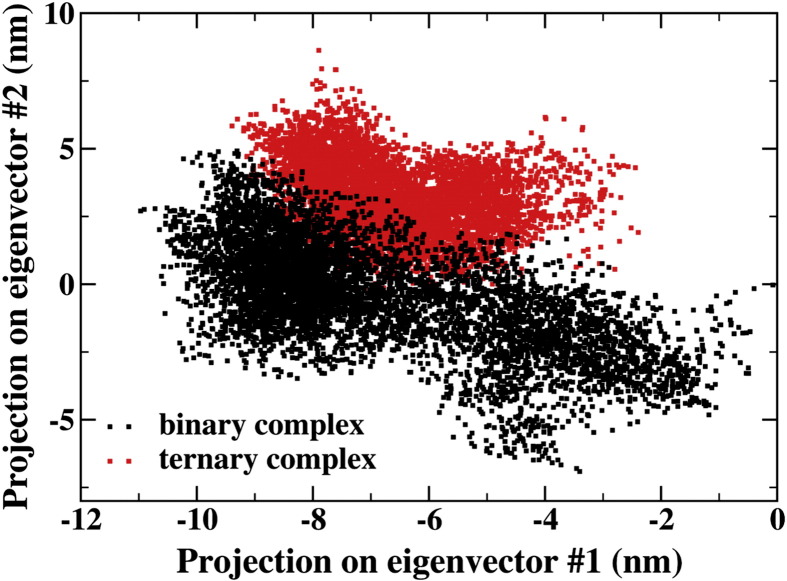
We show that, while being firmly anchored to IscS, IscU has a pivotal motion around the interface. Our results also describe how the catalytic loop of IscS can flip conformation to allow FeS cluster assembly. This motion is hampered in the ternary complex explaining its inhibitory properties in cluster formation.
We conclude that the observed 'fluid' IscS-IscU interface provides the binary complex with a functional adaptability exploited in partner recognition and unravels the molecular determinants of the reported inhibitory action of CyaY in the IscS-IscU-CyaY complex explained in terms of the hampering effect on specific IscU-IscS movements.
Our study provides the first mechanistic basis to explain how the IscS-IscU complex selects its binding partners and supports the inhibitory role of CyaY in the ternary complex.
细菌蛋白 IscS、IscU 和 CyaY,即铁硫簇组装蛋白的细菌同源物,在组装蛋白上的 prosthetic FeS 簇群的生物机器中发挥着重要作用。它们在体内和体外都形成功能上的二元和三元复合物。然而,它们的工作机制仍不清楚。
我们进行了广泛的分子动力学模拟,以了解它们相互作用的性质和动力学的作用,从 IscS-IscU 复合物的晶体结构和基于实验的三元 IscS-IscU-CyaY 复合物模型开始,并使用核磁共振来实验测试界面。
我们表明,虽然 IscU 牢固地锚定在 IscS 上,但它在界面周围有一个关键的运动。我们的结果还描述了 IscS 的催化环如何翻转构象以允许 FeS 簇组装。这种运动在三元复合物中受到阻碍,解释了它在簇形成中的抑制特性。
我们的结论是,观察到的“流动”IscS-IscU 界面为二元复合物提供了功能适应性,用于伴侣识别,并揭示了 CyaY 在 IscS-IscU-CyaY 复合物中报道的抑制作用的分子决定因素,这可以根据对特定 IscU-IscS 运动的阻碍作用来解释。
我们的研究为解释 IscS-IscU 复合物如何选择其结合伴侣提供了第一个机制基础,并支持 CyaY 在三元复合物中的抑制作用。