Zhou Dan, Tang Weiwei, Wang Wenyi, Pan Xiaoyan, An Han-Xiang, Zhang Yun
Department of Translational Medicine, Xiamen Institute of Rare Earth Materials, Xiamen, China; Department of Translational Medicine, Key Laboratory of Design and Assembly of Functional Nanostructures, Fujian Provincial Key Laboratory of Nanomaterials, Fujian Institute of Research on the Structure of Matter, Fuzhou, China.
Department of Medical Oncology, The First Affiliated Hospital of Xiamen University , Xiamen , China.
PeerJ. 2016 Jul 14;4:e2203. doi: 10.7717/peerj.2203. eCollection 2016.
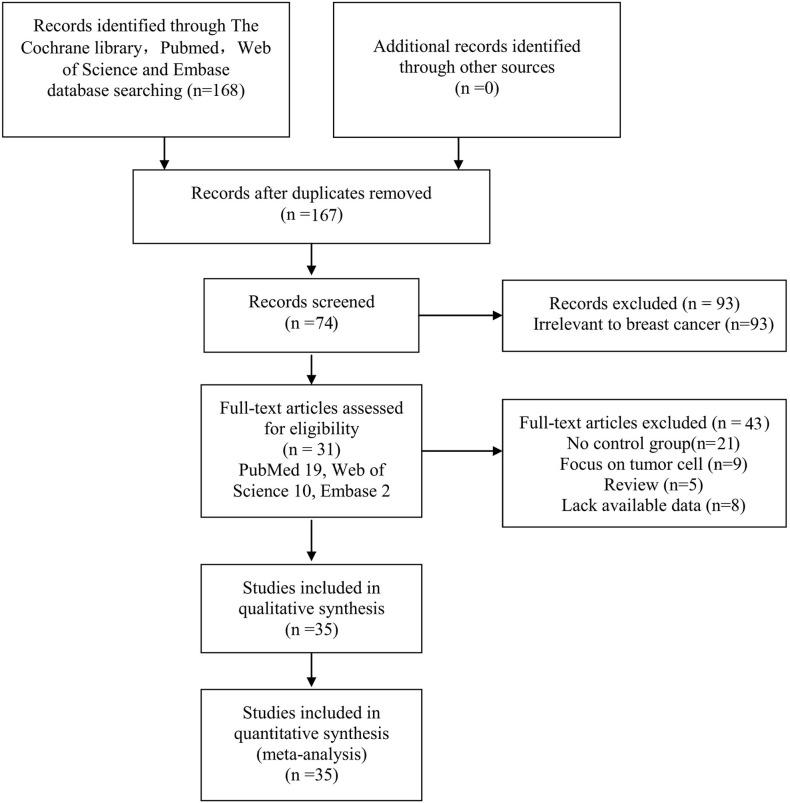
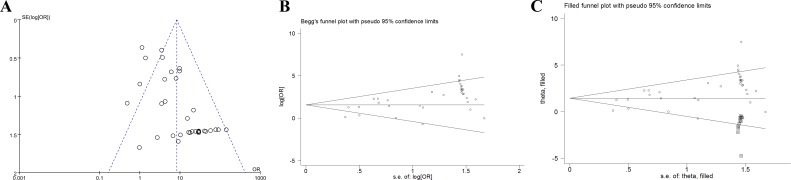
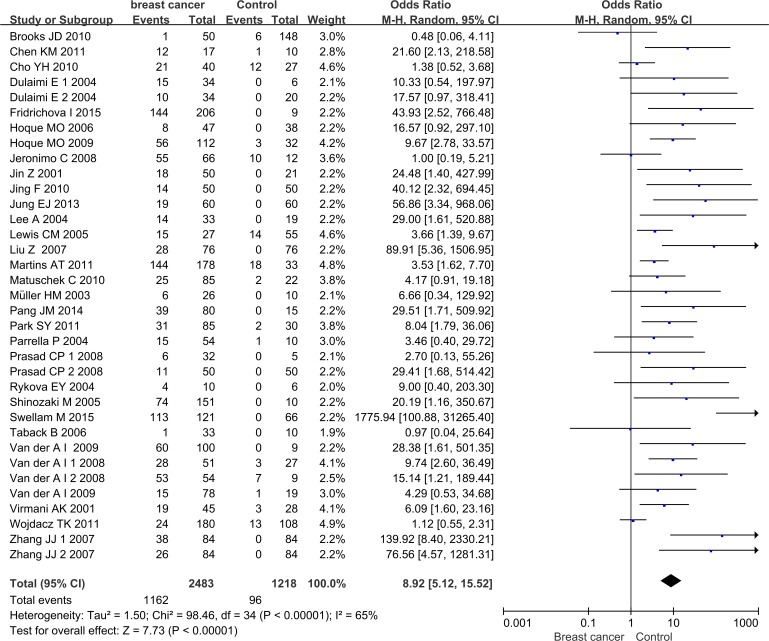
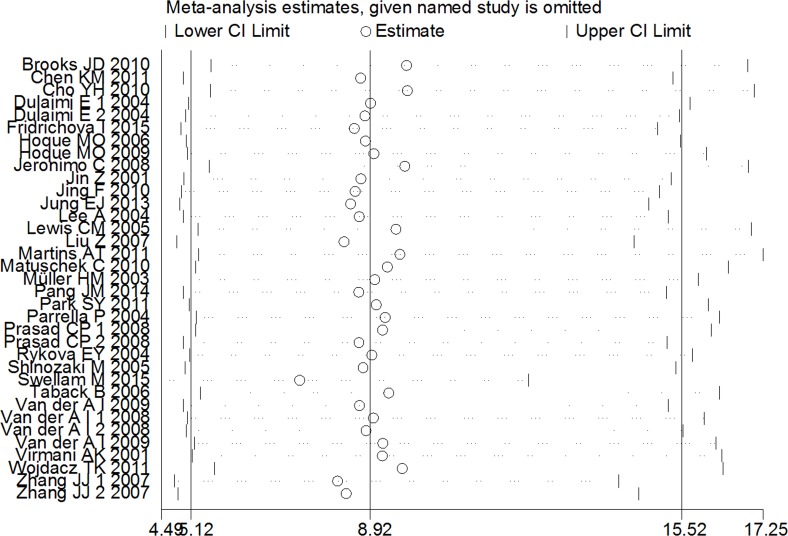
Background. Adenomatous polyposis coli (APC) is widely known as an antagonist of the Wnt signaling pathway via the inactivation of β-catenin. An increasing number of studies have reported that APC methylation contributes to the predisposition to breast cancer (BC). However, recent studies have yielded conflicting results. Methods. Herein, we systematically carried out a meta-analysis to assess the correlation between APC methylation and BC risk. Based on searches of the Cochrane Library, PubMed, Web of Science and Embase databases, the odds ratio (OR) with 95% confidence interval (CI) values were pooled and summarized. Results. A total of 31 articles involving 35 observational studies with 2,483 cases and 1,218 controls met the inclusion criteria. The results demonstrated that the frequency of APC methylation was significantly higher in BC cases than controls under a random effect model (OR = 8.92, 95% CI [5.12-15.52]). Subgroup analysis further confirmed the reliable results, regardless of the sample types detected, methylation detection methods applied and different regions included. Interestingly, our results also showed that the frequency of APC methylation was significantly lower in early-stage BC patients than late-stage ones (OR = 0.62, 95% CI [0.42-0.93]). Conclusion. APC methylation might play an indispensable role in the pathogenesis of BC and could be regarded as a potential biomarker for the diagnosis of BC.
背景。腺瘤性息肉病 coli(APC)作为通过β-连环蛋白失活来拮抗Wnt信号通路的物质而广为人知。越来越多的研究报告称,APC甲基化与乳腺癌(BC)的易感性有关。然而,最近的研究结果相互矛盾。方法。在此,我们系统地进行了一项荟萃分析,以评估APC甲基化与BC风险之间的相关性。基于对Cochrane图书馆、PubMed、科学网和Embase数据库的检索,汇总并总结了具有95%置信区间(CI)值的比值比(OR)。结果。共有31篇文章涉及35项观察性研究,包括2483例病例和1218例对照,符合纳入标准。结果表明,在随机效应模型下,BC病例中APC甲基化的频率显著高于对照组(OR = 8.92,95% CI [5.12 - 15.52])。亚组分析进一步证实了这些可靠的结果,无论检测的样本类型、应用的甲基化检测方法以及所包括的不同地区如何。有趣的是,我们的结果还表明,早期BC患者中APC甲基化的频率显著低于晚期患者(OR = 0.62,95% CI [0.42 - 0.93])。结论。APC甲基化可能在BC的发病机制中起不可或缺的作用,并可被视为BC诊断的潜在生物标志物。