Deforche Louis, Tersteeg Claudia, Roose Elien, Vandenbulcke Aline, Vandeputte Nele, Pareyn Inge, De Cock Elien, Rottensteiner Hanspeter, Deckmyn Hans, De Meyer Simon F, Vanhoorelbeke Karen
Laboratory for Thrombosis Research, IRF Life Sciences, KU Leuven Campus Kulak Kortrijk, Kortrijk, Belgium.
Baxalta Innovations GmbH, Vienna, Austria.
PLoS One. 2016 Aug 1;11(8):e0160388. doi: 10.1371/journal.pone.0160388. eCollection 2016.
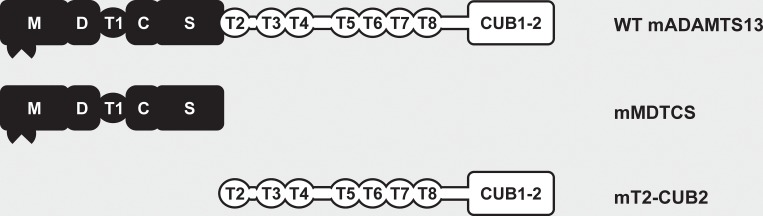
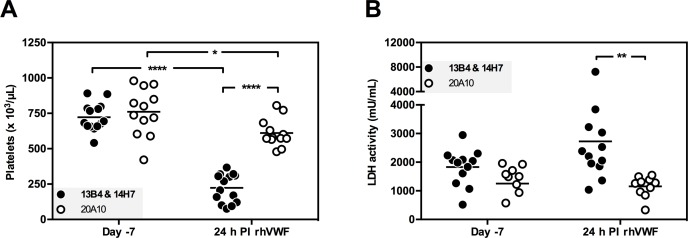
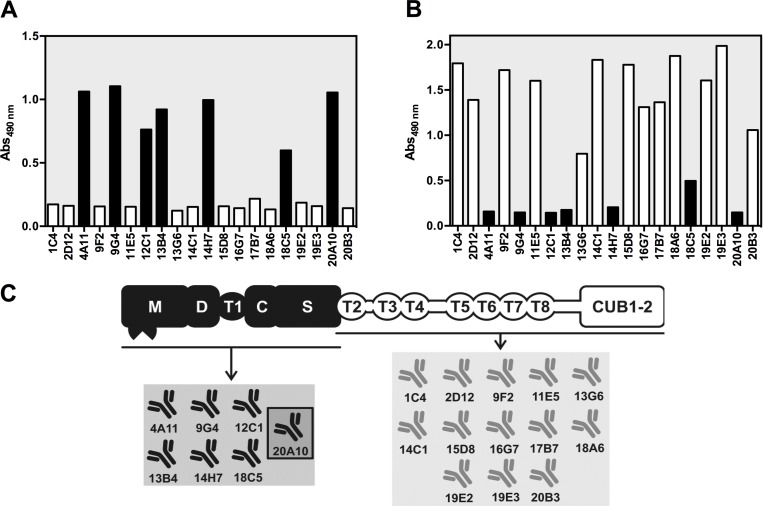
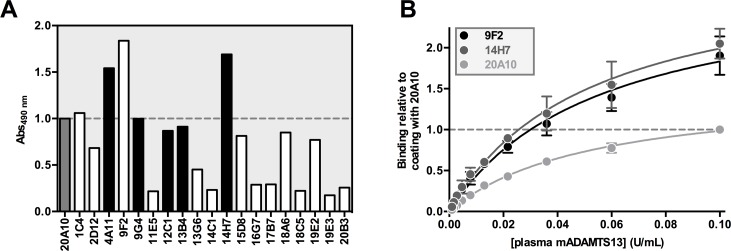
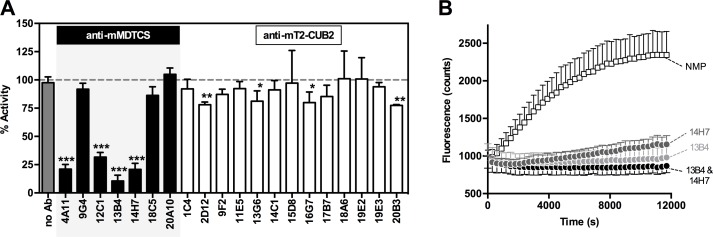
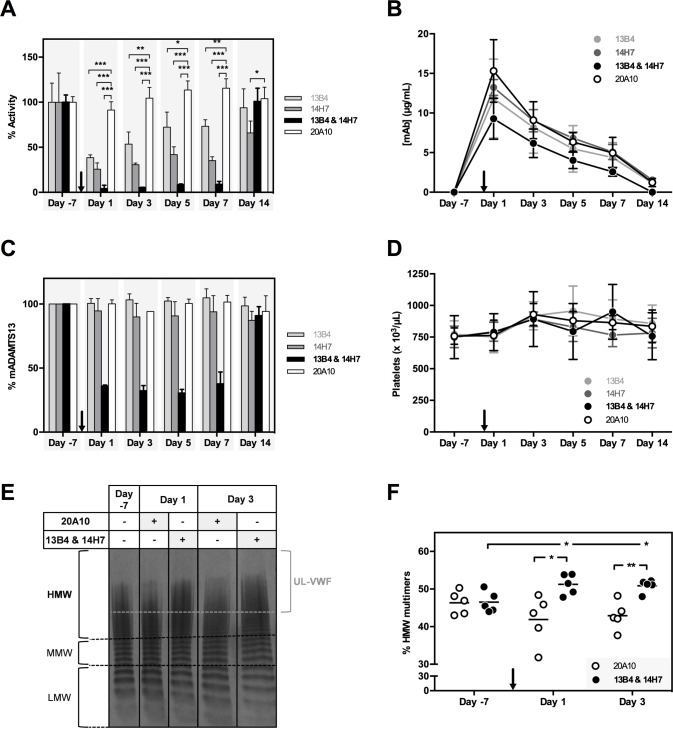
Thrombotic thrombocytopenic purpura (TTP) is a life-threatening thrombotic microangiopathy linked to a deficiency in the metalloprotease ADAMTS13. In the current study, a novel mouse model for acquired TTP was generated to facilitate development and validation of new therapies for this disease. Therefore, a large panel (n = 19) of novel anti-mouse ADAMTS13 (mADAMTS13) monoclonal antibodies (mAbs) of mouse origin was generated. Inhibitory anti-mADAMTS13 mAbs were identified using the FRETS-VWF73 assay. Four mAbs strongly inhibited mADAMTS13 activity in vitro (∼68-90% inhibition). Injecting a combination of 2 inhibitory mAbs (13B4 and 14H7, 1.25 mg/kg each) in Adamts13+/+ mice resulted in full inhibition of plasma ADAMTS13 activity (96 ± 4% inhibition, day 1 post injection), leading to the appearance of ultra-large von Willebrand factor (UL-VWF) multimers. Interestingly, the inhibitory anti-mADAMTS13 mAbs 13B4 and 14H7 were ideally suited to induce long-term ADAMTS13 deficiency in Adamts13+/+ mice. A single bolus injection resulted in full ex vivo inhibition for more than 7 days. As expected, the mice with the acquired ADAMTS13 deficiency did not spontaneously develop TTP, despite the accumulation of UL-VWF multimers. In line with the Adamts13-/- mice, TTP-like symptoms could only be induced when an additional trigger (rVWF) was administered. On the other hand, the availability of our panel of anti-mADAMTS13 mAbs allowed us to further develop a sensitive ELISA to detect ADAMTS13 in mouse plasma. In conclusion, a novel acquired TTP mouse model was generated through the development of inhibitory anti-mADAMTS13 mAbs. Consequently, this model provides new opportunities for the development and validation of novel treatments for patients with TTP. In addition, these newly developed inhibitory anti-mADAMTS13 mAbs are of great value to specifically study the role of ADAMTS13 in mouse models of thrombo-inflammatory disease.
血栓性血小板减少性紫癜(TTP)是一种与金属蛋白酶ADAMTS13缺乏相关的危及生命的血栓性微血管病。在本研究中,构建了一种新型获得性TTP小鼠模型,以促进针对该疾病的新疗法的开发和验证。因此,制备了一大组(n = 19)源自小鼠的新型抗小鼠ADAMTS13(mADAMTS13)单克隆抗体(mAb)。使用FRETS-VWF73检测法鉴定抑制性抗mADAMTS13 mAb。四种mAb在体外强烈抑制mADAMTS13活性(约68-90%抑制)。在Adamts13+/+小鼠中注射两种抑制性mAb(13B4和14H7,各1.25 mg/kg)的组合导致血浆ADAMTS13活性完全抑制(注射后第1天抑制率为96±4%),导致超大血管性血友病因子(UL-VWF)多聚体出现。有趣的是,抑制性抗mADAMTS13 mAb 13B4和14H7非常适合在Adamts13+/+小鼠中诱导长期ADAMTS13缺乏。单次推注可导致体外完全抑制超过7天。正如预期的那样,尽管存在UL-VWF多聚体的积累,但获得性ADAMTS13缺乏的小鼠并未自发发生TTP。与Adamts13-/-小鼠一致,只有在给予额外的触发因素(rVWF)时才能诱导出类似TTP的症状。另一方面,我们的抗mADAMTS13 mAb组的可用性使我们能够进一步开发一种灵敏的ELISA来检测小鼠血浆中的ADAMTS13。总之,通过开发抑制性抗mADAMTS13 mAb构建了一种新型获得性TTP小鼠模型。因此,该模型为TTP患者新疗法的开发和验证提供了新的机会。此外,这些新开发的抑制性抗mADAMTS13 mAb对于在血栓炎症性疾病小鼠模型中特异性研究ADAMTS13的作用具有重要价值。