Groningen Institute for Evolutionary Life Sciences, University of Groningen, PO Box 11103, Groningen 9700 CC, The Netherlands.
Nat Commun. 2016 Aug 3;7:12322. doi: 10.1038/ncomms12322.
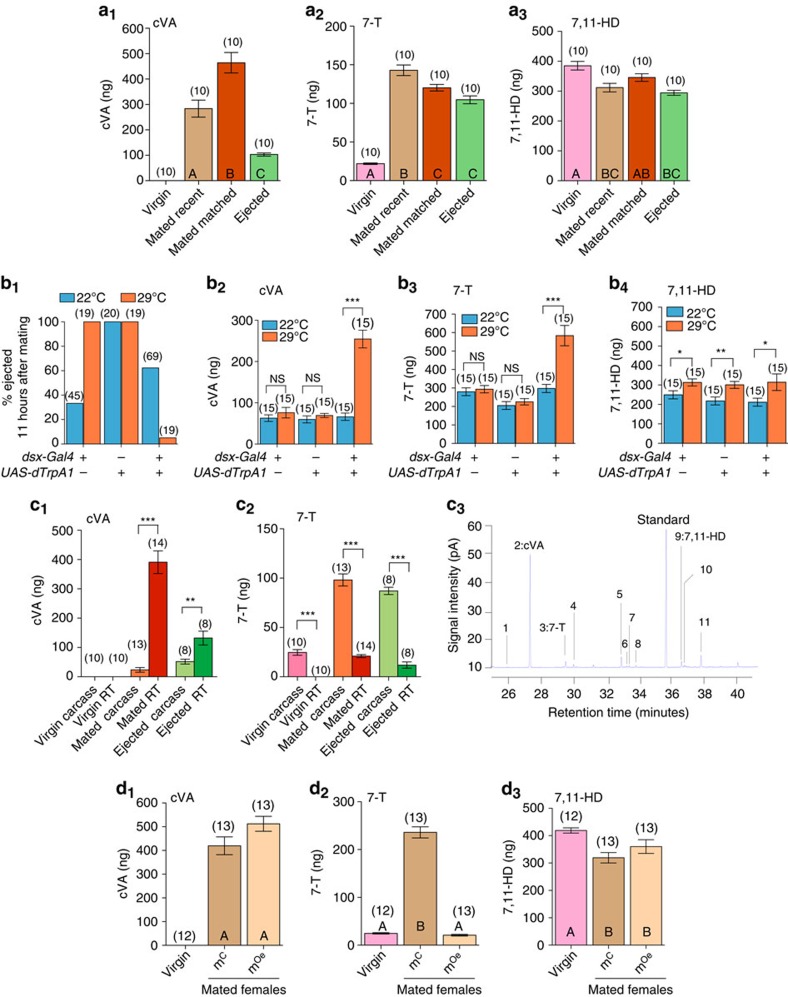
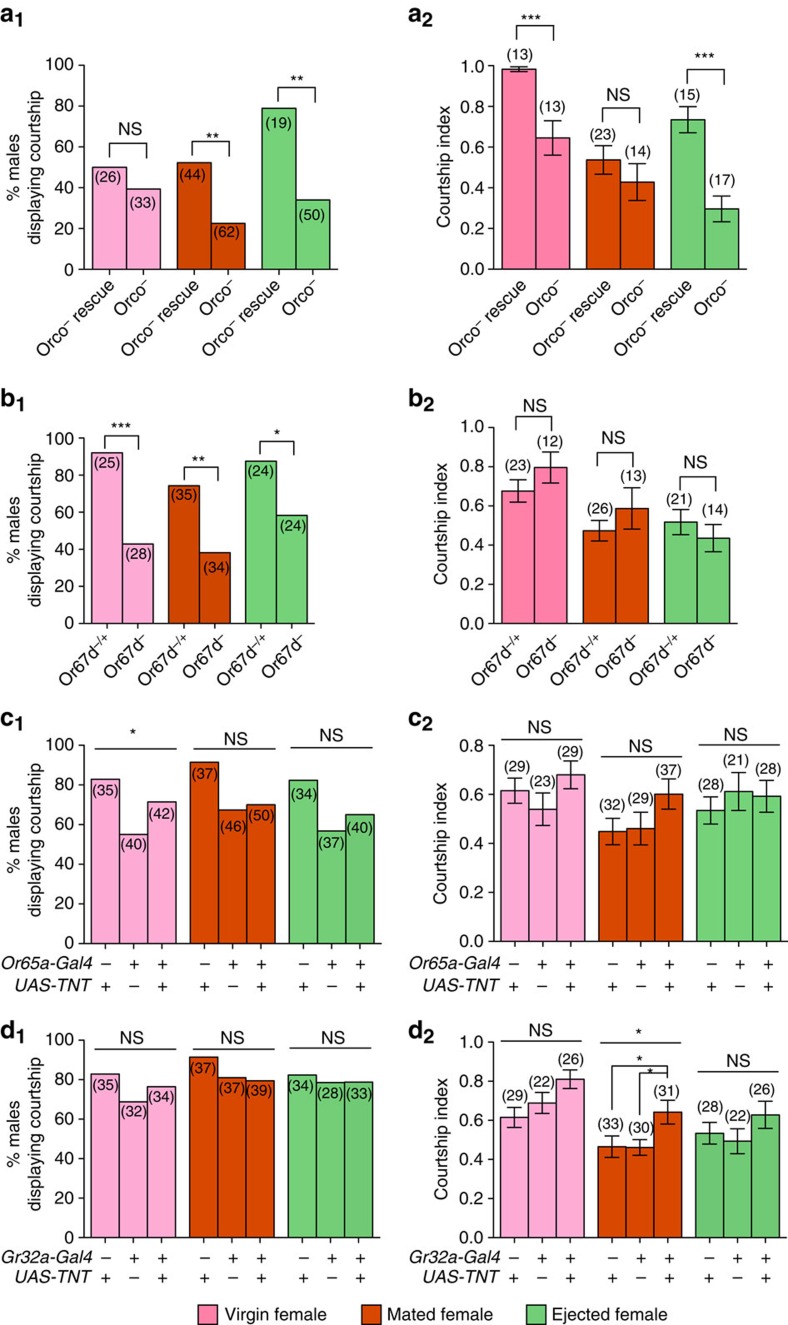
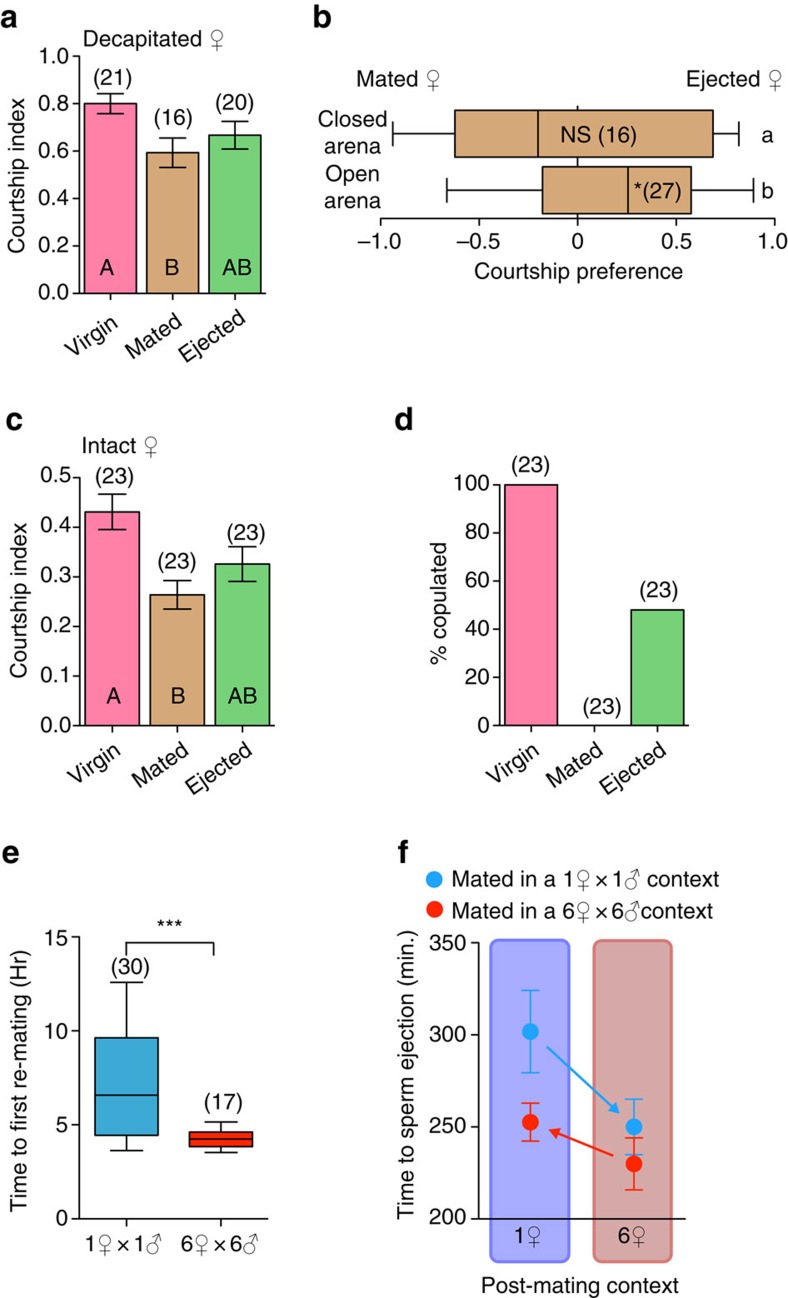
Males from many species ensure paternity by preventing their mates from copulating with other males. One mate-guarding strategy involves marking females with anti-aphrodisiac pheromones (AAPs), which reduces the females' attractiveness and dissuades other males from courting. Since females benefit from polyandry, sexual conflict theory predicts that females should develop mechanisms to counteract AAPs to achieve additional copulations, but no such mechanisms have been documented. Here we show that during copulation Drosophila melanogaster males transfer two AAPs: cis-Vaccenyl Acetate (cVA) to the females' reproductive tract, and 7-Tricosene (7-T) to the females' cuticle. A few hours after copulation, females actively eject cVA from their reproductive tract, which results in increased attractiveness and re-mating. Although 7-T remains on those females, we show that it is the combination of the two chemicals that reduces attractiveness. To our knowledge, female AAP ejection provides the first example of a female mechanism that counter-acts chemical mate-guarding.
许多物种的雄性通过防止其配偶与其他雄性交配来确保亲权。一种伴侣保护策略涉及用抗发情信息素(AAP)标记雌性,这会降低雌性的吸引力,并阻止其他雄性求爱。由于雌性受益于多配偶制,性冲突理论预测雌性应该发展机制来对抗 AAP 以实现额外的交配,但没有记录到这种机制。在这里,我们表明在交配过程中,黑腹果蝇雄性会向雌性生殖道转移两种 AAP:顺式-戊烯基乙酸酯(cVA)和 7-二十三烯(7-T)到雌性的角质层。交配几个小时后,雌性会主动从生殖道中排出 cVA,从而增加了雌性的吸引力并重新交配。尽管 7-T 仍留在那些雌性身上,但我们表明,正是这两种化学物质的组合降低了吸引力。据我们所知,雌性 AAP 排出提供了第一个对抗化学伴侣保护的雌性机制的例子。