Zaller Nickolas, Cheney Ann M, Curran Geoffrey M, Booth Brenda M, Borders Tyrone F
a Department of Health Behavior and Health Education , University of Arkansas for Medical Sciences , Little Rock , Arkansas , USA.
b Department of Social Medicine and Population Health , University of California Riverside School of Medicine , Riverside , California , USA.
Subst Use Misuse. 2016 Oct 14;51(12):1566-1576. doi: 10.1080/10826084.2016.1188954. Epub 2016 Aug 3.
African Americans are incarcerated at rates much higher than other racial and ethnic groups in the United States.
We sought to qualitatively explore the relationships between ongoing involvement in the criminal justice system and continued drug use in a population of urban and rural African American cocaine users in a southern state.
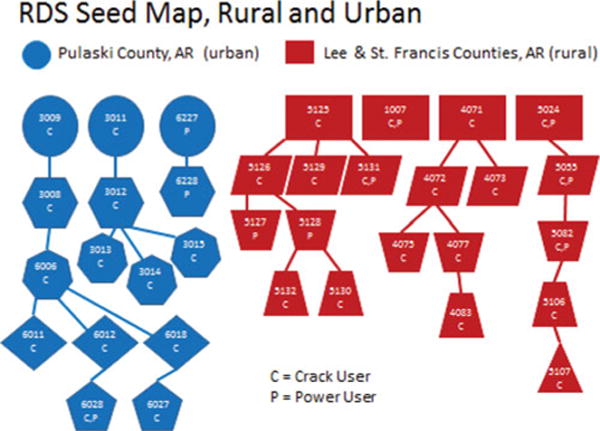
Semi-structured qualitative interviews were conducted among African American cocaine users in Arkansas between 2010 and 2012. Participants resided in both rural (two counties located in the eastern Arkansas Mississippi delta region) and urban (the county including the capital city of Little Rock) areas.
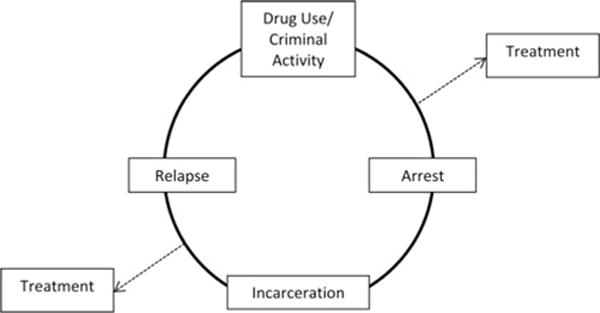
Numerous important themes emerged from participants' narratives, including chronic involvement with the criminal justice system (being a "career criminal"), continued access to drugs while incarcerated, relapse, and reincarceration and lack of access to effective drug treatment. Conclusion/Importance: The themes which emerged from our data speak to the collective experience that many substance using populations in the United States face in dealing with the criminal justice system. Our findings highlight the need to better, more holistic ways of engaging African American substance users in community based substance use treatment and supportive services.
非裔美国人在美国的监禁率远高于其他种族和族裔群体。
我们试图定性探究在南方某州城市和农村非裔美国可卡因使用者群体中,持续参与刑事司法系统与持续吸毒之间的关系。
2010年至2012年期间,对阿肯色州的非裔美国可卡因使用者进行了半结构化定性访谈。参与者居住在农村(阿肯色州东部密西西比三角洲地区的两个县)和城市(包括首府小石城的县)地区。
参与者的叙述中出现了许多重要主题,包括长期参与刑事司法系统(成为“职业罪犯”)、监禁期间仍能获取毒品、复吸、再次入狱以及无法获得有效的药物治疗。结论/重要性:我们数据中出现的主题反映了美国许多吸毒人群在应对刑事司法系统时的共同经历。我们的研究结果凸显了以更好、更全面的方式让非裔美国吸毒者参与基于社区的药物使用治疗和支持性服务的必要性。