Nuttle Xander, Giannuzzi Giuliana, Duyzend Michael H, Schraiber Joshua G, Narvaiza Iñigo, Sudmant Peter H, Penn Osnat, Chiatante Giorgia, Malig Maika, Huddleston John, Benner Chris, Camponeschi Francesca, Ciofi-Baffoni Simone, Stessman Holly A F, Marchetto Maria C N, Denman Laura, Harshman Lana, Baker Carl, Raja Archana, Penewit Kelsi, Janke Nicolette, Tang W Joyce, Ventura Mario, Banci Lucia, Antonacci Francesca, Akey Joshua M, Amemiya Chris T, Gage Fred H, Reymond Alexandre, Eichler Evan E
Nature. 2016 Aug 11;536(7615):205-9. doi: 10.1038/nature19075. Epub 2016 Aug 3.
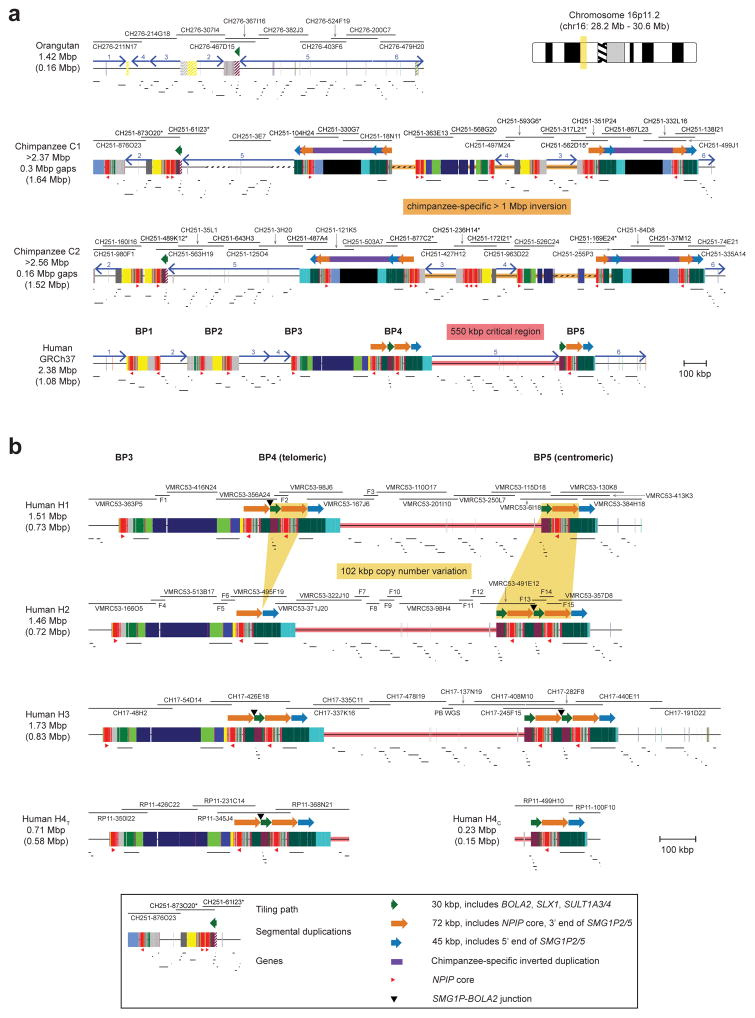
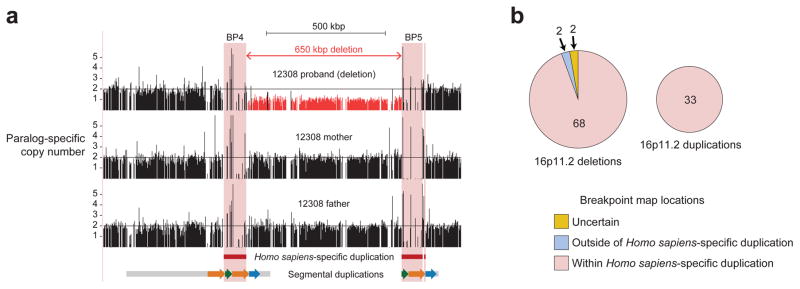
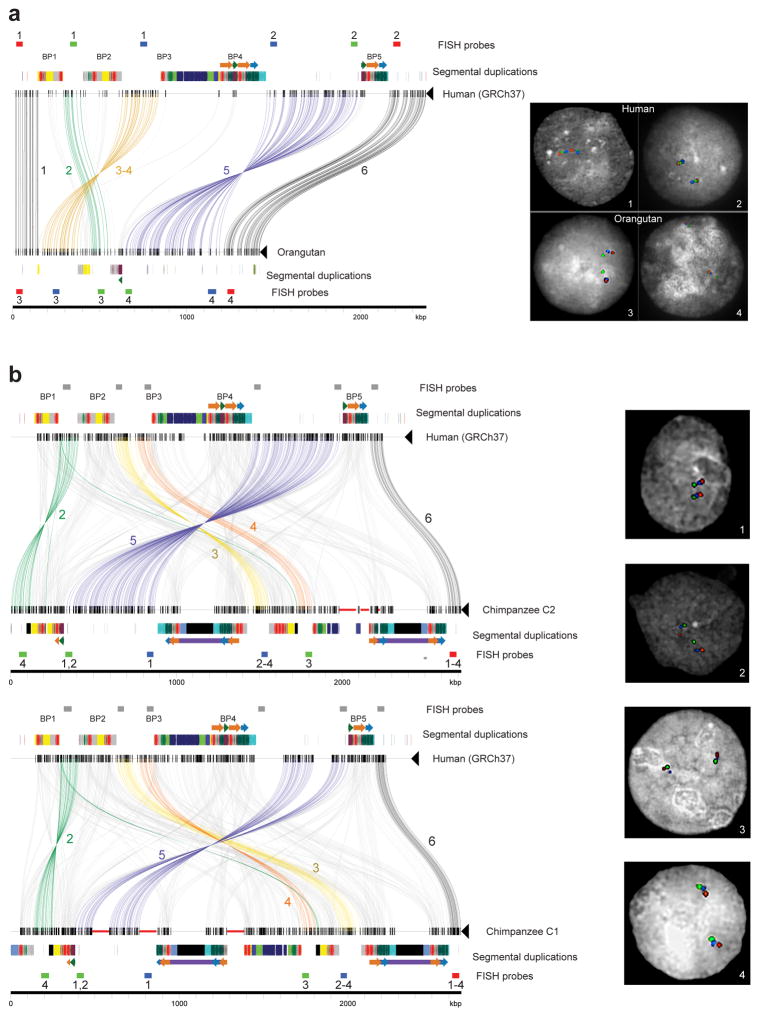
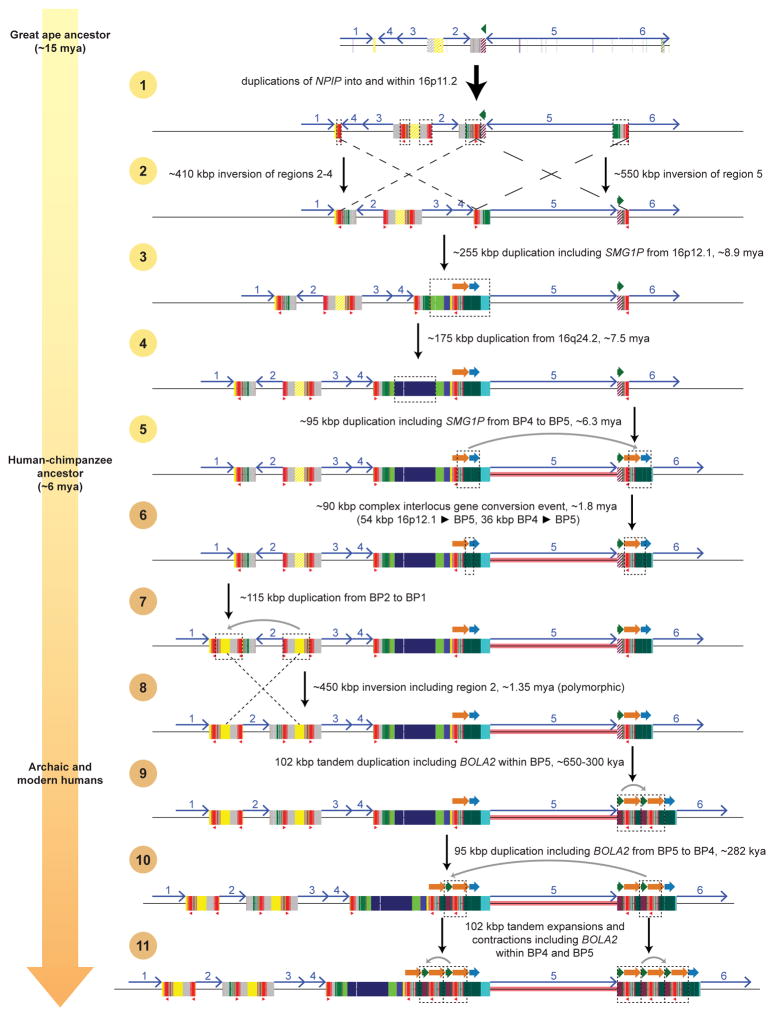
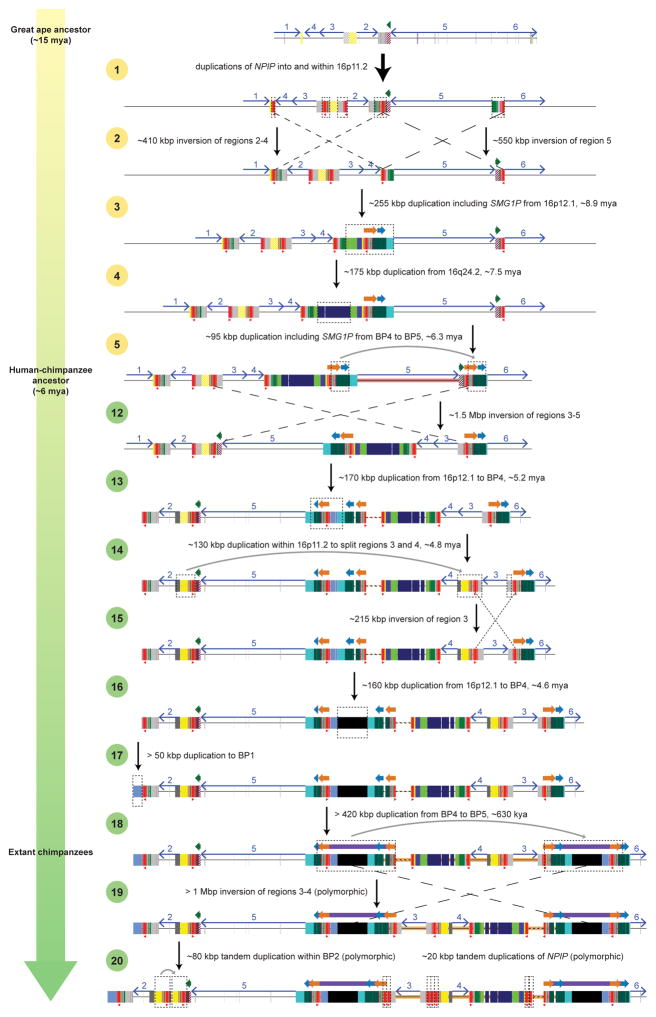
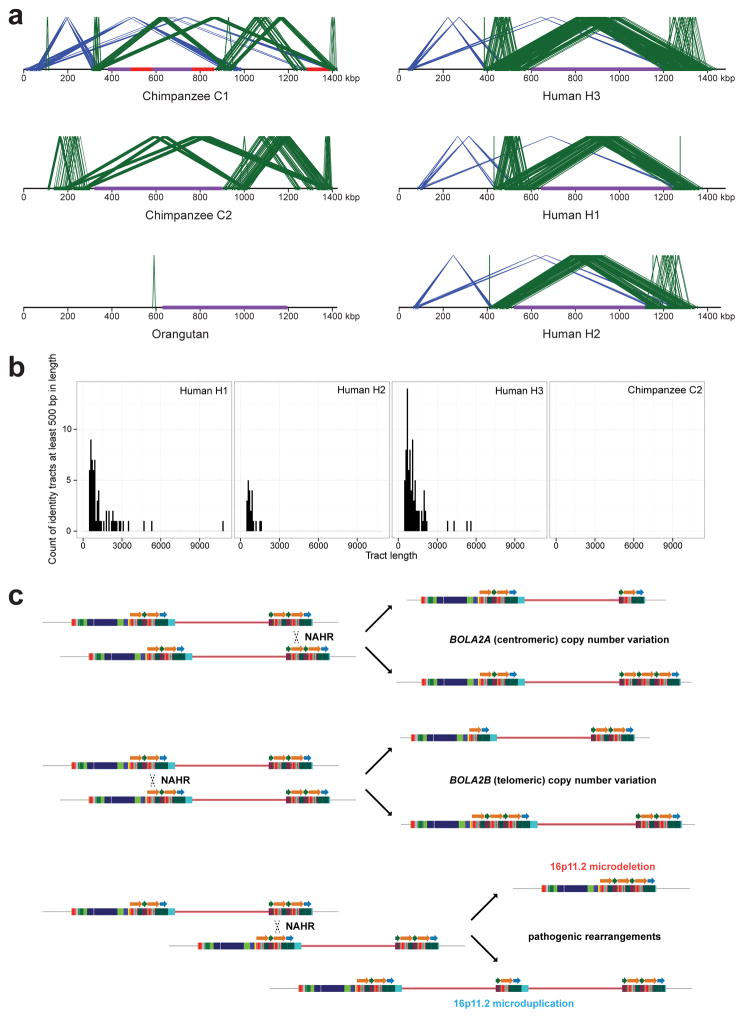
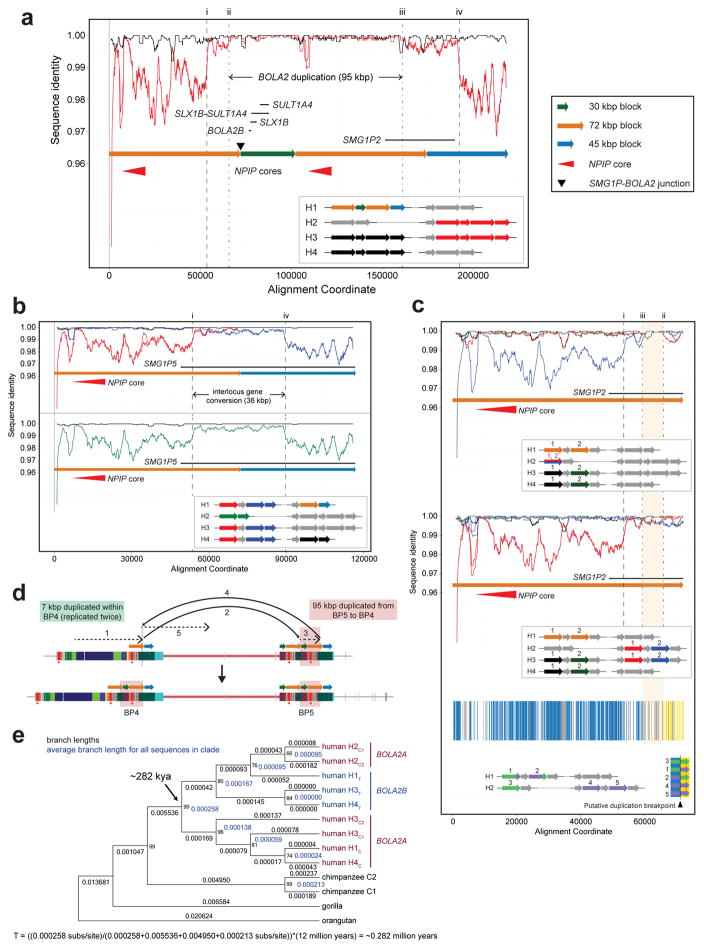
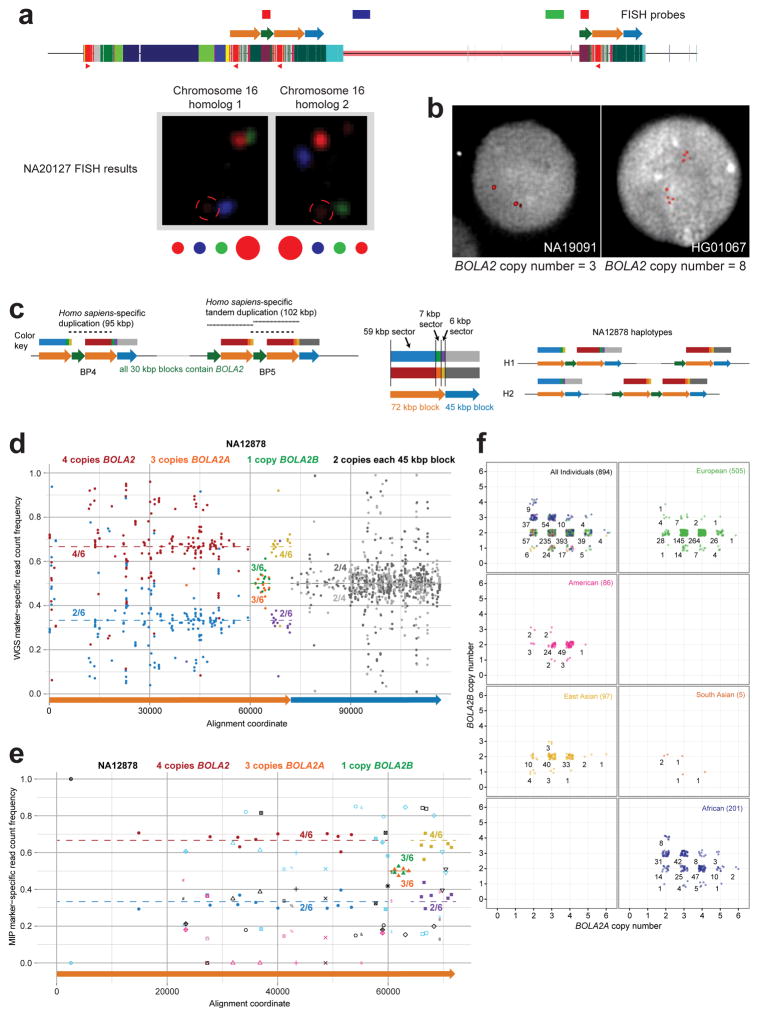
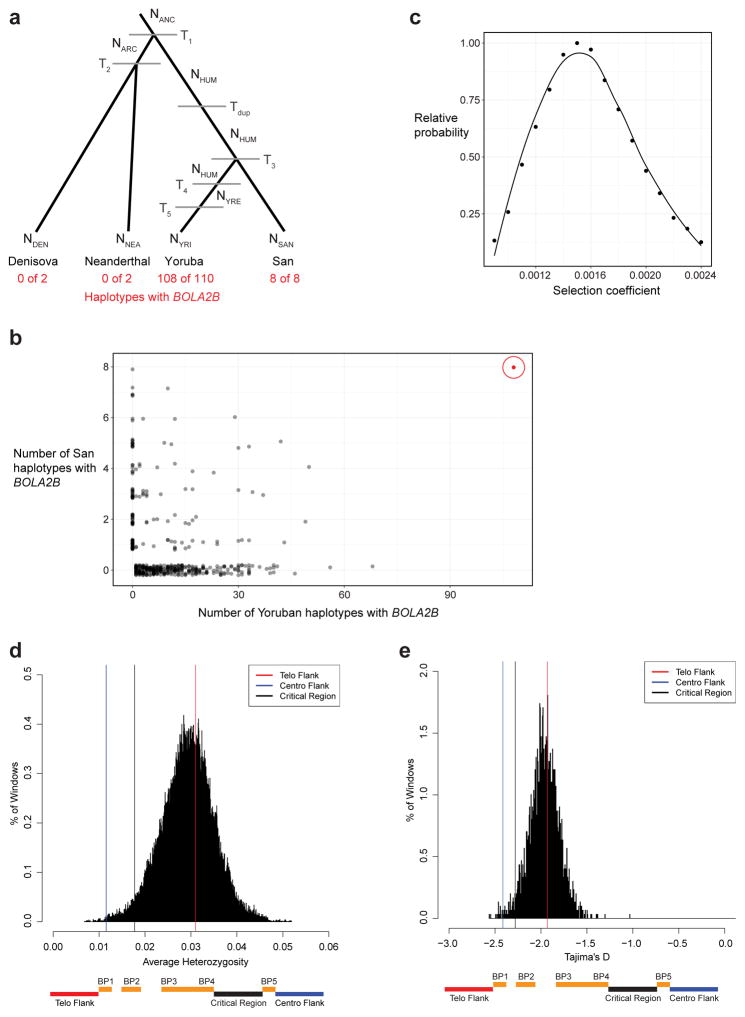
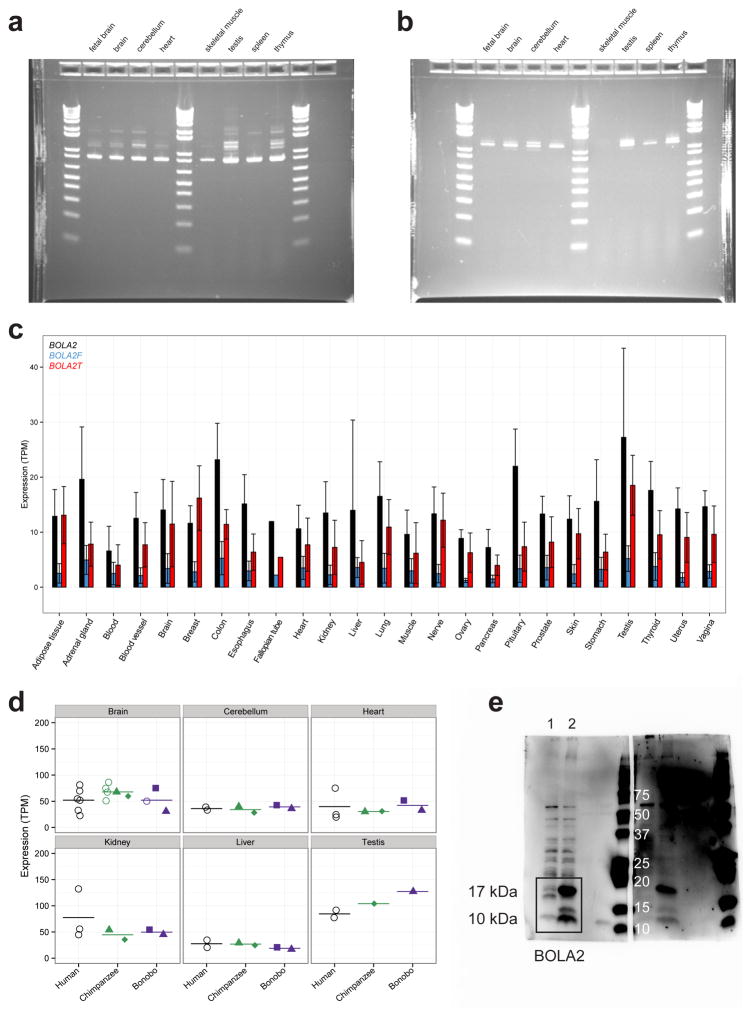
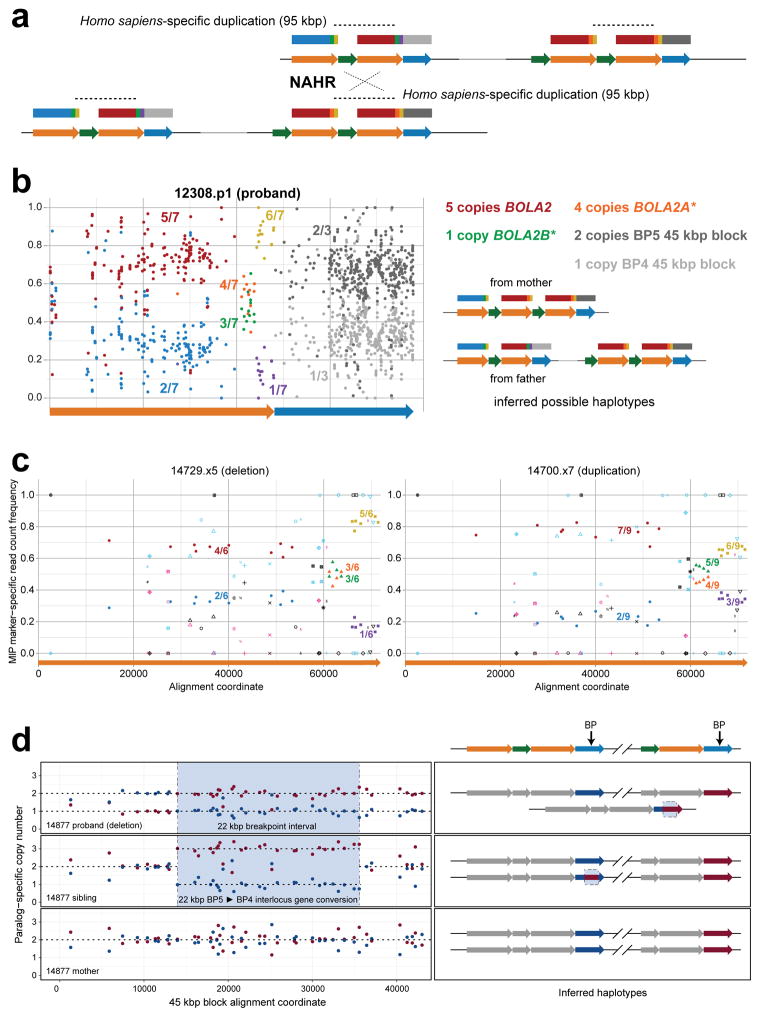
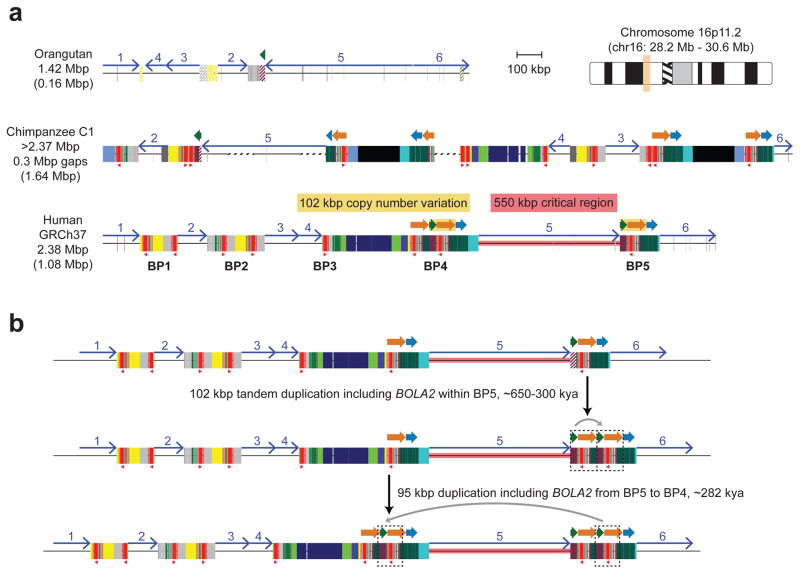
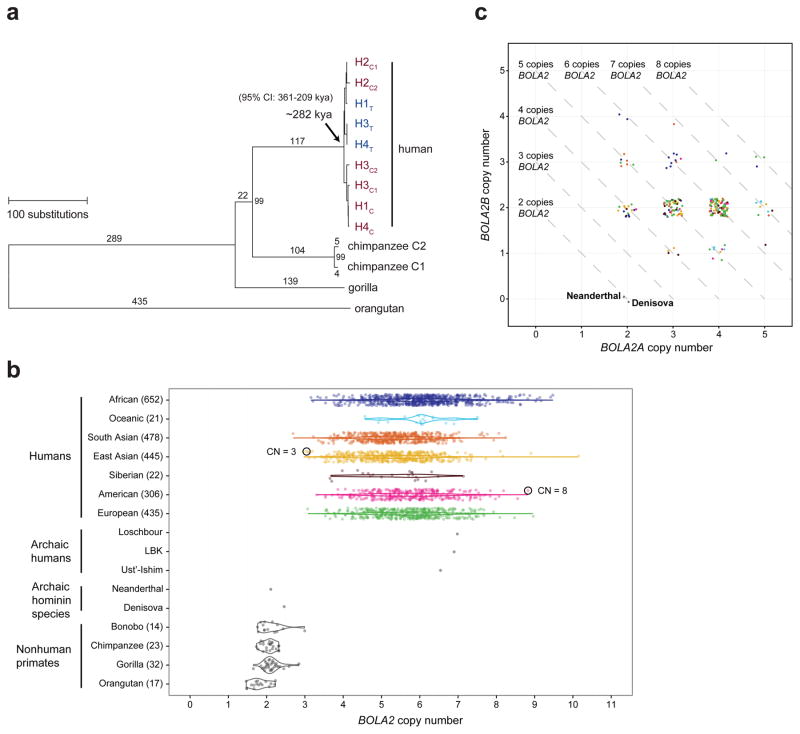
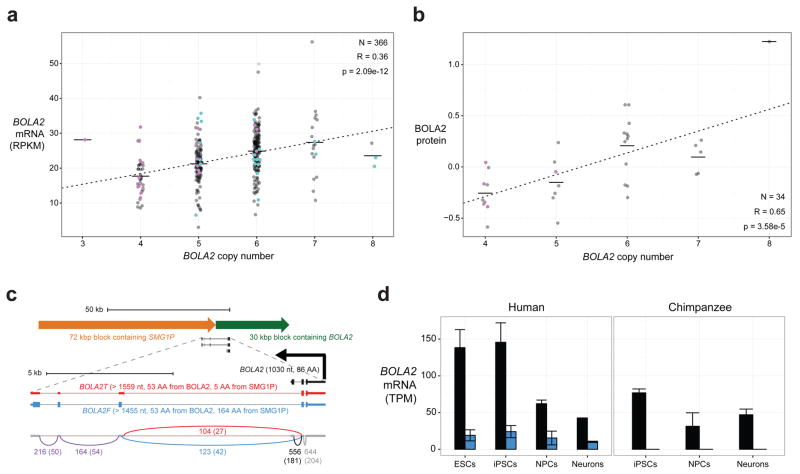
Genetic differences that specify unique aspects of human evolution have typically been identified by comparative analyses between the genomes of humans and closely related primates, including more recently the genomes of archaic hominins. Not all regions of the genome, however, are equally amenable to such study. Recurrent copy number variation (CNV) at chromosome 16p11.2 accounts for approximately 1% of cases of autism and is mediated by a complex set of segmental duplications, many of which arose recently during human evolution. Here we reconstruct the evolutionary history of the locus and identify bolA family member 2 (BOLA2) as a gene duplicated exclusively in Homo sapiens. We estimate that a 95-kilobase-pair segment containing BOLA2 duplicated across the critical region approximately 282 thousand years ago (ka), one of the latest among a series of genomic changes that dramatically restructured the locus during hominid evolution. All humans examined carried one or more copies of the duplication, which nearly fixed early in the human lineage--a pattern unlikely to have arisen so rapidly in the absence of selection (P < 0.0097). We show that the duplication of BOLA2 led to a novel, human-specific in-frame fusion transcript and that BOLA2 copy number correlates with both RNA expression (r = 0.36) and protein level (r = 0.65), with the greatest expression difference between human and chimpanzee in experimentally derived stem cells. Analyses of 152 patients carrying a chromosome 16p11. rearrangement show that more than 96% of breakpoints occur within the H. sapiens-specific duplication. In summary, the duplicative transposition of BOLA2 at the root of the H. sapiens lineage about 282 ka simultaneously increased copy number of a gene associated with iron homeostasis and predisposed our species to recurrent rearrangements associated with disease.
通常通过对人类基因组与亲缘关系密切的灵长类动物基因组进行比较分析来确定那些决定人类进化独特方面的遗传差异,最近还包括古老人类的基因组。然而,并非基因组的所有区域都同样适合此类研究。16号染色体p11.2区域的反复拷贝数变异(CNV)约占自闭症病例的1%,由一组复杂的节段性重复介导,其中许多是在人类进化过程中近期出现的。在这里,我们重建了该基因座的进化历史,并确定bolA家族成员2(BOLA2)是仅在智人中发生复制的基因。我们估计,一个包含BOLA2的95千碱基对片段大约在28.2万年前(ka)在关键区域进行了复制,这是在人类进化过程中显著重组该基因座的一系列基因组变化中最晚发生的变化之一。所有接受检测的人类都携带一个或多个该重复片段的拷贝,该重复片段在人类谱系早期几乎固定下来——如果没有选择,这种模式不太可能如此迅速地出现(P < 0.0097)。我们表明,BOLA2的复制导致了一种新的、人类特有的框内融合转录本,并且BOLA2的拷贝数与RNA表达(r = 0.36)和蛋白质水平(r = 0.65)均相关,在实验获得的干细胞中,人类和黑猩猩之间的表达差异最大。对152名携带16号染色体p11.重排的患者的分析表明,超过96%的断点发生在智人特有的重复片段内。总之,大约28.2万年前在智人谱系根部发生的BOLA2重复转座同时增加了与铁稳态相关基因的拷贝数,并使我们的物种易患与疾病相关的反复重排。