Blaya Josefa, Marhuenda Frutos C, Pascual Jose A, Ros Margarita
Department of Soil and Water Conservation and Organic Wastes Management, Centro de Edafología y Biología Aplicada del Segura (CEBAS-CSIC), Murcia, Spain.
Department of Agrochemistry and Biochemistry. University of Alicante, Alicante, Spain.
PLoS One. 2016 Aug 4;11(8):e0158048. doi: 10.1371/journal.pone.0158048. eCollection 2016.
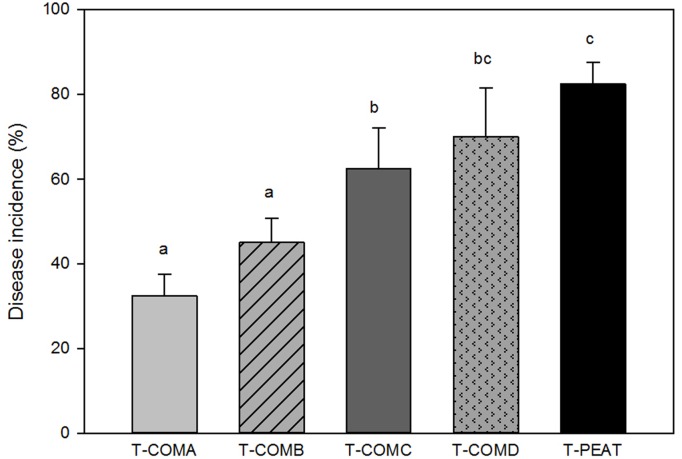
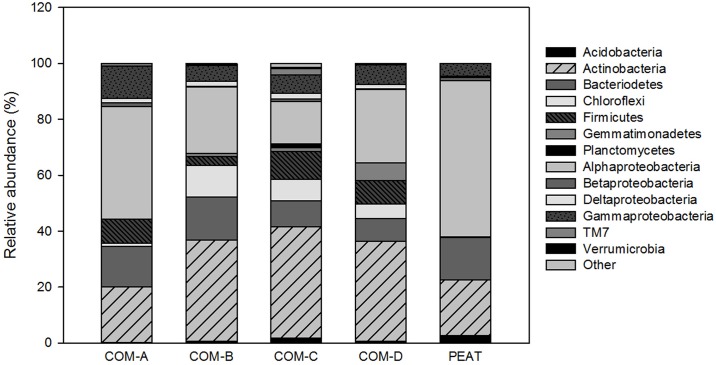
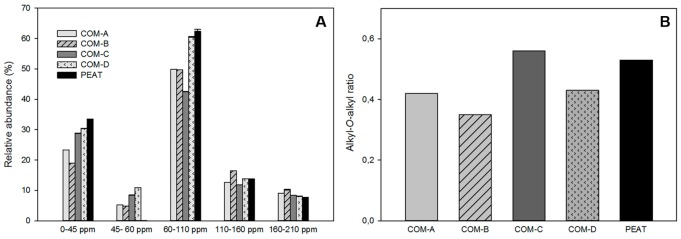
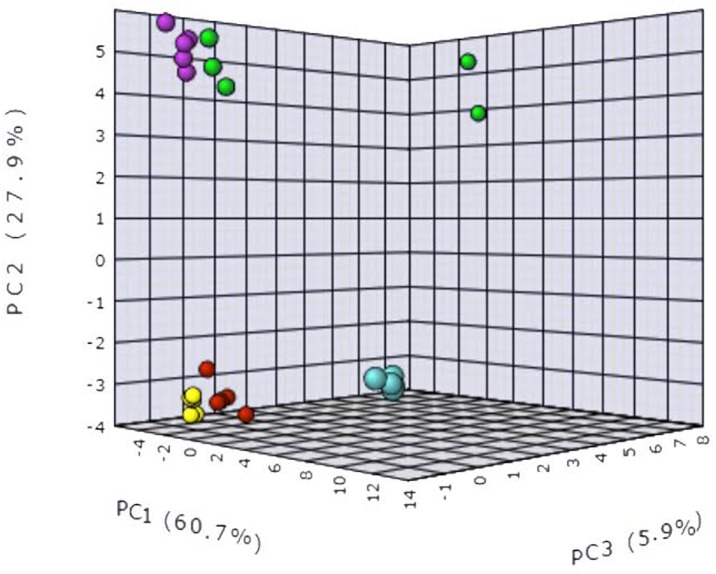
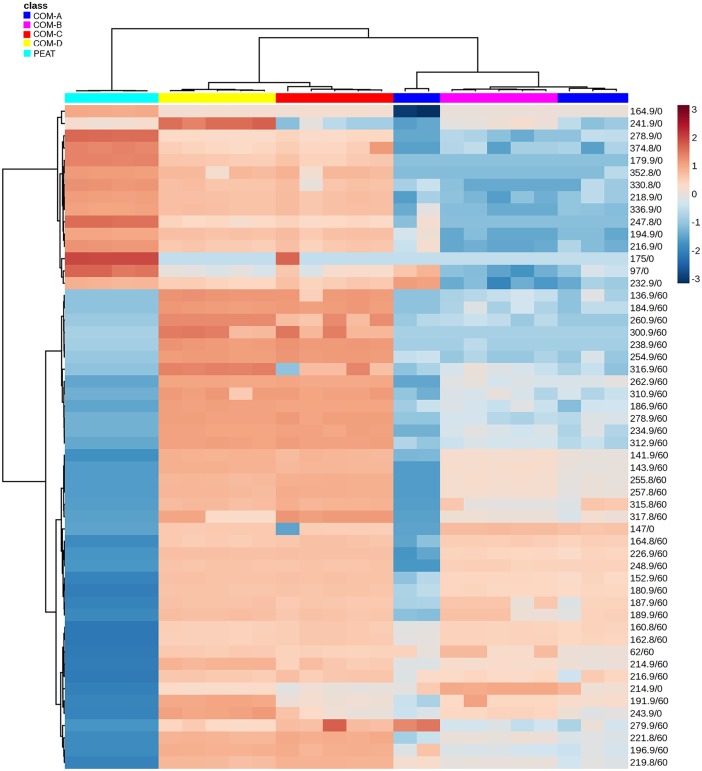
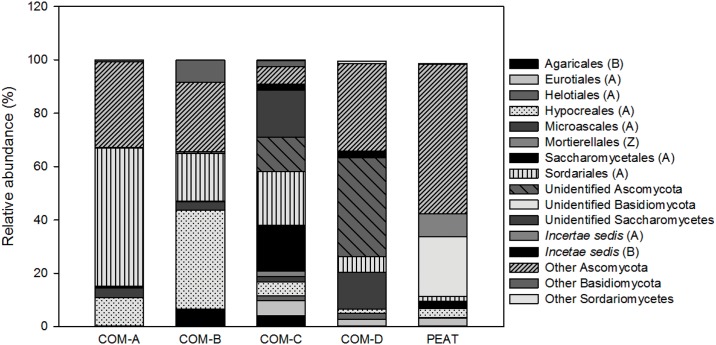
Phytophthora root rot caused by Phytophthora nicotianae is an economically important disease in pepper crops. The use of suppressive composts is a low environmental impact method for its control. Although attempts have been made to reveal the relationship between microbiota and compost suppressiveness, little is known about the microorganisms associated with disease suppression. Here, an Ion Torrent platform was used to assess the microbial composition of composts made of different agro-industrial waste and with different levels of suppressiveness against P. nicotianae. Both bacterial and fungal populations responded differently depending on the chemical heterogeneity of materials used during the composting process. High proportions (67-75%) of vineyard pruning waste were used in the most suppressive composts, COM-A and COM-B. This material may have promoted the presence of higher relative abundance of Ascomycota as well as higher microbial activity, which have proved to be essential for controlling the disease. Although no unique fungi or bacteria have been detected in neither suppressive nor conducive composts, relatively high abundance of Fusarium and Zopfiella were found in compost COM-B and COM-A, respectively. To the best of our knowledge, this is the first work that studies compost metabolome. Surprisingly, composts and peat clustered together in principal component analysis of the metabolic data according to their levels of suppressiveness achieved. This study demonstrated the need for combining the information provided by different techniques, including metagenomics and metametabolomics, to better understand the ability of compost to control plant diseases.
由烟草疫霉引起的辣椒疫霉根腐病是辣椒作物上一种具有重要经济影响的病害。使用抑制性堆肥是一种对环境影响较小的防治方法。尽管人们已尝试揭示微生物群与堆肥抑制性之间的关系,但对于与病害抑制相关的微生物却知之甚少。在此,利用离子激流平台评估了由不同农业工业废弃物制成的、对烟草疫霉具有不同抑制水平的堆肥的微生物组成。细菌和真菌群体的反应因堆肥过程中所用材料的化学异质性而有所不同。在抑制效果最佳的堆肥COM - A和COM - B中,使用了高比例(67 - 75%)的葡萄园修剪废弃物。这种材料可能促进了子囊菌门相对丰度的增加以及微生物活性的提高,而这已被证明对控制病害至关重要。尽管在抑制性和非抑制性堆肥中均未检测到独特的真菌或细菌,但分别在堆肥COM - B和COM - A中发现了相对较高丰度的镰刀菌属和佐菲酵母属。据我们所知,这是第一项研究堆肥代谢组的工作。令人惊讶的是,在代谢数据的主成分分析中,堆肥和泥炭根据其实现的抑制水平聚集在一起。这项研究表明,需要结合包括宏基因组学和元代谢组学在内的不同技术所提供的信息,以更好地理解堆肥控制植物病害的能力。