Bohne Alexandra-Viola, Teubner Marlene, Liere Karsten, Weihe Andreas, Börner Thomas
Institute of Biology, Humboldt University, Philippstr.13, Rhoda Erdmann Haus, 10115, Berlin, Germany.
Molecular Plant Sciences, Ludwig-Maximillians-University, Grosshaderner Str. 2-4, 82152, Planegg-Martinsried, Germany.
Plant Mol Biol. 2016 Oct;92(3):357-69. doi: 10.1007/s11103-016-0518-z. Epub 2016 Aug 6.
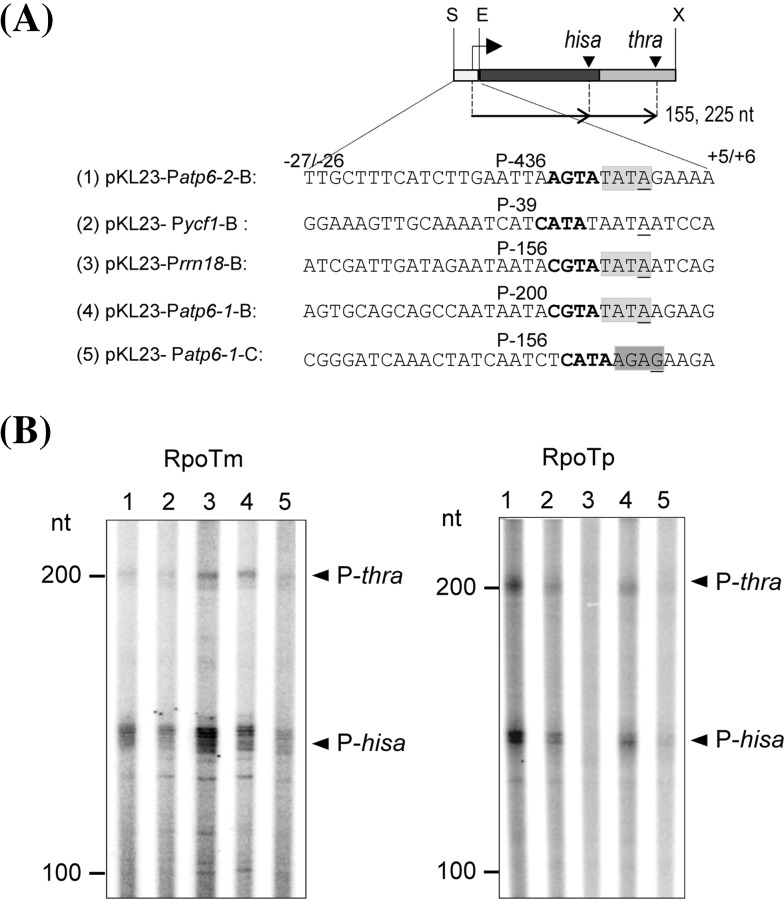
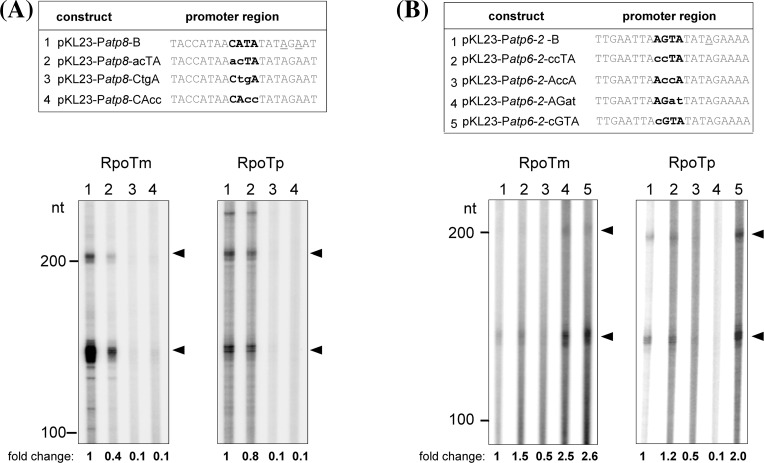
We identified sequence motifs, which enhance or reduce the ability of the Arabidopsis phage-type RNA polymerases RPOTm (mitochondrial RNAP), RPOTp (plastidial RNAP), and RPOTmp (active in both organelles) to recognize their promoters in vitro with help of a 'specificity loop'. The importance of this data for the evolution and function of the organellar RNA polymerases is discussed. The single-subunit RNA polymerase (RNAP) of bacteriophage T7 is able to perform all steps of transcription without additional transcription factors. Dicotyledonous plants possess three phage-type RNAPs, RPOTm-the mitochondrial RNAP, RPOTp-the plastidial RNAP, and RPOTmp-an RNAP active in both organelles. RPOTm and RPOTp, like the T7 polymerase, are able to recognize promoters, while RPOTmp displays no significant promoter specificity in vitro. To find out which promoter motifs are crucial for recognition by the polymerases we performed in vitro transcription assays with recombinant Arabidopsis RPOTm and RPOTp enzymes. By comparing different truncated and mutagenized promoter constructs, we observed the same minimal promoter sequence supposed to be needed in vivo for transcription initiation. Moreover, we identified elements of core and flanking sequences, which are of critical importance for promoter recognition and activity in vitro. We further intended to reveal why RPOTmp does not efficiently recognize promoters in vitro and if promoter recognition is based on a structurally defined specificity loop of the plant enzymes as described for the yeast and T7 RNAPs. Interestingly, the exchange of only three amino acids within the putative specificity loop of RPOTmp enabled the enzyme for specific promoter transcription in vitro. Thus, also in plant phage-type RNAPs the specificity loop is engaged in promoter recognition. The results are discussed with respect to their relevance for transcription in organello and to the evolution of RPOT enzymes including the divergence of their functions.
我们鉴定出了一些序列基序,它们借助一个“特异性环”增强或降低了拟南芥噬菌体型RNA聚合酶RPOTm(线粒体RNA聚合酶)、RPOTp(质体RNA聚合酶)和RPOTmp(在两个细胞器中均有活性)在体外识别其启动子的能力。本文讨论了这些数据对于细胞器RNA聚合酶的进化和功能的重要性。噬菌体T7的单亚基RNA聚合酶(RNAP)无需额外的转录因子就能完成转录的所有步骤。双子叶植物拥有三种噬菌体型RNAP,即线粒体RNAP的RPOTm、质体RNAP的RPOTp以及在两个细胞器中均有活性的RNAP的RPOTmp。RPOTm和RPOTp与T7聚合酶一样,能够识别启动子,而RPOTmp在体外没有显著的启动子特异性。为了找出哪些启动子基序对于聚合酶的识别至关重要,我们用重组的拟南芥RPOTm和RPOTp酶进行了体外转录分析。通过比较不同的截短和诱变启动子构建体,我们观察到了体内转录起始所需的相同最小启动子序列。此外,我们鉴定出了核心序列和侧翼序列的元件,它们对于体外启动子识别和活性至关重要。我们进一步想要揭示为什么RPOTmp在体外不能有效地识别启动子,以及启动子识别是否基于植物酶中如酵母和T7 RNAPs所描述的结构定义的特异性环。有趣的是,仅在RPOTmp的假定特异性环内交换三个氨基酸就能使该酶在体外进行特异性启动子转录。因此,在植物噬菌体型RNAPs中,特异性环也参与启动子识别。本文讨论了这些结果与它们在细胞器内转录的相关性以及RPOT酶的进化,包括其功能的分化。