Lau Joey, Grapengiesser Eva, Hellman Bo
Department of Medical Cell Biology, Uppsala University, Box 571, 751 23 Uppsala, Sweden.
J Diabetes Res. 2016;2016:4930741. doi: 10.1155/2016/4930741. Epub 2016 Jul 18.
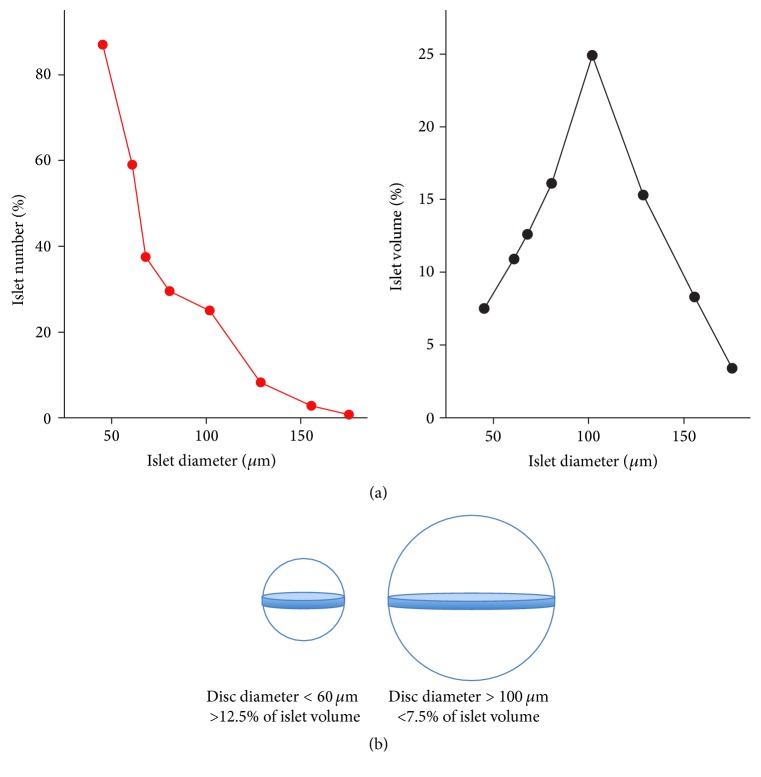
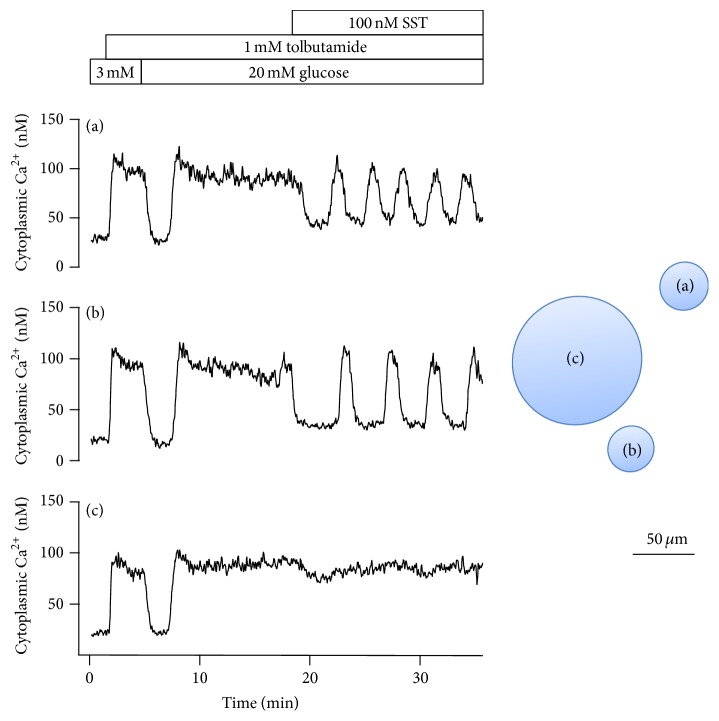
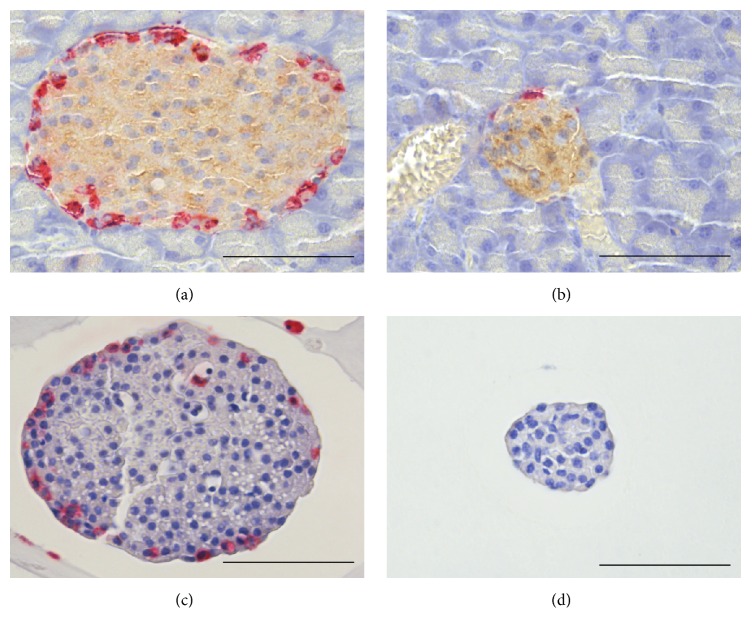
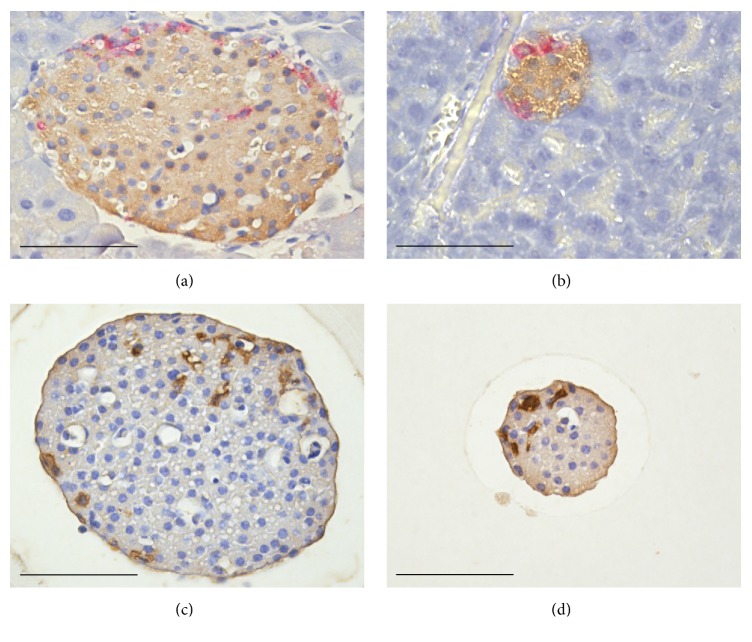
Small and big mouse islets were compared with special reference to their content of glucagon-producing α-cells and somatostatin-producing δ-cells. Areas stained for glucagon and somatostatin were measured in the largest cross section of small (diameter < 60 μm) and big (diameter > 100 μm) islets. Comparison of the areas indicated proportionally more δ- than α-cells in the small islets. After isolation with collagenase these islets were practically devoid of α-cells. We evaluated the functional importance of the islet size by measuring the Ca(2+) signal for insulin release. A majority of the small islets responded to the hyperpolarization action of somatostatin with periodic decrease of cytoplasmic Ca(2+) when glucose was elevated after tolbutamide blockade of the KATP channels.
对大小不同的小鼠胰岛进行了比较,特别关注其产生胰高血糖素的α细胞和产生生长抑素的δ细胞的含量。在小(直径<60μm)和大(直径>100μm)胰岛的最大横截面上测量胰高血糖素和生长抑素染色的面积。面积比较表明,小胰岛中δ细胞的比例比α细胞多。用胶原酶分离后,这些胰岛实际上没有α细胞。我们通过测量胰岛素释放的Ca(2+)信号来评估胰岛大小的功能重要性。当在甲苯磺丁脲阻断KATP通道后葡萄糖升高时,大多数小胰岛对生长抑素的超极化作用有反应,细胞质Ca(2+)周期性降低。