Poosti Fariba, Bansal Ruchi, Yazdani Saleh, Prakash Jai, Beljaars Leonie, van den Born Jacob, de Borst Martin H, van Goor Harry, Hillebrands Jan-Luuk, Poelstra Klaas
Department of Pathology and Medical Biology, Division of Pathology, University Medical Center Groningen, University of Groningen, Groningen, The Netherlands.
Department of Microbiology and Immunology, Laboratory of Molecular Immunology, Rega Institute, KU Leuven, Belgium.
Oncotarget. 2016 Aug 23;7(34):54240-54252. doi: 10.18632/oncotarget.11095.
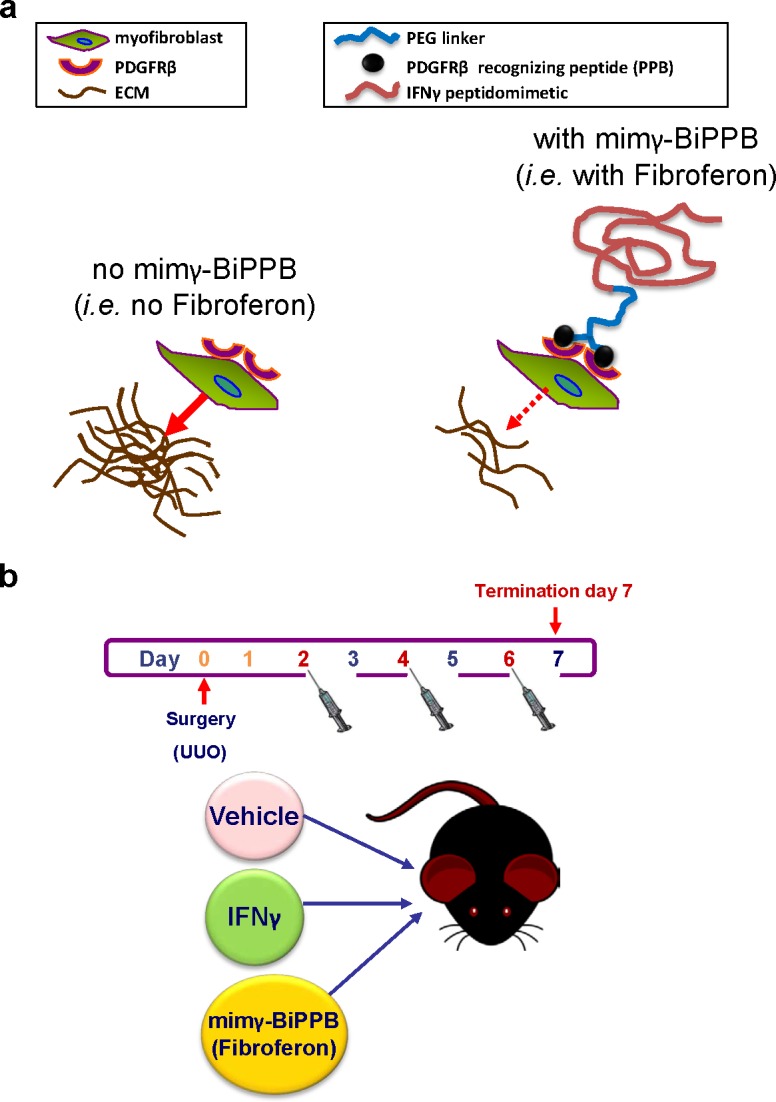
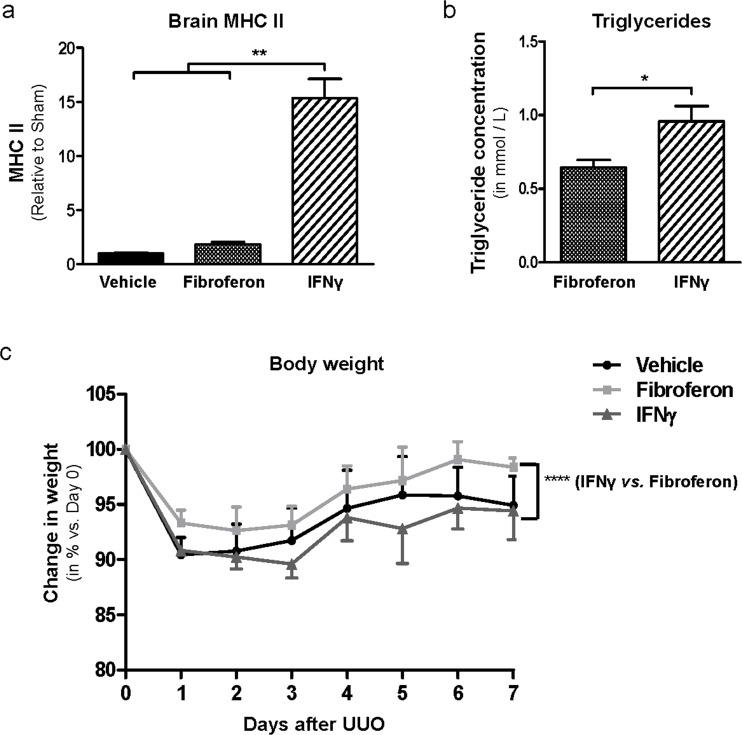
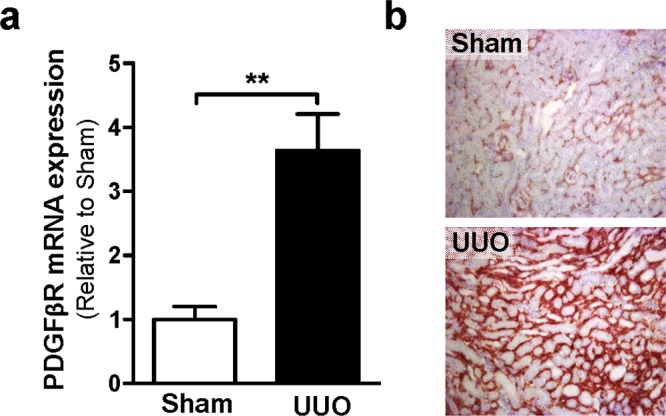
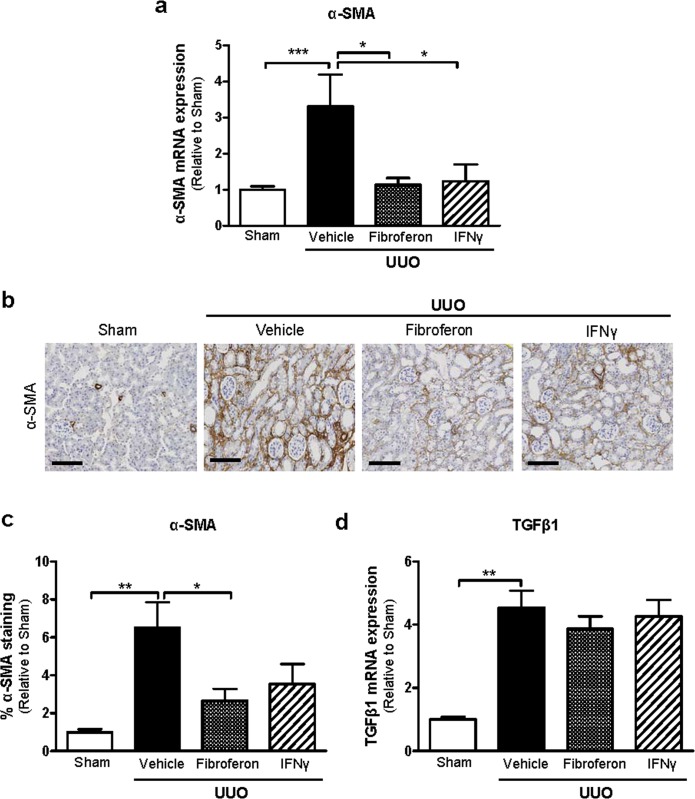
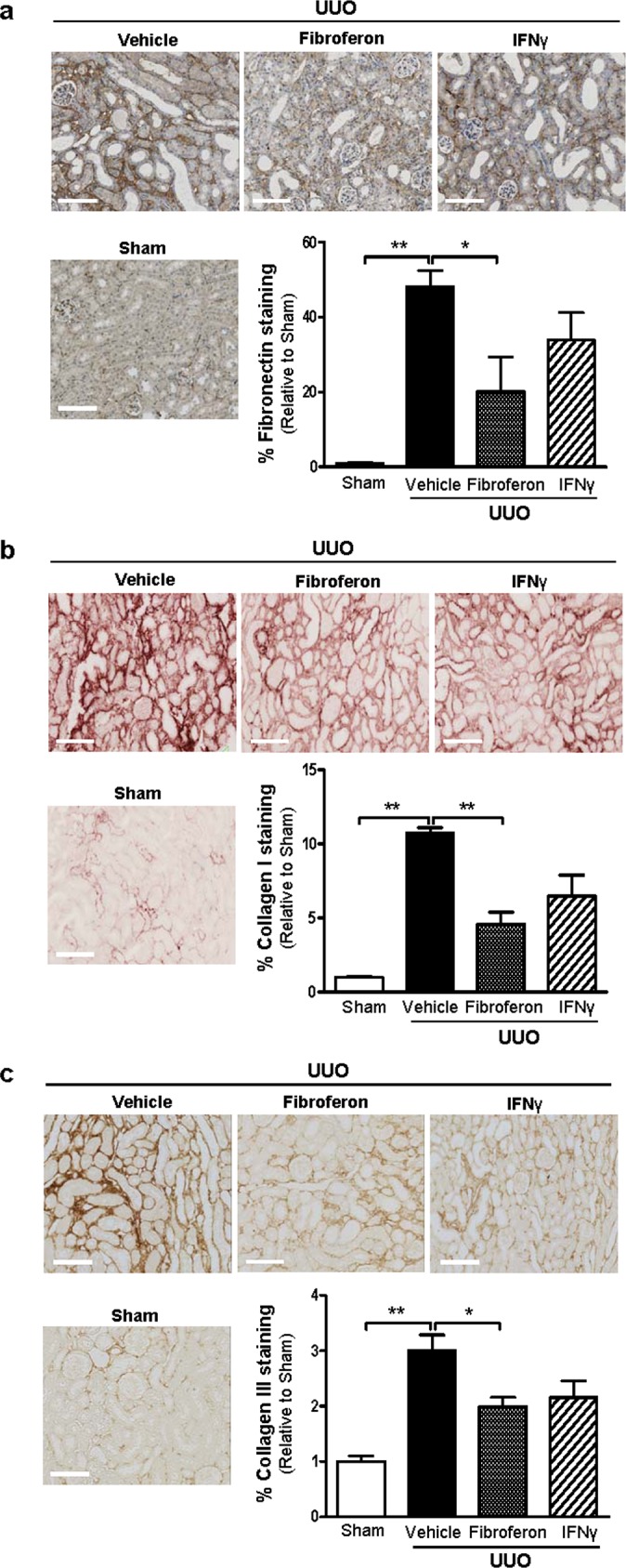
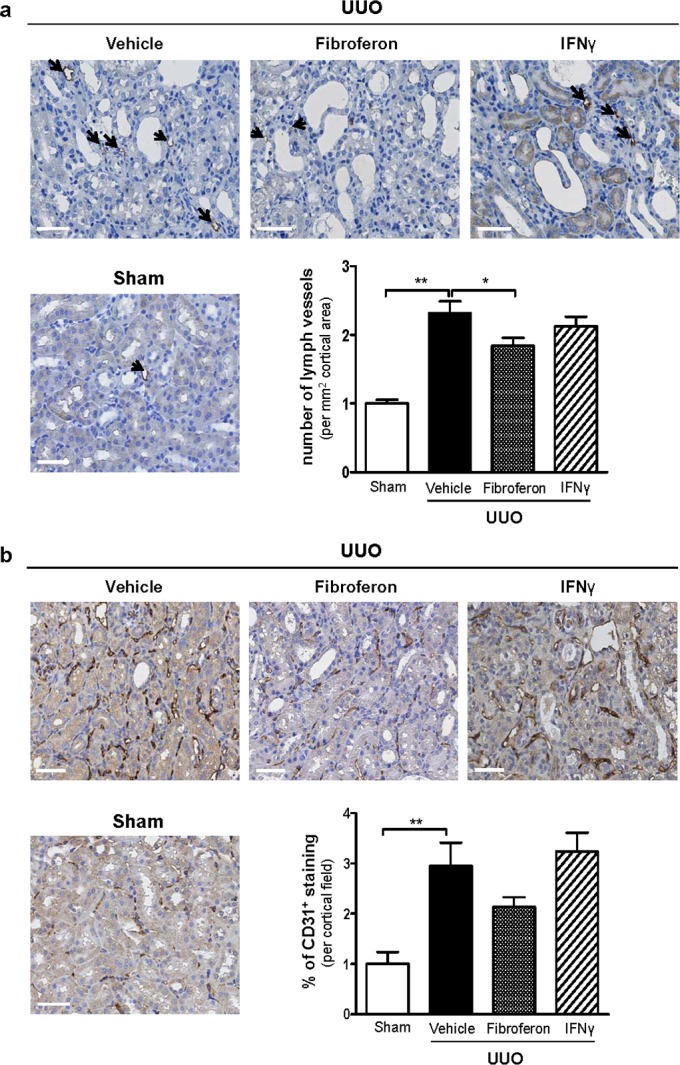
Renal fibrosis cannot be adequately treated since anti-fibrotic treatment is lacking. Interferon-γ is a pro-inflammatory cytokine with anti-fibrotic properties. Clinical use of interferon-γ is hampered due to inflammation-mediated systemic side effects. We used an interferon-γ peptidomimetic (mimγ) lacking the extracellular IFNγReceptor recognition domain, and coupled it to the PDGFβR-recognizing peptide BiPPB. Here we tested the efficacy of mimγ-BiPPB (referred to as "Fibroferon") targeted to PDGFβR-overexpressing interstitial myofibroblasts to attenuate renal fibrosis without inducing inflammation-mediated side effects in the mouse unilateral ureter obstruction model.Unilateral ureter obstruction induced renal fibrosis characterized by significantly increased α-SMA, TGFβ1, fibronectin, and collagens I and III protein and/or mRNA expression. Fibroferon treatment significantly reduced expression of these fibrotic markers. Compared to full-length IFNγ, anti-fibrotic effects of Fibroferon were more pronounced. Unilateral ureter obstruction-induced lymphangiogenesis was significantly reduced by Fibroferon but not full-length IFNγ. In contrast to full-length IFNγ, Fibroferon did not induce IFNγ-related side-effects as evidenced by preserved low-level brain MHC II expression (similar to vehicle), lowered plasma triglyceride levels, and improved weight gain after unilateral ureter obstruction.In conclusion, compared to full-length IFNγ, the IFNγ-peptidomimetic Fibroferon targeted to PDGFβR-overexpressing myofibroblasts attenuates renal fibrosis in the absence of IFNγ-mediated adverse effects.
由于缺乏抗纤维化治疗方法,肾纤维化无法得到充分治疗。干扰素-γ是一种具有抗纤维化特性的促炎细胞因子。由于炎症介导的全身副作用,干扰素-γ的临床应用受到阻碍。我们使用了一种缺乏细胞外IFNγ受体识别域的干扰素-γ肽模拟物(mimγ),并将其与识别血小板衍生生长因子β受体(PDGFβR)的肽BiPPB偶联。在此,我们在小鼠单侧输尿管梗阻模型中测试了靶向过表达PDGFβR的间质肌成纤维细胞的mimγ-BiPPB(称为“Fibroferon”)减轻肾纤维化而不诱导炎症介导的副作用的疗效。单侧输尿管梗阻诱导肾纤维化,其特征是α-平滑肌肌动蛋白(α-SMA)、转化生长因子β1(TGFβ1)、纤连蛋白以及I型和III型胶原蛋白的蛋白和/或mRNA表达显著增加。Fibroferon治疗显著降低了这些纤维化标志物的表达。与全长干扰素-γ相比,Fibroferon的抗纤维化作用更明显。Fibroferon显著减少了单侧输尿管梗阻诱导的淋巴管生成,但全长干扰素-γ没有。与全长干扰素-γ不同,Fibroferon没有诱导干扰素-γ相关的副作用,这表现为脑MHC II低水平表达得以保留(类似于赋形剂组)、血浆甘油三酯水平降低以及单侧输尿管梗阻后体重增加改善。总之,与全长干扰素-γ相比,靶向过表达PDGFβR的肌成纤维细胞的干扰素-γ肽模拟物Fibroferon在没有干扰素-γ介导的不良反应的情况下减轻了肾纤维化。