Rieder Franz J J, Gröschel Charlotte, Kastner Marie-Theres, Kosulin Karin, Laengle Johannes, Zadnikar Rene, Marculescu Rodrig, Schneider Martina, Lion Thomas, Bergmann Michael, Kallay Enikö, Steininger Christoph
Department of Medicine I, Division of Infectious Diseases and Tropical Medicine, Medical University of Vienna, Vienna, Austria.
Department of Pathophysiology and Allergy Research, Medical University of Vienna, Vienna, Austria.
J Steroid Biochem Mol Biol. 2017 Jan;165(Pt B):356-362. doi: 10.1016/j.jsbmb.2016.08.002. Epub 2016 Aug 9.
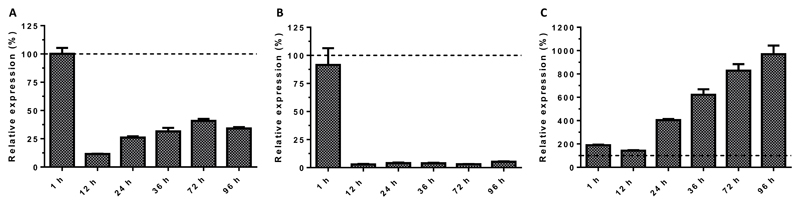
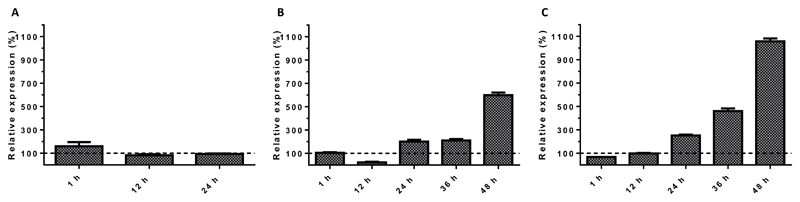
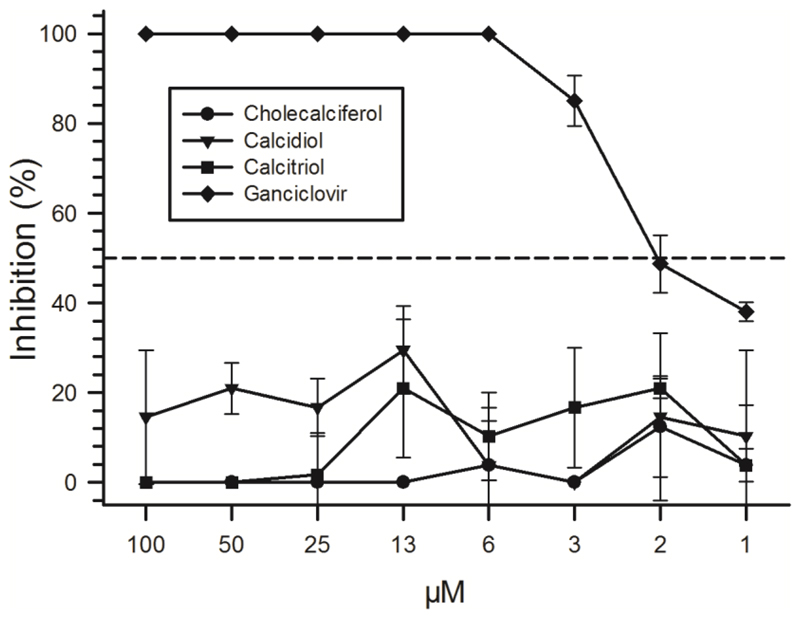
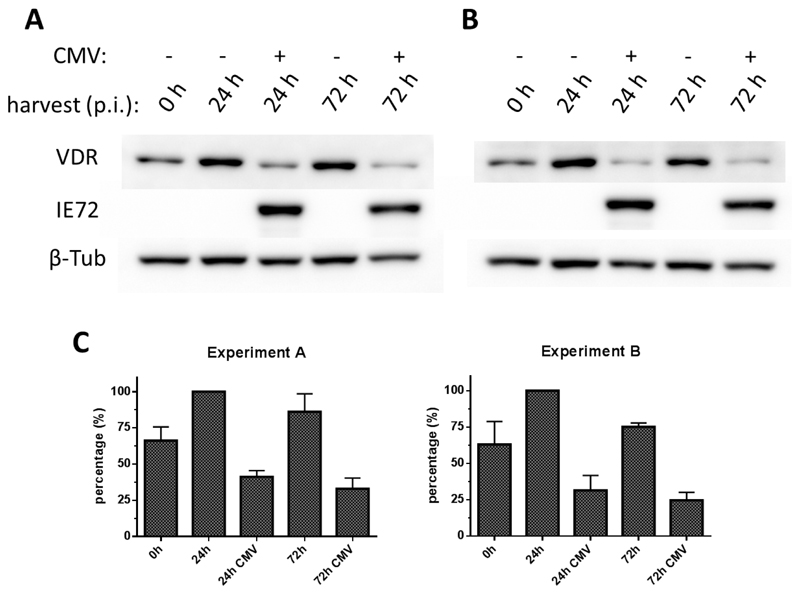
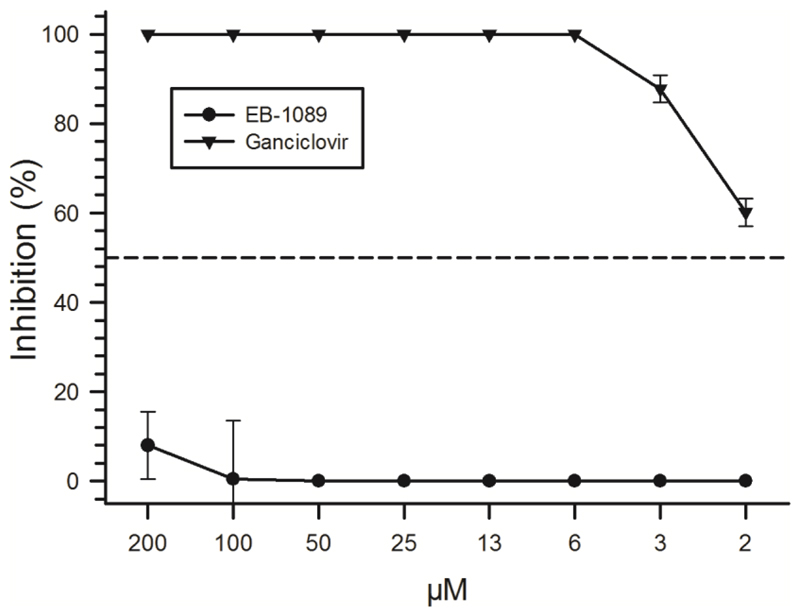
Vitamin D (VD) is essential for the human body and involved in a wide variety of critical physiological processes including bone, muscle, and cardiovascular health, as well as innate immunity and antimicrobial responses. Here, we elucidated the significance of the VD system in cytomegalovirus (CMV) infection, which is one of the most common opportunistic infections in immunocompromised or -suppressed patients. We found that expression of vitamin D receptor (VDR) was downregulated in CMV-infected cells within 12h [hrs] post infection [p.i.] to 12% relative to VDR expression in mock-infected fibroblasts and did not recover during the CMV replication cycle of 96h. None of the biologically active metabolites of VD, cholecalciferol, calcidiol, or calcitriol, inhibit CMV replication significantly in human fibroblasts. In a feedback loop, expression of CYP24A1 dropped to 3% by 12h p.i. and expression of CYP27B1 increased gradually during the replication cycle of CMV to 970% probably as a consequence of VDR inhibition. VDR expression was not downregulated during influenza virus or adenovirus replication. The potent synthetic vitamin D analog EB-1089 was not able to inhibit CMV replication or antagonize its effect on VDR expression. Only CMV replication, and none of the other viral pathogens evaluated, inhibited the vitamin D system in vitro. In view of the pleiotropism of VDR, CMV-mediated downregulation may have far-reaching virological, immunological, and clinical implications and thus warrant further evaluations in vitro and in vivo.
维生素D(VD)对人体至关重要,参与多种关键生理过程,包括骨骼、肌肉和心血管健康,以及先天免疫和抗菌反应。在此,我们阐明了VD系统在巨细胞病毒(CMV)感染中的意义,CMV感染是免疫受损或免疫抑制患者中最常见的机会性感染之一。我们发现,感染后12小时内,CMV感染细胞中维生素D受体(VDR)的表达相对于 mock 感染的成纤维细胞中VDR的表达下调至12%,并且在96小时的CMV复制周期中未恢复。VD的生物活性代谢物胆钙化醇、骨化二醇或骨化三醇均未在人成纤维细胞中显著抑制CMV复制。在一个反馈回路中,CYP24A1的表达在感染后12小时降至3%,而CYP27B1的表达在CMV复制周期中逐渐增加至970%,这可能是VDR抑制的结果。在流感病毒或腺病毒复制过程中,VDR表达未下调。强效合成维生素D类似物EB-1089无法抑制CMV复制或拮抗其对VDR表达的影响。只有CMV复制,而不是其他评估的病毒病原体,在体外抑制了维生素D系统。鉴于VDR的多效性,CMV介导的下调可能具有深远的病毒学、免疫学和临床意义,因此值得在体外和体内进行进一步评估。