Zhao Lin, Zheng Xin-Yu
Department of Breast Surgery, the First Hospital of China Medical University.
Department of Breast Surgery, the First Hospital of China Medical University; The First Laboratory, Cancer Institute of China Medical University, Shenyang, People's Republic of China.
Onco Targets Ther. 2016 Jul 22;9:4505-16. doi: 10.2147/OTT.S100037. eCollection 2016.
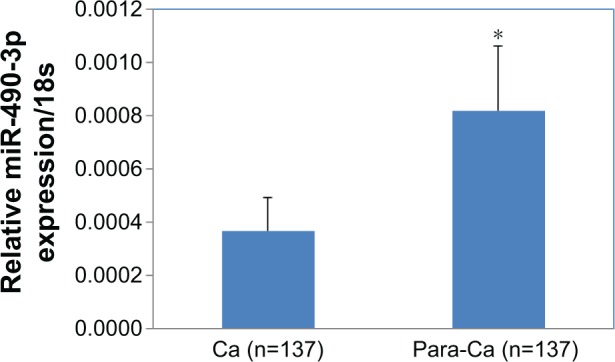
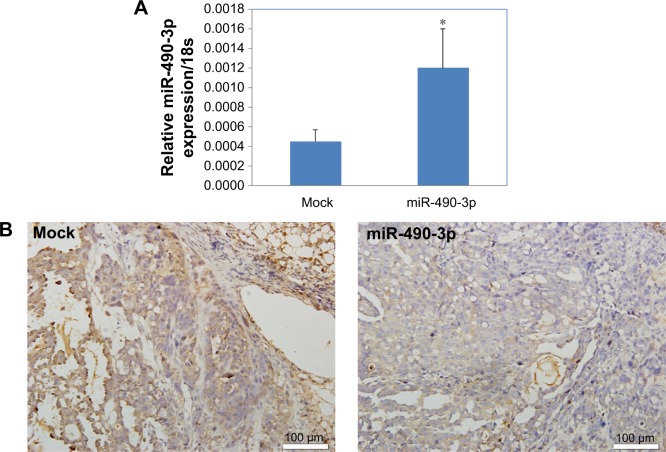
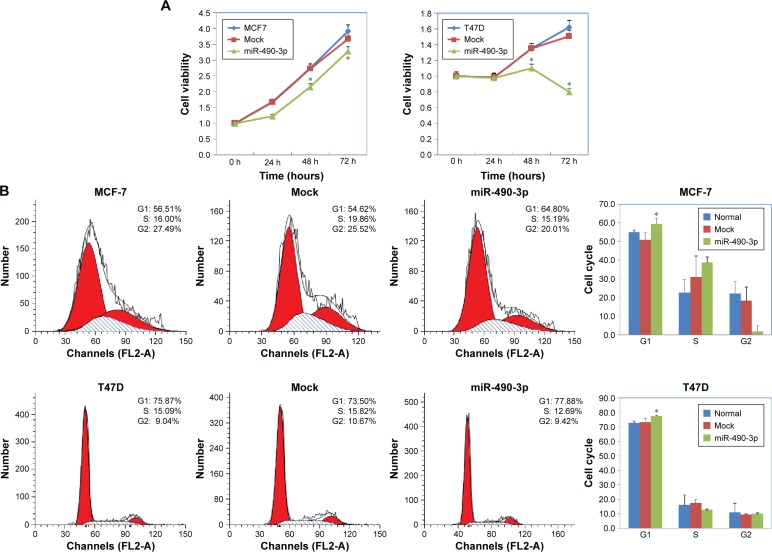
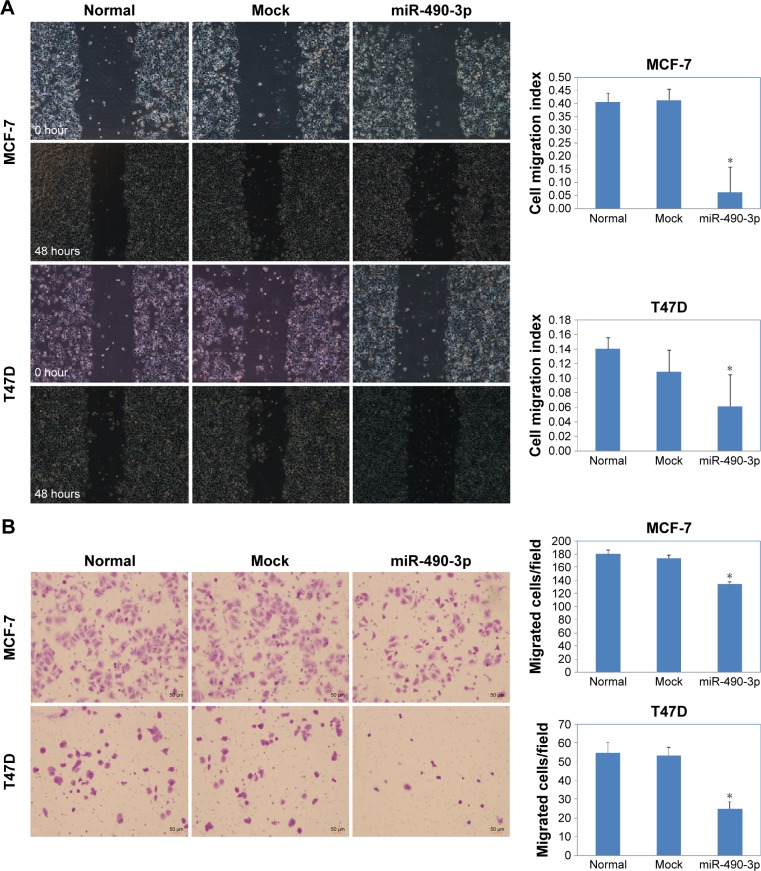
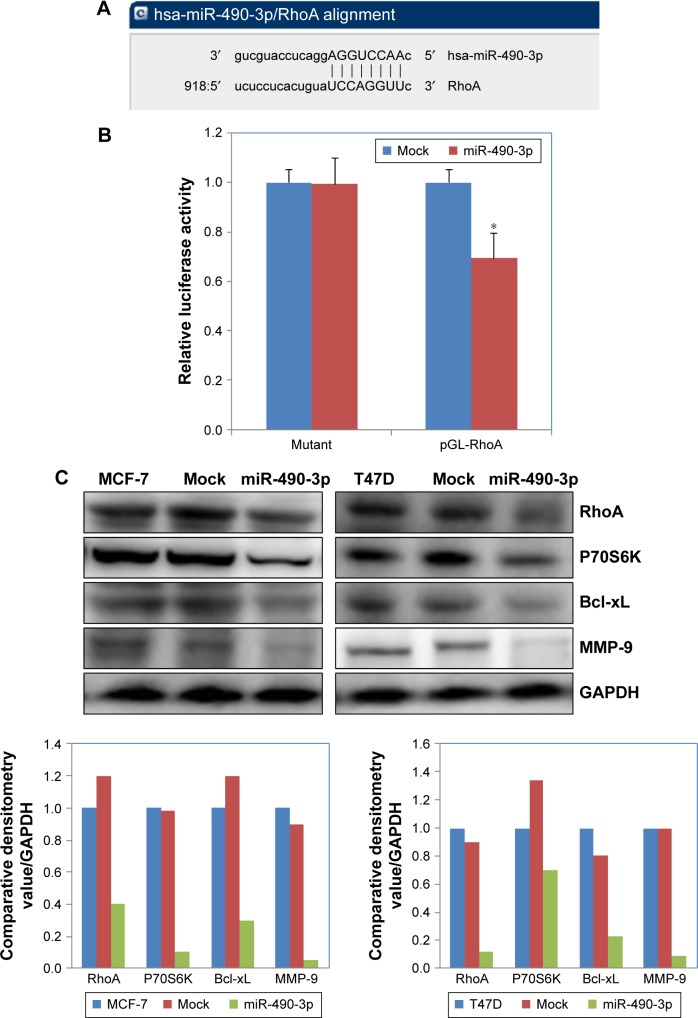
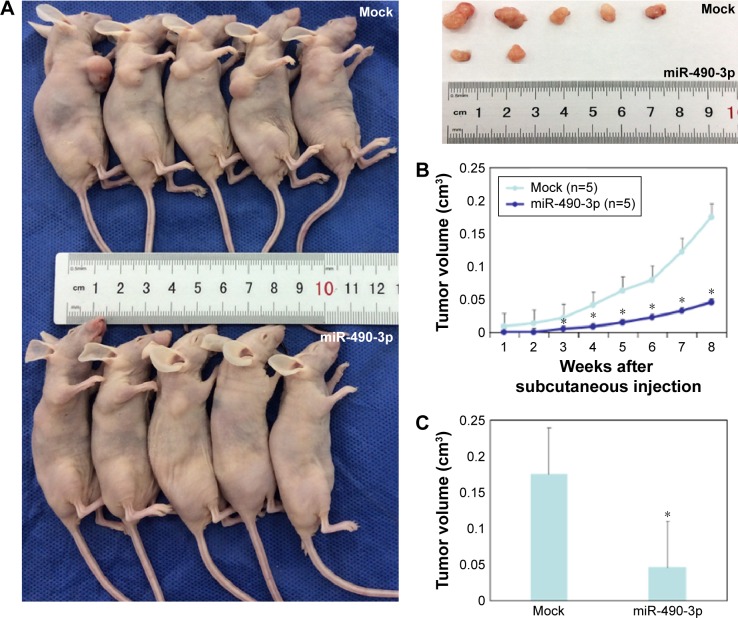
MicroRNAs are consistently reported to regulate gene expression in all cancer cell types by modulating a wide range of biological processes, including cell proliferation, differentiation, and apoptosis, which are associated with tumor development and progression. Previous studies have revealed that miR-490-3p regulates cell proliferation and apoptosis in cancers, such as hepatocellular carcinoma, lung cancer, bladder cancer, and ovarian carcinoma. In this study, we explored the hitherto unrevealed role of miR-490-3p in breast cancer. We tested miR-490-3p expression in breast cancer tissue and paracarcinoma tissue using reverse transcription-polymerase chain reaction. We also transfected the human breast cancer cell lines MCF-7 and T47D with miR-490-3p; subsequently, we determined the cell phenotype and the expression of Ras homolog gene family member A (RhoA), Bcl-xL, matrix metalloproteinase-9, and P70S6K (P70S6 kinase). Dual-luciferase reporter assay and a xenograft mouse model were used to reveal the roles of miR-490-3p and its target gene RHOA. We found that the levels of miR-490-3p were lower in the breast cancer tissue than in the paracarcinoma tissues. The overexpression of miR-490-3p suppressed breast cancer cell proliferation and promoted early stage apoptosis. Western blotting results revealed that the miR-490-3p overexpression reduced RhoA, Bcl-XL, matrix metalloproteinase-9, and P70S6K protein expression. The dual-luciferase reporter assay confirmed that RhoA is a target of miR-490-3p. The xenograft mouse model confirmed that miR-490-3p overexpression suppressed tumor growth and reduced RhoA expression. Our results indicate that miR-490-3p acts as oncosuppressive microRNA to inhibit breast cancer tumorigenesis and progression by targeting RhoA directly. It may contribute to breast cancer diagnosis and treatment.
一直以来,有报道称微小RNA通过调节包括细胞增殖、分化和凋亡在内的多种生物过程来调控所有癌细胞类型中的基因表达,而这些生物过程与肿瘤的发生和发展相关。先前的研究表明,miR-490-3p在诸如肝细胞癌、肺癌、膀胱癌和卵巢癌等癌症中调节细胞增殖和凋亡。在本研究中,我们探究了miR-490-3p在乳腺癌中尚未被揭示的作用。我们使用逆转录-聚合酶链反应检测了乳腺癌组织和癌旁组织中miR-490-3p的表达。我们还用miR-490-3p转染了人乳腺癌细胞系MCF-7和T47D;随后,我们确定了细胞表型以及Ras同源基因家族成员A(RhoA)、Bcl-xL、基质金属蛋白酶-9和P70S6K(P70S6激酶)的表达。双荧光素酶报告基因检测和异种移植小鼠模型被用于揭示miR-490-3p及其靶基因RHOA的作用。我们发现乳腺癌组织中miR-490-3p的水平低于癌旁组织。miR-490-3p的过表达抑制了乳腺癌细胞的增殖并促进了早期凋亡。蛋白质印迹结果显示,miR-490-3p的过表达降低了RhoA、Bcl-XL、基质金属蛋白酶-9和P70S6K的蛋白表达。双荧光素酶报告基因检测证实RhoA是miR-490-3p的一个靶标。异种移植小鼠模型证实miR-490-3p的过表达抑制了肿瘤生长并降低了RhoA的表达。我们的结果表明,miR-490-3p作为一种抑癌微小RNA,通过直接靶向RhoA来抑制乳腺癌的发生和发展。它可能有助于乳腺癌的诊断和治疗。